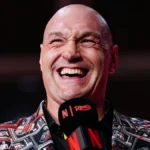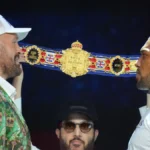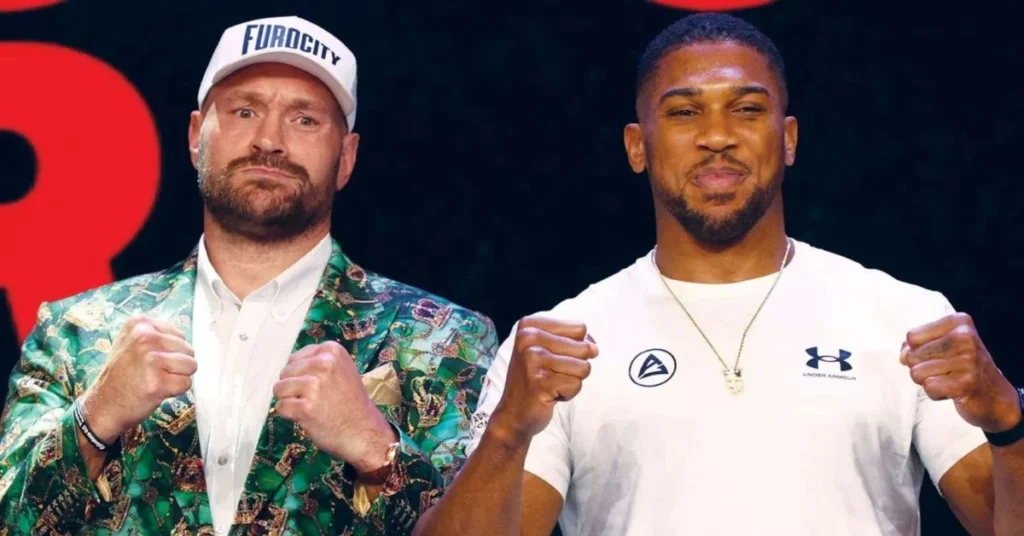
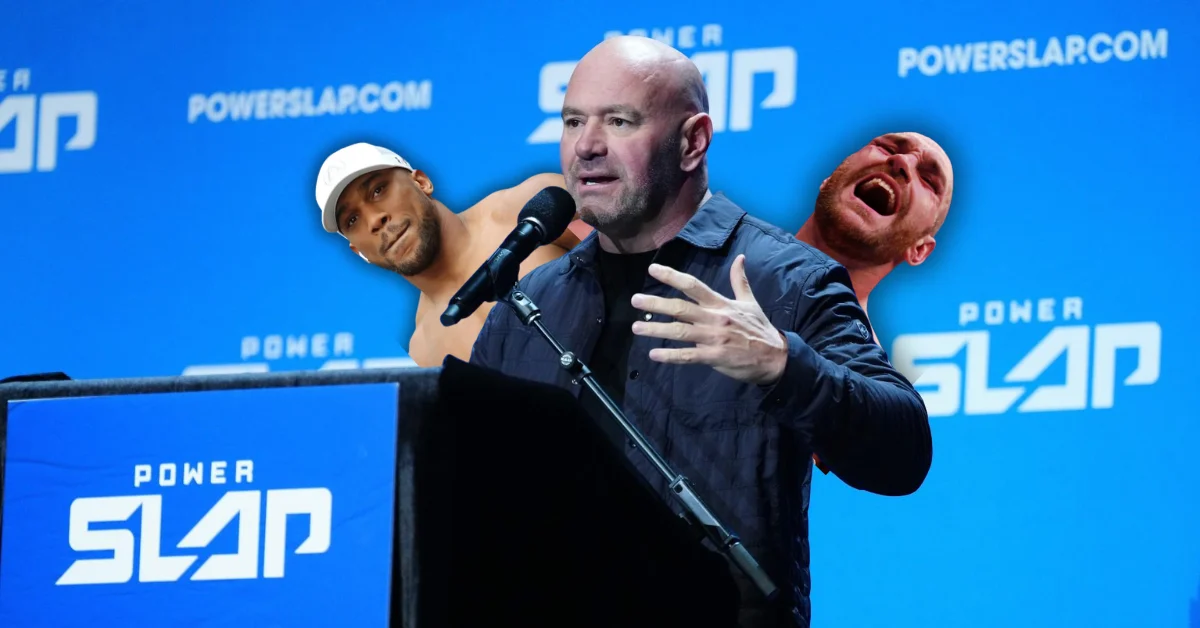
Dana White readily admits that the ongoing public debate surrounding his exact operational role in the upcoming blockbuster bout between Tyson Felix—correction, Tyson Fury—and Anthony Joshua is nothing short of bizarre. While Matchroom Boxing promoter Eddie Hearn asserts that Anthony Joshua’s existing contracts strictly prohibit the UFC chief executive from having any hand in promoting the event, White maintains a firm stance that the primary stakeholders who requested his involvement still explicitly want him on board. Amidst competing corporate interpretations, conflicting contractual clauses, and classic boxing promotional posturing, tickets for the historic heavyweight collision are moving at a historic pace.
Speaking at length with Jack Figg of Sun Boxing, White was pressed on why Joshua’s management team would allegedly sign a contract that effectively excludes the very figure Saudi boxing chief Turki Alalshikh specifically wanted involved in the collaborative effort. White did not attempt to sugarcoat the messy landscape of professional boxing management, acknowledging that the administrative friction comes with the territory.
"The whole thing is bizarre, but boxing is bizarre," White told Sun Boxing. "I mean, that’s why this sport has ended up where it’s ended up." He colorfully characterized the sport’s backstage politics as "bat s*** nuts" before quickly pivoting his focus back to the massive commercial reality of the event itself. "Tickets are on sale. Tickets sold like crazy and the fight’s happening," he added, emphasizing the historic magnitude of the pairing. "Definitely the biggest British heavyweight matchup ever. And it’s great for the sport of boxing that the fight’s finally going to happen."
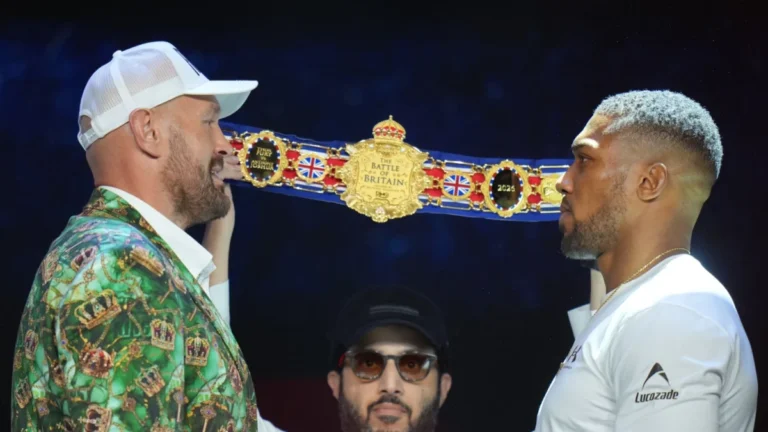
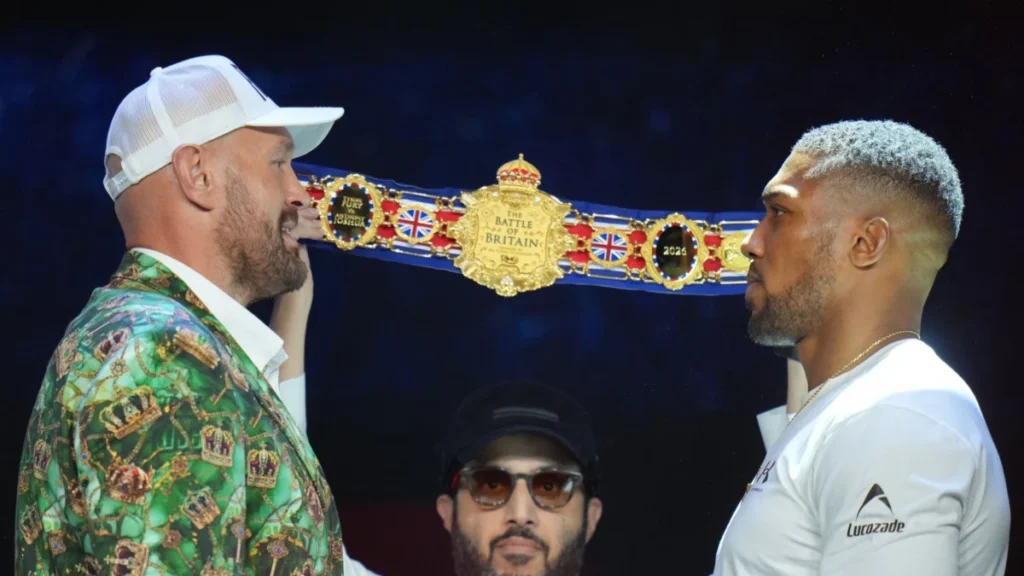
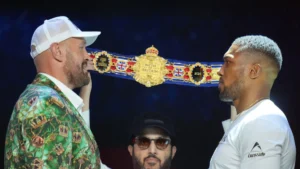
Tyson Fury and Anthony Joshua are officially scheduled to square off at Cardiff’s Principality Stadium on December 11, with the high-profile card streaming globally to millions of subscribers on Netflix. Bringing the two British heavyweight titans into the same ring has required years of delicate negotiations, false starts, and shifting geopolitical boxing investments. However, as the fight date approaches, the battle over who actually gets to build, produce, and market the mega-event has quickly transformed into a high-stakes corporate feud of its own.

Dana White: A Producer, a Promoter — or Both?
The administrative dispute burst into the public sphere immediately following the official fight announcement, which initially described the spectacle as a direct collaboration between Turki Alalshikh’s promotional vehicle, The Ring, and Dana White. Eddie Hearn immediately pushed back against the narrative, publicly stating that Joshua’s contractual agreements explicitly prohibited White from taking on any promotional responsibilities for the card. Frank Warren, Tyson Fury’s long-time UK promoter, also initially pointed to pre-existing contractual restrictions that supposedly barred Zuffa, White’s parent company, from promoting the event.
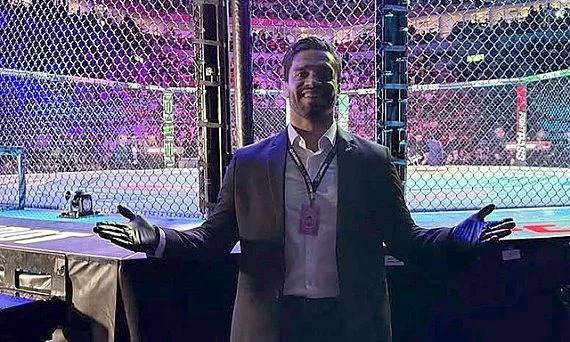
As the war of words intensified across sports media outlets, White’s own explanations began to oscillate between production and promotion rather than settling neatly into a single corporate title. In comments subsequently published by the BBC, White attempted to clarify his multifaceted duties for the December card.
"I am producing the fight, me and my team will be producing the fight that night," White stated. He then added a nuanced distinction regarding his public-facing duties: "I guess we’ll call me one of the promoters of the event, you know, because you do have Frank Warren and Eddie Hearn that are both promoters too, promoting the event."
There exists a significant traditional distinction within professional combat sports between helping publicize a marquee fight and serving as its officially recognized promoter of record. According to official regulatory filings with the British Boxing Board of Control, the officially named promoters authorized for the event are Matchroom Boxing, Queensberry Promotions, and Sela. White’s name does not appear on that specific regulatory roster, but the UFC boss has repeatedly shrugged off the importance of administrative paperwork.
"I am producing the fight and I am here promoting the fight," White told Figg during his media rounds. "I’ve been on a PR tour all morning."

Hearn’s corporate objections, however, extend well beyond whose name simply appears on the top of promotional posters and press releases. On October 4, the Matchroom chairman asserted that comprehensive television production responsibilities were also strictly prohibited under the terms of Joshua’s contract. Furthermore, Hearn claimed that events firm Sela had confirmed in writing that White’s initial production claims were entirely untrue. White countered these assertions directly by naming key members of his own executive production team, specifically pointing to Craig Borsari and Zach Candito as industry professionals who would be handling the show’s broadcast elements.
White Points to a Personal-Involvement Argument
To navigate the labyrinth of conflicting legal interpretations, White has floated a distinct rationale for why he believes he is fully permitted to participate in the event: he reads the restrictive covenants as applying strictly to corporate entities rather than to him as an individual.
"I know it says that Zuffa and TKO couldn’t be involved," White explained. "Pero—but it doesn’t say I can’t be, personally."
That interpretation remains White’s personal reading of the situation rather than an established legal ruling or an agreed-upon arbitration outcome. Hearn continues to maintain that the binding agreements explicitly prevent White from having any functional involvement in the event without the explicit, formal sign-off from both him and Anthony Joshua. Consequently, the public accounts and statements from both camps do not definitively establish that White has successfully engineered a contractual workaround that satisfies all participating parties.
Turki Alalshikh has consistently utilized the term "collaborate" when describing White’s integration into the promotional machinery, while Hearn has continuously rejected the notion of White holding any formal promotional authority under the framework of the existing agreements. White’s overarching position remains entirely straightforward: he was formally invited by key power players, and he accepted the invitation.

"The reality is that Turki wanted me to be a part of this thing. Netflix wanted me to be a part of this thing, so I am. That’s it," White said. "If they didn’t want me to be a part of it, you wouldn’t see me trying to fight my way into the AJ/Fury fight. I was asked to do this and I accepted it."
When questioned directly about Hearn’s vocal contractual objections during his media engagements, White casually floated the possibility of looming litigation, though without signaling any immediate legal action. "If that’s the case, then I guess he’s probably got a lawsuit or something on his hands. I don’t know," he remarked.
Despite White characterizing the remark as an off-the-cuff response rather than an announcement of active legal proceedings, the tensions remain palpable. Hearn has occasionally left a narrow door open for a compromise, noting that he is not fundamentally opposed to White participating in some capacity if someone can logically explain the tangible benefit to Anthony Joshua. White, however, has publicly disputed suggestions that a formal mediation meeting was ever successfully arranged to resolve their differences behind closed doors.
A $34 Million Gate, Despite the Argument
Fortunately for the financial backers, broadcasters, and fighters involved, the ongoing public war of words has done absolutely nothing to dampen consumer demand for seats inside the stadium. More than 500,000 eager fans flooded the digital ticket queue the moment general sales officially opened on October 9. Pointing to the overwhelming early market response, White estimated that the event’s total ticket revenue, or gate, is currently scaled to generate approximately $34 million.
"I don’t want to misspeak here, but we have this thing scaled for around $34 million," White noted regarding the financial projections.

While that eye-watering figure represents an early projection for the live gate rather than a confirmed final accounting or the event’s total commercial revenue, it underscores the massive global appeal of the heavyweight showdown. Amidst the ongoing promotional bickering, White even offered a rare moment of public praise to his boxing promotional rivals, crediting both Hearn and Joshua for standing firm on keeping the historic event in the United Kingdom rather than moving it overseas to a venue like New York’s famed Madison Square Garden.
"You’ve gotta credit Eddie and AJ for fighting hard to keep it in the UK," White acknowledged. "But this fight was going to do well wherever it was."