

When it comes to lower body development in the gym, the quadriceps routinely capture the lion’s share of attention, both from everyday lifters and in academic exercise science literature. In the typical gym environment, trainees rack up substantial volume for the front of their thighs through a steady diet of squats, leg presses, and lunges—movements that hammer the quads whether a lifter intentionally prioritizes them or not. The hamstrings, on the other hand, rarely enjoy that same automatic accumulation of volume. Unless a lifter deliberately and consistently programs targeted accessory movements like leg curls and hip hinges, the posterior thigh muscles easily end up as an afterthought.
In the realm of scientific research, the disparity continues because quads simply present a more cooperative subject of study. Most human beings store less subcutaneous fat over the top of their quads, and the individual muscle heads of the quadriceps are significantly easier to image using standard ultrasound equipment due to consistently lying closer to the skin’s surface than the deeply embedded hamstrings.
However, a robust body of research regarding hamstring training does exist, even if many lifters remain unaware of it. Much of this insight comes courtesy of strength and conditioning professionals. Given how prevalent and debilitating acute hamstring strains are in sports, hamstring conditioning—with a particular focus on movements like Nordic curls—has received heightened research interest as a clinical and practical intervention to mitigate injury risk. Recent literature offers a comprehensive breakdown of exercise selection for maximizing hamstring hypertrophy, challenging several long-held assumptions about how these muscles respond to resistance training.
Anatomical Realities and Biomechanical Challenges
To understand why certain exercises succeed while others fail, a brief look at the functional anatomy of the posterior thigh is necessary. The hamstrings comprise four distinct muscle heads: the long head of the biceps femoris, the short head of the biceps femoris, the semitendinosus, and the semimembranosus. All four heads share the primary function of flexing the knee joint, acting in a manner similar to a standard leg curl. With the sole exception of the short head of the biceps femoris, the remaining three heads are biarticular, meaning they also cross the hip joint and assist in extending the hips.
Intuitively, this dual-joint architecture suggests that optimal hamstring development requires a combination of two distinct mechanical categories of exercises: knee flexion movements like leg curls and hip extension movements like deadlifts or good mornings. Yet, popular compound multi-joint movements like barbell squats and heavy leg presses are likely ineffective for building significant hamstring muscle mass.

This counterintuitive reality was illustrated clearly in a pair of recent scientific investigations. The first study compared the muscle-building efficacy of the barbell hip thrust against the traditional barbell squat; neither exercise produced substantial growth in the hamstrings. A second study compared a standard squat taken to 90 degrees of knee flexion against a deeper squat taken to 140 degrees of knee flexion. Once again, neither variation stimulated meaningful hamstring hypertrophy.
The root cause of this lack of growth lies in the biarticular nature of the hamstrings. During any compound movement that requires simultaneous extension at the knees and the hips—such as the ascending phase of a squat—the hamstrings find themselves caught in a functional dilemma. While they assist in extending the hip, they simultaneously generate mechanical torque that attempts to flex the knee, thereby actively working against the quadriceps. To circumvent this internal mechanical conflict and achieve successful extension, the central nervous system preferentially recruits muscles that do not present this physiological friction, most notably the gluteus maximus and the adductor magnus. Consequently, compound movements that demand high levels of torque to achieve simultaneous knee and hip extension are fundamentally suboptimal for direct hamstring hypertrophy.
Hip Hinges Versus Leg Curls: Differential Growth Patterns
If multi-joint compound exercises fall short for the posterior thigh, targeted movements must be utilized. To make hip hinges effective for hamstring development, the knee joint must be kept relatively fixed, and the concurrent demands for knee extension must be minimized. Interestingly, detailed architectural and hypertrophy patterns vary significantly depending on whether a lifter utilizes leg curls or hip hinges.
A study conducted by Kawama and colleagues investigated the effects of varying training frequencies using an eccentric-only lengthened partial stiff-legged deadlift exercise. The results demonstrated that the long head of the biceps femoris, the semimembranosus, and the semitendinosus experienced substantial hypertrophy, whereas the short head of the biceps femoris failed to grow to a comparable degree.
Other researchers have directly compared specific hip hinge variations to leg curl variants. In a study by Bourne and colleagues, researchers compared the 45-degree back extension against the Nordic hamstring curl. The findings revealed that the long head of the biceps femoris and the semimembranosus grew more effectively from the 45-degree back extension, whereas the short head of the biceps femoris and the semitendinosus experienced superior growth from the Nordic hamstring curl.

Similarly, a recent study by Morin and collaborators directly contrasted the Nordic hamstring curl with the stiff-legged deadlift. The data indicated that the Nordic curl resulted in greater growth of the semitendinosus compared to the stiff-legged deadlift, whereas the stiff-legged deadlift promoted greater growth of the semimembranosus. Both exercises produced similar degrees of hypertrophy in the long head of the biceps femoris, though the researchers did not measure changes in the short head.
Taken together, these three studies suggest that hip hinge movements are generally superior for developing the long head of the biceps femoris and the semimembranosus. Conversely, leg curl variations tend to be more effective for targeting the short head of the biceps femoris and the semitendinosus. This functional divergence provides a clear, evidence-based rationale for incorporating both movement categories into a well-rounded physique or athletic training program.
Navigating Leg Curl Variations
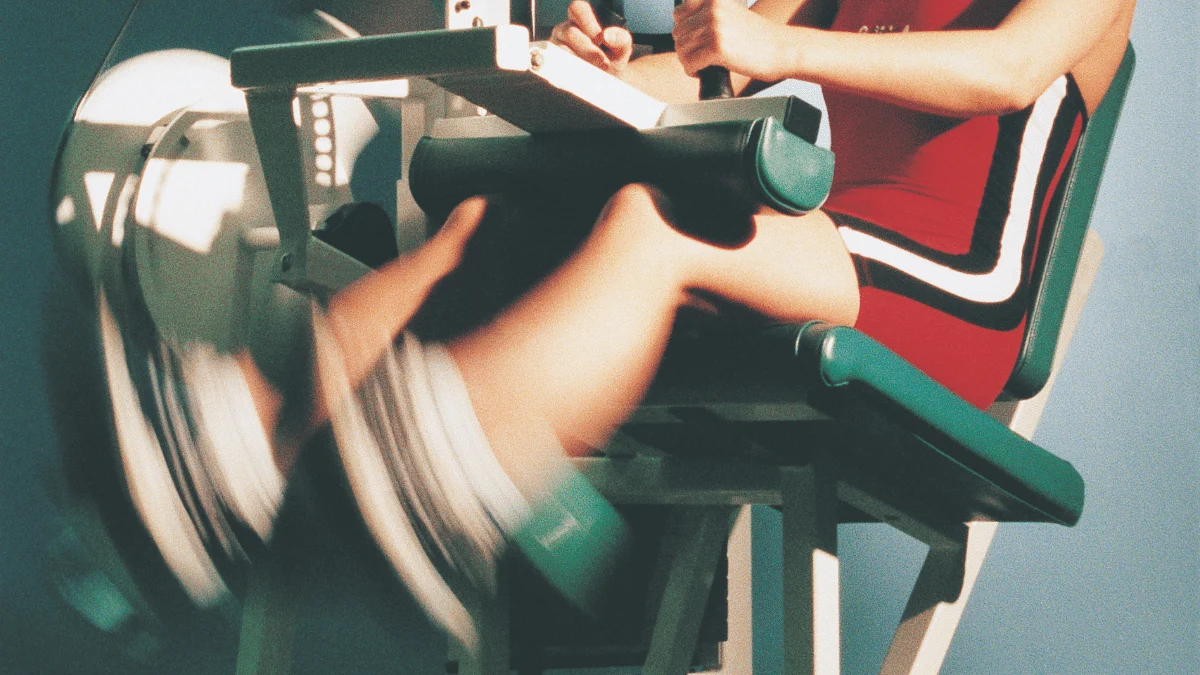
When narrowing down the optimal choice for knee flexion movements, a pair of studies led by researcher Kazunori Maeo provides practical guidance. The first investigation compared the seated leg curl to the lying leg curl. Performing a leg curl from a seated position inherently flexes the hips, placing a greater passive stretch on the biarticular hamstrings than a lying leg curl. Conversely, the sartorius muscle—a knee flexor that also acts to flex the hip—experiences a greater stretch during the lying leg curl than the seated variation. The results showed that the seated leg curl produced significantly greater hypertrophy of the biarticular hamstrings, while the lying leg curl preferentially stimulated growth in the sartorius.
A subsequent study by the same research group compared a seated leg curl performed with an intentional forward torso lean for an enhanced stretch against the traditional Nordic hamstring curl. While the seated leg curl emphasizes a stretched starting position for the biarticular hamstrings, the Nordic curl emphasizes resistance profiles in the stretched position, becoming mechanically more difficult as the body lowers toward the floor. The findings indicated that the Nordic curl led to superior growth in the short head of the hamstrings and the sartorius, whereas the seated leg curl stimulated greater development in the long head and the semimembranosus. Growth rates for the semitendinosus, gracilis, and popliteus remained similar between the two groups.
Synthesizing these findings, the seated leg curl emerges as arguably the most effective single choice for overall hamstring development. However, the traditional lying leg curl retains value for targeting the sartorius, and the Nordic curl offers unique benefits for the short head of the hamstrings. It is also worth noting that these specific studies compared isolated curl variations; in the context of a complete program that also includes hip hinges, individual responses may adapt further.

Emerging Insights on Range of Motion and Ankle Position
Additional research sheds light on subtle execution variables, though some findings remain preliminary or explore non-traditional techniques. One conference abstract by Maeo and colleagues compared half-repetitions performed exclusively in the stretched position against full range of motion repetitions using a multi-hip machine. The data indicated that hypertrophy of both the hamstrings and the glutes was generally superior when utilizing the lengthened partial training technique, suggesting that experimenting with stretched partials could prove beneficial for posterior chain development.
On the other hand, research examining fine-tuned adjustments to limb positioning has provided more definitive answers that simplify training variables. A study by Cadeo and collaborators evaluated the effects of performing lying leg curls with the ankle fully plantarflexed versus fully dorsiflexed to observe changes in the long head of the biceps femoris. The experimental design aimed to manipulate the length of the gastrocnemius—a calf muscle that also crosses the knee joint to assist in flexion—thereby shifting mechanical stress toward or away from the hamstrings. The results demonstrated that ankle position had no meaningful impact on the resulting muscle growth. Consequently, lifters can safely select whatever ankle position feels most comfortable during leg curls without sacrificing muscular gains.
Ultimately, achieving balanced and comprehensive hamstring development requires a deliberate approach that moves beyond relying solely on compound leg movements like squats. Building a complete posterior thigh demands the inclusion of both hip hinges and targeted leg curls, with hinges preferentially biasing the long head and semimembranosus, and curls better addressing the semitendinosus and short head. Within leg curl options, seated variations provide exceptional overall stimulus, while lying curls and Nordic variations offer valuable complementary advantages.