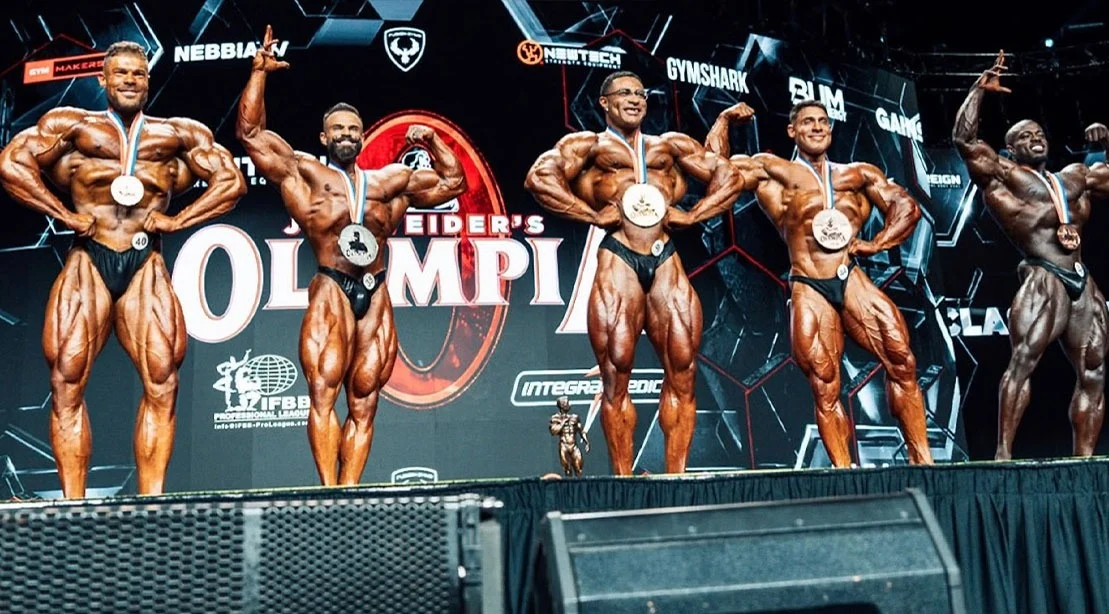
With sixty-two editions of the competition now recorded in the history books, the Mr. Olympia remains the undisputed centerpiece of competitive bodybuilding. Even as the modern landscape of fitness undergoes rapid commercial, demographic, and digital transformations, the event continues to command an unrivaled authority over the iron game. In recent years, under the stewardship of owner Jake Wood, the Olympia brand has balanced two seemingly opposing mandates: broadening its global accessibility and championing competitive inclusivity, while strictly safeguarding the elite athletic standards required to hoist the most iconic trophy in strength sports.
The pinnacle of that pursuit was underscored on Sept. 26, 2026, when Wood took to the stage to present the hallowed Sandow trophy to Nick “The Mutant” Walker, crowning him the 20th distinct champion in the contest’s storied history. The bronze likeness of Eugen Sandow has long symbolized ultimate physical supremacy, serving as an immortalizing stamp of approval for the most formidable physiques on the planet. From its inception in 1965 under the visionary direction of Joe Weider, the competition was engineered to identify the greatest of the great—a standard that active athletes maintain has never wavered.
“It’s the absolute best,” remarked Romanian Men’s Physique competitor Andrei Deiu, who has twice earned his way to the Olympia stage. “All of the best bodybuilders in the entire world meet at Olympia.”
To understand why the competition has retained this status across six decades—and where it is headed next—requires examining the structural roots of its prestige, the shifting eras of physical ideals, and the ongoing modernization of the sport.
Why Is the Mr. Olympia the Most Prestigious Bodybuilding Competition?
The prestige of the Mr. Olympia is rooted directly in the historical limitations of mid-twentieth-century bodybuilding. Prior to 1965, the sport was governed by conventions that frequently curtailed the ambitions of its top stars. Premier competitions of the era, including the Mr. America, Mr. World, and Mr. Universe, routinely barred reigning champions from defending their titles once they had won.
This policy created an artificial ceiling for the sport’s greatest pioneers. Luminaries such as Bill Pearl, Reg Park, and Larry Scott frequently found themselves with no higher summit to climb after capturing the major titles, leaving them with limited competitive options: enter an early competitive retirement or pivot entirely to the guest posing circuit. Recognizing that this structure capped the earning potential of athletes and deprived fans of seeing the best athletes continuously test themselves against rising challengers, publishing pioneer Joe Weider introduced the Mr. Olympia.
Weider’s revolutionary format provided a permanent battleground where titleholders could return year after year to defend their crowns for as long as their conditioning and physiques held up. Larry Scott seized this opportunity immediately, capturing back-to-back inaugural victories in 1965 and 1966. In the decades that followed, this open-ended dominance created legends whose sustained reigns defined the sport. The absolute benchmark for sustained supremacy remains the record-tying eight consecutive victories achieved by Lee Haney and Ronnie Coleman.
The platform was further elevated by Arnold Schwarzenegger, whose seven victories between 1970 and 1980 helped propel the Olympia from specialized athletic halls into mainstream global pop culture. Schwarzenegger’s crossover appeal paved the way for subsequent era-defining dynasties led by Dorian Yates, Jay Cutler, and Phil Heath.
While the classic era relied heavily on newsstand muscle magazine covers to build stardom, today’s landscape is steered by digital reach. Modern bodybuilding figures command massive online followings that rival mainstream sports stars. Classic Physique icon Chris Bumstead boasts an audience exceeding 26 million followers, while breakout athlete Sam Sulek, who earned his IFBB Pro card in 2025, has cultivated more than 4.5 million YouTube subscribers.
To bridge this digital reach with the traditional fan experience, event organizers have prioritized direct fan engagement. During the 2026 contest, past, present, and aspiring champions gathered at the Palms Hotel & Casino in Las Vegas to meet attendees face-to-face. Lines snaked continuously through the venue, extending from the Palms’ indoor nightclub setting out toward the poolside.
“There’s no other event like this,” said two-time Classic Physique champion and 212 contender Breon Ansley while interacting with crowds of supporters. “The world comes together. Like-minded, and with a different kind of energy.”
This distinct energy is reinforced by the strict qualification system that governs the Olympia stage. While prestigious fixtures like the Arnold Classic have substantially increased their prize purses to draw elite competitors, participation in the Arnold’s Open division is determined via exclusive invitation. In contrast, securing a spot on the Olympia stage requires meeting stringent IFBB Pro League qualification metrics, ensuring that every contender has earned their placement through active competition.
“The Arnold is great, but it’s nothing like the Olympia,” stated Open division competitor Blessing Awodibu, who has stood on both stages. “Olympia is that one show, a title that every single bodybuilder wants to win. It is not easy to earn the qualification to compete here. It shows that you’re the best in the world.”
How Has the Mr. Olympia Evolved Across Bodybuilding Eras?
While fan interactions, media sessions, and weekend spectacles remain vital components of the Olympia experience, the core of the brand’s enduring prestige remains what transpires under the stage lights.
“To me, the Olympia means the pinnacle,” Ansley emphasized. “It is essentially what we’ve been working our whole life for. The Olympia means excellence… Worldwide excellence.”
That standard has been tested and reshaped repeatedly as physical ideals have shifted across generations. Brandon Curry, who hoisted the Sandow in 2019, points to this historical lineage and the extreme difficulty of reaching the summit as the primary reasons the title remains unchallenged.
“Each champion receives the utmost respect, because each has a different journey, and represents a different signature in the sport, and none of them look exactly alike,” Curry explained.
The visual history of the Mr. Olympia reflects distinct eras of design:
- The Golden Era: Defined by symmetry, taper, narrow waistlines, and classical lines, epitomized by Schwarzenegger, Frank Zane, and Sergio Oliva.
- The Mass Monster Era: Emerging in the late 1980s and peaking through the 1990s and 2000s, this period prioritized extreme muscle density, scale, and paper-thin conditioning, spearheaded by Yates, Haney, and Coleman.
- The Modern Era: Today’s athletes face the complex challenge of balancing dense mass with structural control and razor-sharp conditioning, working to fulfill evolving judging directives and audience expectations.
Olympia Continues to Evolve in Order to Keep its Crown
Although the Men’s Open division remains the historic headliner and primary box-office draw, the modern Olympia has adapted significantly by embracing a wider variety of divisions.
The explosion of the Classic Physique division, anchored by Chris Bumstead’s dominant six-year title run, demonstrated a massive public appetite for aesthetics reminiscent of the sport’s earlier decades. Simultaneously, Ryan Terry’s four-year reign atop the Men’s Physique division has highlighted a streamlined, beach-ready vision of elite physical development.
Organizers have continued to broaden the competitive roster to mirror evolving cultural fitness trends. The introduction of the Fit Model category in 2026 provided an accessible entry point for athletes pursuing refined tone over extreme muscularity.
This expansion has also redefined the competitive balance of the weekend. Since the debut of the Ms. Olympia competition in 1980—won inaugurially by Rachel McLish—the female side of the sport has diversified substantially. Today, female divisions outnumber male divisions at the Olympia weekend, spanning categories such as Fitness, Figure, Bikini, Women’s Physique, and Wellness.
The focus on broader representation is equally evident in the Wheelchair Olympia division. In recent years, coordinated efforts between contest leadership and corporate partners have bolstered the division’s financial viability and competitive visibility.
“We’ve got more sponsorships, more prize money, and we are truly grateful,” said James Berger, winner of the 2025 Wheelchair Olympia. “That’s a lot of what kept us from wanting to compete, because traveling is hard… It costs a little bit more. But now the division is growing tremendously, and it’s top notch right now. We’re on the upswing and I can’t wait to see that it will be even better next year.”
So, What Next for the Olympia?
The strategic focus for the Olympia now centers on digital distribution, fan experience, and long-term global growth.
In 2026, organizers launched a worldwide free live stream of the Friday and Saturday evening finals. The unprecedented traffic briefly overwhelmed the host servers, causing site outages that, while challenging operationally, highlighted the massive global demand for the broadcast. Concurrently, Olympia President Dan Solomon confirmed that Joe Weider’s Fitness and Performance Expo, held at the Las Vegas Convention Center as the weekend’s companion event, set multiple all-time attendance and engagement records.
Looking ahead to next year’s competition, organizers plan to build on this momentum by returning to the Palms Hotel & Casino in Las Vegas. Beyond that, Jake Wood has raised the possibility of staging future editions of the Olympia in international host cities. Such a move would mark the first international Mr. Olympia since Helsinki, Finland hosted the event in 1992.
The ancillary weekend festivities are also continuing to broaden their scope. The 2026 Fitness & Performance Expo supplemented traditional bodybuilding and strength displays with an expanded roster of disciplines, including Sumo wrestling, a dedicated Spartan race course, and a skateboarding exhibition.
Underpinning these commercial expansions is an ongoing focus on community. Beyond competitive rivalries, the strength community relies on shared dedication to physical discipline across borders. To reflect this ethos, Solomon revealed that the Joe Weider estate is currently developing a humanitarian-oriented Olympia honor designed to recognize athletes who leverage their platforms to support community causes and charitable work.
As the Mr. Olympia balances sixty-two years of competitive tradition with modern media models and inclusive competitive divisions, the platform continues to solidify its role as the ultimate arbiter of physical excellence.