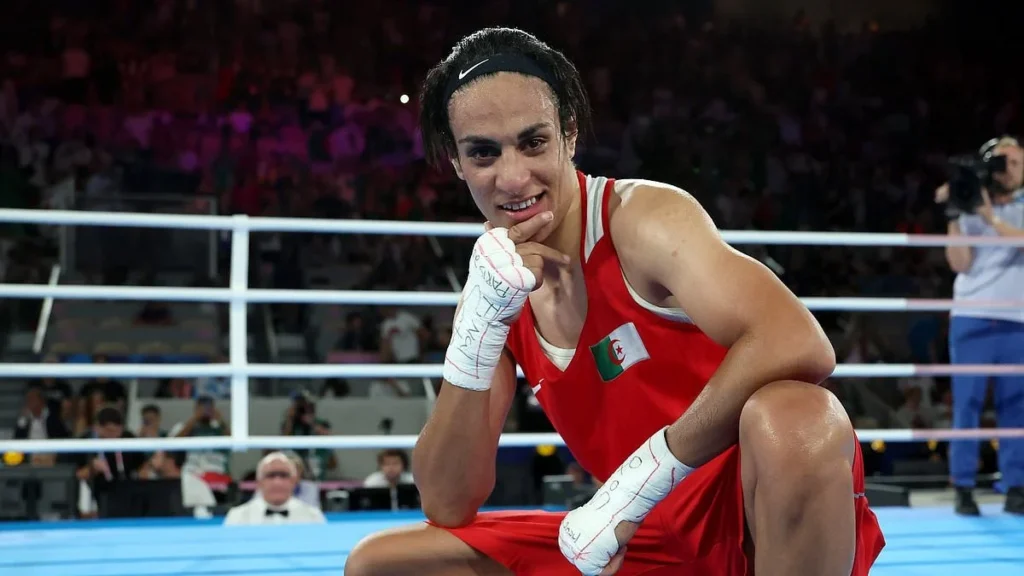
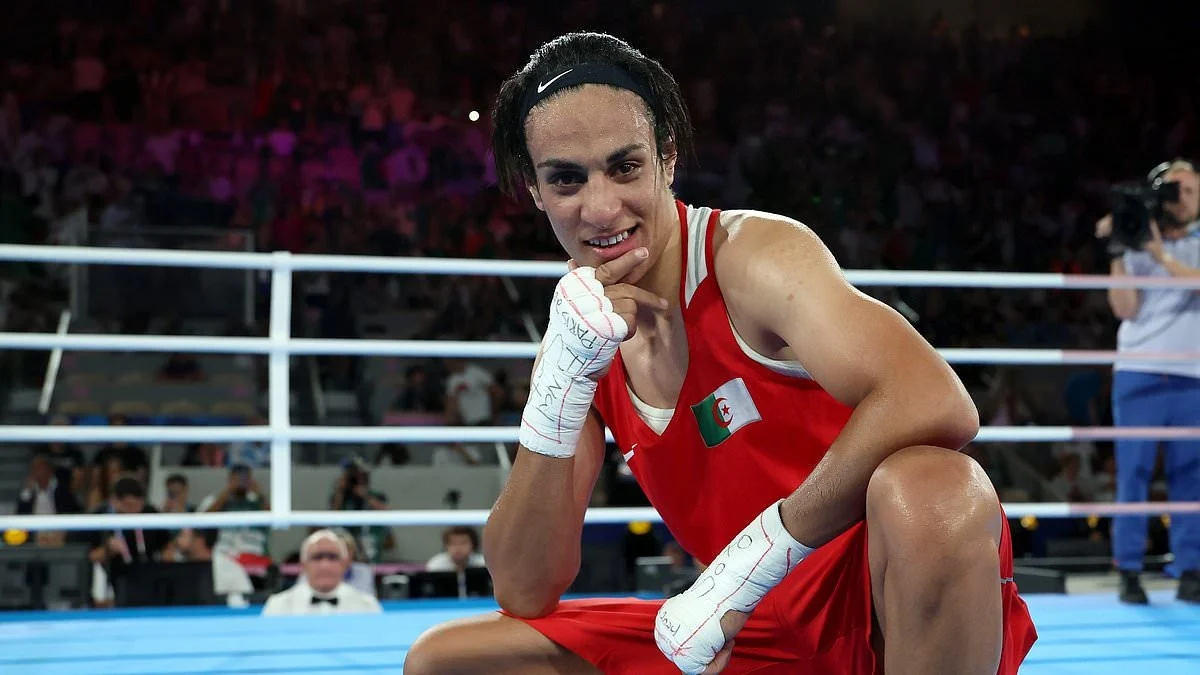
PARIS — Olympic welterweight champion Imane Khelif is preparing to make her professional boxing debut this December in Paris, embarking on a new phase of her athletic career with the stated goal of capturing a professional world championship. The Algerian fighter is scheduled to face 21-year-old Clarida Sarabia in the French capital, returning to the very city where she claimed an Olympic gold medal more than two years ago while finding herself at the center of an intense international controversy surrounding gender eligibility in combat sports.
The December bout represents Khelif’s first competitive appearance inside the squared circle in over two years, concluding an extended hiatus away from active competition that followed her triumph at the 2024 Olympic Games. For Khelif, entering the paid ranks is both a pursuit of championship honors and a significant personal milestone after a prolonged period away from competitive action. Speaking on her decision to transition to the professional arena, the 27-year-old boxer reflected on the emotional weight of her time away from the sport, expressing both relief and renewed determination as she looks toward the next chapter of her career.
"It’s been over two years since I last boxed, and I’ve really missed being in the ring," Khelif said regarding her upcoming professional debut. "The last couple of years have been quite difficult. The time has come to turn professional, and I’m going to give it my all."
The period following her gold medal victory in Paris proved to be an exhausting test of endurance outside the ring. Deprived of regular competition, Khelif spent months confronting uncertainty regarding her future in the sport while navigating the global discourse that had erupted around her identity and athletic eligibility. She described that prolonged waiting period as a quiet, internal battle, characterized by moments of doubt that were ultimately eclipsed by a resolve to return to boxing on her own terms.
"Days became weeks, weeks became months," Khelif said of her extended absence. "I waited, doubted. But deep inside, the fire never died. Behind closed doors, I kept fighting. Because this fight was never only mine. It was for everyone who dared to be, for everyone who refused to give up."
Her coaching team views the transition to the professional ranks as an opportunity to demonstrate her caliber on an elite stage. Khelif’s coach, Kamel Abdesselam, indicated that the Algerian fighter will not follow the protracted, gradual development cycle typical of many novice professionals. Given her international amateur pedigree and Olympic success, Abdesselam stated that Khelif could be positioned to challenge for a professional world title within just three to five fights. That accelerated timeline underscores the team’s confidence in her ability to establish herself quickly against established contenders in women’s professional boxing.
The matchup against Sarabia in Paris brings Khelif back to the setting of her most celebrated athletic achievement, which was simultaneously the source of extraordinary personal turmoil. During the 2024 Olympic tournament, Khelif captured the welterweight division’s gold medal, but her competitive campaign was enveloped in an unrelenting media and political storm. The dispute originated largely from an earlier decision by the International Boxing Association (IBA), which had disqualified Khelif from the 2023 World Championships after she reportedly failed an eligibility test administered by the governing body.
The controversy prompted intense examination into her biological makeup and eligibility to participate in women’s sports. Khelif possesses a naturally high level of testosterone, though she takes medication to lower and regulate those hormone levels. Further reporting and medical understanding indicate that she was born female, has lived and identified as female her entire life, but is believed to carry the SRY gene, which is typically associated with male sex chromosomes.
Despite those complex biological realities, the discourse surrounding her participation was frequently overtaken by public mischaracterizations and political rhetoric. Most notably, United States President Donald Trump repeatedly singled out Khelif on public platforms. Trump previously signed an executive order titled "Keeping Men Out of Women’s Sports" and targeted Khelif directly, referring to her as a "male boxer" who had "transitioned" and allegedly "stole the women’s gold medal" through her participation in the 2024 Games in Paris. Trump subsequently doubled down on those characterizations during a January speech delivered to Republican lawmakers, reiterating his assertion that Khelif is a male.
Those assertions, which framed Khelif as a transgender athlete who had transitioned from male to female, are incorrect based on the established understanding of her background. Khelif addressed the political attacks and misrepresentations directly in an interview with the French sports publication L’Équipe, rejecting the labels placed upon her while expressing a measured perspective on the political commentary coming from the United States.
"I respect everyone, and I respect Trump because he’s the president of the United States," Khelif told L’Équipe. "Trump cannot distort the truth. I’m not trans, I’m a girl. I was raised as a girl, I grew up as a girl, people in my village have always known me as a girl."
The broader fallout from the 2024 Olympic controversy dramatically reshaped the regulatory environment within international amateur boxing. Following the dispute, World Boxing, a newly formed international governing body seeking Olympic recognition, instituted mandatory sex testing protocols for athletes wishing to compete in female divisions beginning in 2025. Khelif has not participated in any World Boxing events since those testing mandates were introduced.
Rather than submitting to the newly established requirements under World Boxing, Khelif chose to mount a formal legal challenge. She took her case to the Court of Arbitration for Sport (CAS) in an effort to establish her right to compete in sanctioned amateur bouts without undergoing the mandated testing procedures. That legal dispute remains unresolved, with a formal hearing before the sport’s highest judicial authority still pending.
Khelif’s regulatory situation stands in contrast to that of Lin Yu-ting, the Taiwanese boxer who similarly faced widespread scrutiny during the 2024 Olympics after winning the featherweight gold medal. Like Khelif, Lin had been disqualified by the IBA in 2023, making both fighters central figures in the Olympic eligibility debate. However, Lin chose to comply with the new sex testing protocols instituted by World Boxing and was officially cleared earlier this year to participate in its sanctioned tournaments. Lin’s clearance by World Boxing cast significant doubt on the legitimacy and fairness of the initial allegations and testing methods that had sparked the international uproar over her gender in 2023 and 2024.
Even as Khelif contests World Boxing’s policies before CAS and prepares for her upcoming professional debut, she has kept the door open for another Olympic appearance. The 27-year-old hopes to defend her Olympic title at the 2028 Summer Games in Los Angeles. To do so, she will be required to submit to sex testing, following an overarching mandate universally instituted by the International Olympic Committee (IOC) governing participation in the women’s category.
Unlike her resistance to the World Boxing testing regime, Khelif has expressed complete readiness to comply with the IOC’s official requirements to secure her eligibility for the Los Angeles Games. In a February interview with CNN, the Olympic champion stated unequivocally that she would fulfill whatever mandates are placed upon her to compete at the Olympic level, while also urging sports governing bodies to adopt balanced and empathetic approaches when implementing such regulations.
"Of course, I would accept doing anything I’m required to do to participate in competitions," Khelif told CNN. "They should protect women, but they need to pay attention that while protecting women, they shouldn’t hurt other women."
With her legal battle pending at the Court of Arbitration for Sport and the regulatory landscape for Los Angeles 2028 clearly established, Khelif’s immediate focus turns to Paris and the start of her professional journey against Clarida Sarabia. After two years away from the ring, the December bout will provide the first look at whether the Olympic champion can successfully translate her amateur pedigree to the professional ranks and move closer to the world title her team envisions.