



The modern mixed martial arts fight camp is widely regarded as one of the most delicate and demanding balancing acts in all of professional sports. Behind every walkout to the cage lies a complex matrix of conflicting physiological and logistical demands that coaches must navigate daily. Strength and conditioning coaches, striking mentors, wrestling gurus, and dietitians are tasked with steering an athlete toward peak performance on fight night while simultaneously managing the punishing physical tolls of heavy sparring, grueling technical sessions, and a relentless caloric deficit aimed at making weight.
These competing pressures generate profound levels of both internal and external stress for the athlete. Compounding the challenge is the unpredictable nature of the sport’s scheduling landscape. In an ideal scenario, a training camp spans eight to ten weeks, affording coaches ample time to build a structured progression. Yet, the realities of professional combat sports often mean athletes accept bouts on short notice—sometimes with as little as a fortnight to prepare—forcing support teams to adapt on the fly.
For strength and conditioning professionals, these hurdles demand a fundamental shift in mindset. Long-term, rigid periodization models rarely survive contact with a chaotic MMA schedule. Instead, coaches must pivot toward managing acute fatigue, prioritizing high-intensity, low-volume work, and integrating energy-system-specific conditioning that seamlessly complements the athlete’s work on the mats. This agile approach ensures that fighters maintain essential qualities like strength, power, and tissue tolerance even as the relentless demands of a camp threaten to erode them.

Managing Fatigue in the Midst of Chaos
Fatigue management stands out as arguably the most critical component of physical preparation during a fight camp. An MMA athlete’s time and energy are finite resources, making the efficiency of every training session paramount. However, effective fatigue management extends far beyond drafting a scientifically sound training program; it requires a deep understanding of the sport, constant and transparent communication, inherent flexibility, and the clever utilization of available technological resources.
A persistent structural hurdle in mixed martial arts is that training camps often operate in fragmented silos. Unlike traditional team sports operating under a unified organizational umbrella, an MMA fighter’s entourage frequently lacks a central hub. The sport coach, the strength coach, and the dietitian may operate independently, sometimes unaware of one another’s broader strategies. Even within a single gym, athletes frequently employ external strength coaches or seek out specialized technical training in disciplines like Brazilian Jiu-Jitsu or wrestling elsewhere. Consequently, critical lines of communication often rely solely on the athlete, creating blind spots in the overarching preparation framework.
Overcoming these communication gaps requires proactive inquiry. Asking targeted questions regarding the ongoing weight cut, daily sparring volume, sleep quality, and recovery metrics allows coaches to extract maximum value from every session. Because athletes typically train in some capacity at least six days a week, the precise placement of strength and conditioning sessions dictates the overall harmony of the schedule. A practical understanding of the sport helps identify which mat sessions will exact the heaviest toll, enabling coaches to schedule physical preparation around high-stress combat days.

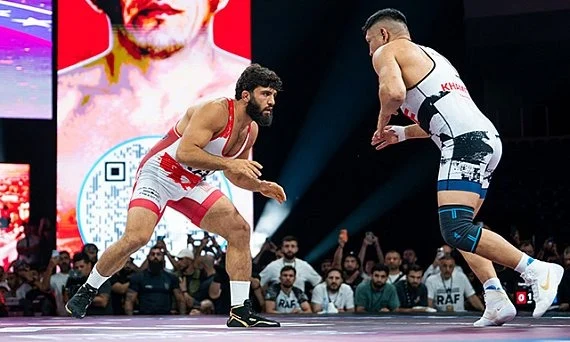
Individual stylistic preferences further complicate programming. For instance, fighters who lean heavily on wrestling often spend extensive time locked in heavy collar ties. The cumulative pulling volume required by this grappling-heavy style can cause grip fatigue to accumulate rapidly and linger far longer than anticipated. Recognizing such sport-specific wear and tear requires coaches to continuously reevaluate and tailor their programs to match the individual’s unique fighting identity.
Modern wearable technology offers another vital layer of insight. Continuous tracking of metrics such as resting heart rate, heart rate variability, sleep scores, and overall training load provides an objective window into how an athlete’s physiological system responds to cumulative stress. This data empowers coaches to exercise necessary flexibility. When an unexpected, grueling sparring session leaves an athlete depleted, or when wearable metrics reveal a substantial, multi-day drop in heart rate variability, coaches can dynamically alter the session. Swapping heavy external loads for short, unresisted sprints or reactive broad jumps, for example, allows the athlete to continue developing power output without accumulating the systemic fatigue associated with loaded barbell work. Furthermore, utilizing subjective intensity parameters rather than rigid rep-max numbers accommodates the daily fluctuations in perceived difficulty that fighters inevitably experience.
Structuring Strength and Conditioning
Given the crowded nature of a fight camp schedule, seasoned coaches have found optimal results by programming just two total-body strength sessions per week, occasionally supplemented by a third optional day dedicated to low-level aerobic conditioning. This secondary session serves a dual purpose: it acts as an active recovery tool that promotes blood flow and tissue remodeling, while also assisting the weight-cutting process without introducing high-impact joint stress. While traditional MMA culture often prizes old-school roadwork, stationary bikes or other low-impact modalities achieve the desired cardiovascular and metabolic outcomes without the compounding wear and tear of pavement pounding.

During the primary strength days, the emphasis remains squarely on high-intensity, lower-volume work that gradually evolves over an eight-week cycle. Prioritizing high-intensity nervous system engagement allows fighters to maintain raw strength and build explosive power without packing on unnecessary muscle mass during a demanding weight cut. Research into short-term training blocks demonstrates that concentrated, low-volume strength and power protocols can yield significant improvements in countermovement jump performance, sprint speed, and overall upper- and lower-body strength without causing undesirable increases in total body mass.
Training Progression Across the Camp
In the early stages of a fight camp, programming typically prioritizes heavier force production, power development, and broader glycolytic conditioning. Coaches frequently integrate loaded power movements, moderate-to-heavy lifts operating at roughly 70 to 80 percent difficulty, and extended conditioning intervals to lay a robust physical foundation.
As the camp progresses, however, the hierarchy of demands shifts decisively. Technical drilling, hard sparring, and the acute demands of weight management begin to dominate the athlete’s calendar. To mitigate excessive fatigue and prevent overtraining, strength and conditioning protocols naturally transition toward higher-velocity movements utilizing lighter overall loads. From a mechanical standpoint, this involves reducing the cumulative eccentric load by pairing max-effort isometric variations with explosive plyometrics like box jumps.

On the conditioning side, intervals shift away from generalized aerobic work toward precise, sport-specific energy system demands. Time-motion analyses of professional MMA bouts have established clear work-to-rest ratios, revealing that typical high-intensity exchanges in the cage last approximately 6 to 14 seconds, punctuated by recovery or lower-intensity phases lasting 15 to 36 seconds. Tailoring conditioning intervals to mirror these exact physiological demands ensures the athlete’s energy system is primed for the chaotic bursts characteristic of real combat.
By the final fortnight of a camp, the heavy physical lifting is complete, and attention pivots toward tactical strategy and the culmination of the weight-cutting protocol. Sports science literature consistently supports a substantial 40 to 60 percent reduction in overall training volume during the final 12 days leading up to a fight. This tapering window is essential for allowing accumulated micro-trauma to heal, ensuring the athlete arrives on fight night fully recovered and peaking athletically. While fight week itself is notoriously frantic—rife with media obligations, promotional appearances, intense weight-management protocols, and travel—non-technical physical preparation recedes into the background, with light aerobic flushing sessions used strictly to promote circulation.
The Realities of Short-Notice Competition
An ideal, uninterrupted training camp is a luxury that mixed martial arts rarely guarantees. The sport thrives on high-stakes volatility, and stepping into the cage on short notice can be a career-defining opportunity. When an athlete accepts a bout on a matter of days or weeks, the luxury of a methodical, multi-week training progression evaporates entirely. This stark reality underscores the necessity of maintaining a high baseline level of general physical preparedness and aerobic endurance year-round.

When managing short-notice assignments, coaches must resist the temptation to drastically accelerate training volume in a rushed bid to build fitness. Because technical preparation must ramp up instantaneously, overloading the athlete with excessive physical stress outside of the gym can prove counterproductive. In these high-pressure scenarios, coaches lean heavily toward a late-camp training template—focusing on targeted power development in the weight room and concise, alactic conditioning intervals that stimulate the nervous system without inviting undue exhaustion.
Ultimately, the overarching objective of any fight camp preparation is to deliver the athlete to the cage in the optimal position to secure victory. Numerous unpredictable variables inevitably surface throughout a camp, threatening to disrupt an athlete’s trajectory. By understanding the distinct demands of mixed martial arts, maintaining transparent communication channels across the entire support team, and prioritizing high-intensity, low-volume methodologies, strength and conditioning coaches can successfully guide fighters through the physical gauntlet of camp preparation.