

The 1912 Olympic marathon in Stockholm was defined by a brutal, unforgiving Scandinavian heatwave that decimated the field of competitors. Among those struggling under the oppressive sun was Shizo Kanakuri, a pioneering marathon runner representing Japan. His journey to Sweden had been an exhausting, multi-week ordeal involving travel across the Trans-Siberian Railway, leaving him malnourished, sleep-deprived, and poorly prepared for the extreme conditions. At around the 16-mile mark, physically depleted and disoriented, Kanakuri finally collapsed. He stumbled off the dusty road and into the garden of a local family hosting a party. His bemused hosts offered him shelter, and the runner sat quietly, drinking orange juice for an hour while the rest of the competitors battled toward the finish line.
Overcome with shame at his failure to complete the race, Kanakuri quietly boarded a boat back to Japan the following day without notifying Olympic officials. In Sweden, his sudden disappearance sparked decades of speculation. He became a mythical figure known as the "disappearing runner," and his name remained on the country’s official missing persons register for more than half a century.
It was not until the 1960s that a Swedish journalist finally tracked Kanakuri down to Kumamoto in southern Japan, where he was living a quiet life as a geography teacher. Recognizing the extraordinary promotional value of the story, a Swedish television station paid to fly the elderly educator back to Stockholm, ferrying him directly to the exact spot where he had abandoned the course five decades earlier.
In March 1967, Kanakuri finally trotted across the finish line, completing the 1912 Olympic marathon with an official time of 54 years, eight months, six days, five hours, 32 minutes, and 20.3 seconds. The event carried absolutely no sporting significance, yet it captured the public imagination. It was a charming, highly marketable human-interest story that filled newspaper columns, occupied broadcast schedules, and satisfied the commercial appetite of the media.

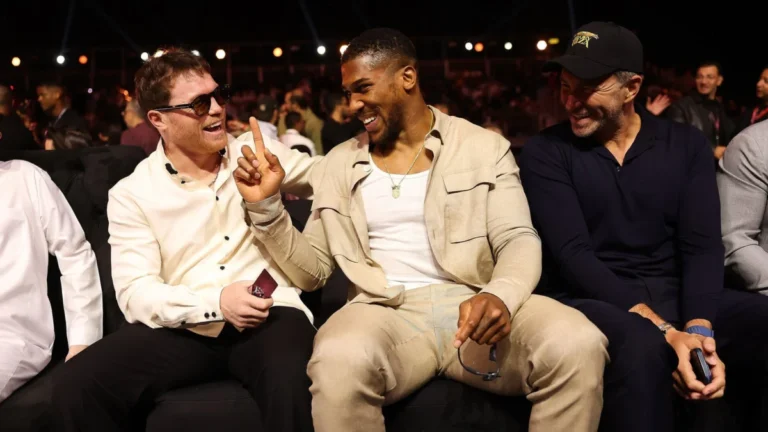
This circuitous historical anomaly serves as an ideal metaphor for the impending heavyweight clash between Tyson Fury and Anthony Joshua. The highly anticipated bout is frequently criticized as happening far too late, scheduled long after both the 38-year-old Fury and the 36-year-old Joshua have passed their absolute athletic primes. It has been years since either fighter has defeated a reigning opponent of elite, world-class pedigree, creating a promotional delay so prolonged that it makes the agonizing build-up to the Floyd Mayweather Jr. versus Manny Pacquiao fight look impulsive.
Yet, to view the delay of Fury versus Joshua as a administrative failure is to misunderstand the modern boxing industry. The fight is happening precisely when the business dictates it should: at the exact intersection of maximum commercial value and minimal athletic risk. Had the match been made in 2021, when both men held world titles, the stakes would have been perilously high. An undisputed championship, undefeated records, and lifetime legacies would have been placed at immediate risk.
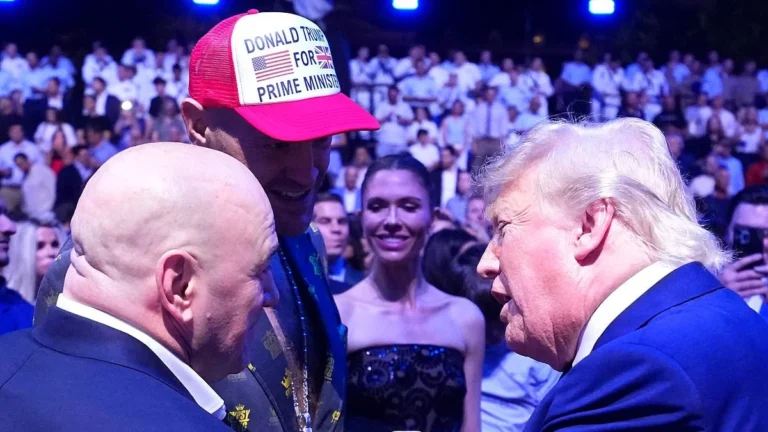
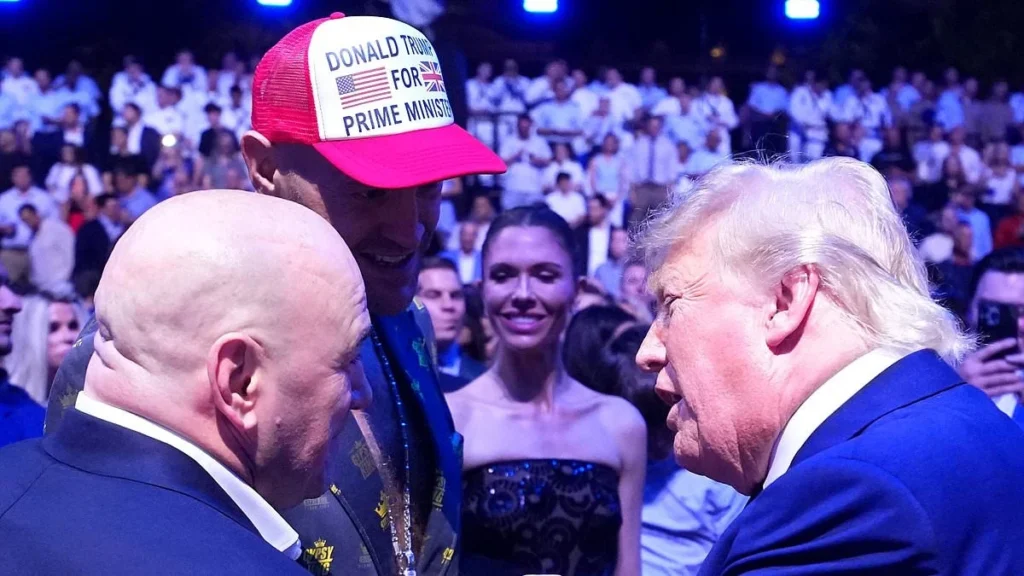
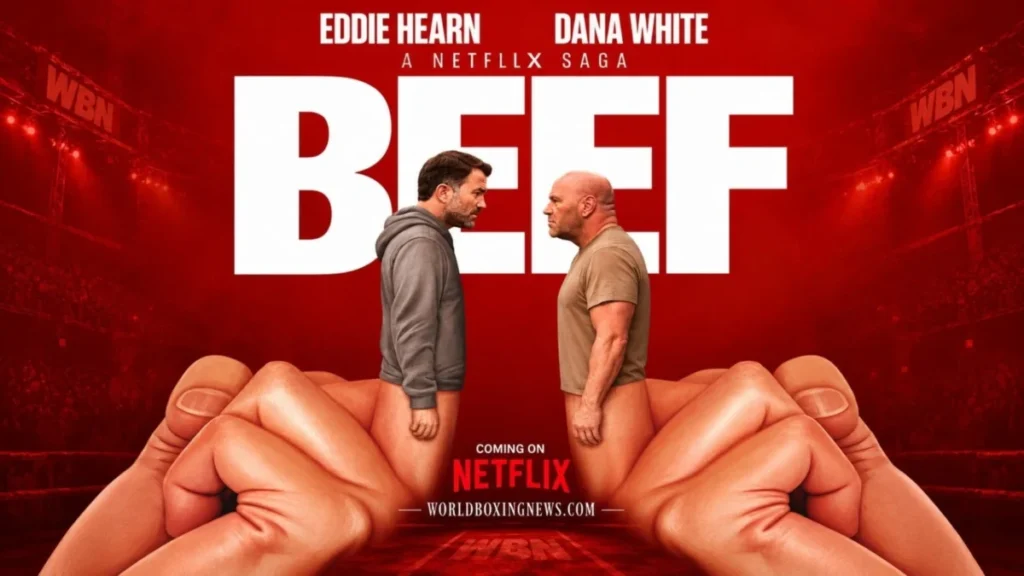
By contrast, staging the fight today eliminates that genuine sporting jeopardy while preserving the immense public appetite. Conversely, waiting until 2031 would render the event an undeniable novelty act, a fairground attraction that not even the combined promotional efforts of Frank Warren, Eddie Hearn, Dana White, and Saudi Arabia’s Turki al-Sheikh could sell as a legitimate athletic contest.
The fight must happen now, at the precise moment before the public completely loses interest. Like a skilled merchant extracting the highest possible price for fruit on the very verge of spoiling, the boxing industry is operating at its highest financial efficiency. The financial logic is undeniable. In April 2016, Joshua famously remarked that the matchup would happen "at the right time." At that point, a fight with Fury would have generated only a fraction of the estimated £150 million purse it commands today. In the unique economy of professional boxing, prolonged absence only serves to make the eventual payout larger.
This calculated avoidance of competitive immediacy is often treated as a minor inconvenience by fans, rather than the systemic malfunction it truly represents. Virtually every other major sport is organized around the fundamental principle that the best competitors must regularly face one another to determine a true champion. Leagues, governing bodies, and tournament structures exist specifically to mandate these confrontations.
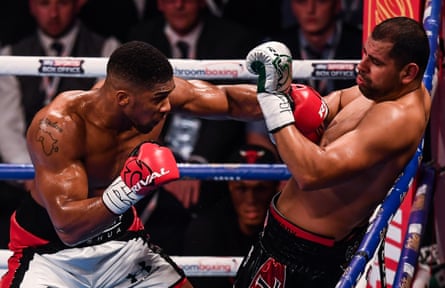
Boxing remains the prominent exception to this rule, raising the legitimate question of whether it can still be classified as a sport in the traditional, codified sense. Instead, it operates as a decentralized entertainment industry where matchmaking is governed by risk management and television license fees rather than meritocratic rankings.
For years, Fury has attempted to shift the blame onto Joshua for the failure to finalize the fight earlier, presenting himself as an eager participant who has spent his entire career waiting for the opportunity. This narrative, however, conveniently overlooks the significant self-inflicted disruptions that have characterized Fury’s career. His timeline includes a two-and-a-half-year absence from the ring to resolve a complex mixture of anti-doping charges, recreational substance abuse, and severe mental health struggles.
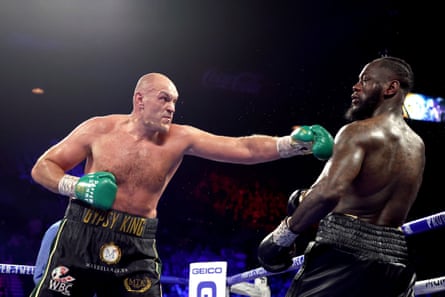
Following his return, Fury spent another two and a half years locked in a grueling trilogy with Deontay Wilder—a rivalry fought not only in the ring but also in the courtroom, where legal arbitration forced a third bout and derailed a previously agreed-upon unification fight with Joshua in Saudi Arabia. While the Wilder trilogy provided spectacular drama, it also served to delay other era-defining matchups, leaving the broader heavyweight division in a state of prolonged stagnation.
Furthermore, Fury’s frequent declarations of retirement have repeatedly complicated long-term promotional planning. The heavyweight has publicly retired at least five times over the past decade, announcing permanent departures from the sport in 2013, 2016, 2017, 2022, and again during the 2025–2026 cycle. While these announcements are often dismissed as promotional posturing, they present a challenging environment for promoters trying to negotiate multi-million-dollar, multi-fight broadcast agreements.
While it is unfair to accuse any fighter who risks their physical safety of cowardice, it remains a disappointment that a matchup capable of defining a generation of British boxing is occurring only after the sporting stakes have been significantly diminished. Despite the intense promotional campaigns that will inevitably accompany the event, the fight offers few answers to the division’s lingering sporting questions. No undisputed titles will be settled, and no historical legacies will be fundamentally rewritten. Indeed, the lack of definitive stakes may actually serve the financial interests of both camps, preserving the viability of a highly lucrative rematch in the future.
The historical success of prizefighting has always relied on its ability to balance two competing identities. On one hand, it presents itself as the ultimate test of human endurance and athletic supremacy, featuring the finest combat athletes on earth. On the other hand, it embraces the theatrical traditions of pantomime, deliberately packaging conflict to maximize public consumption. The sport is at its most compelling when these two elements work in harmony.
In recent years, however, these two identities have drifted apart, dividing the sport into two separate ecosystems: one dedicated to meritocratic athletic competition, and the other driven by digital celebrity and algorithmic popularity.
In the meritocratic sphere, exceptional young talents like Moses Itauma remain largely unknown to the general public, while high-caliber domestic matchups like the heavyweight clash between Daniel Dubois and Fabio Wardley receive critical acclaim from boxing purists but fail to capture broader mainstream attention.
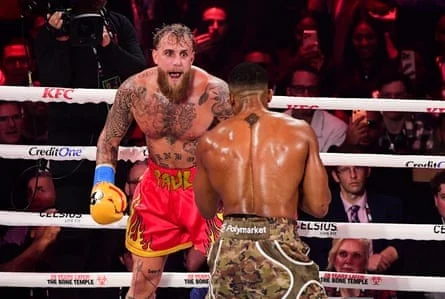
In the celebrity-driven sphere, internet personalities like Jake Paul generate massive pay-per-view audiences, while established champions seek out unorthodox crossover bouts, such as heavyweight champion Oleksandr Usyk participating in exhibitions, or legendary figures like Floyd Mayweather Jr. discussing potential bouts with long-retired icons like Mike Tyson.
The upcoming fight between Fury and Joshua sits squarely between these two realities. While broadcasters and fans may wish to believe they are witnessing the historic peak of two great heavyweights, the event is ultimately a triumph of commercial matchmaking rather than athletic necessity. Much like Shizo Kanakuri crossing the Olympic finish line decades after the race had ended, the event will generate substantial revenue, satisfy broadcasters, and fill the sporting calendar, even if the competitive moment has long since passed.