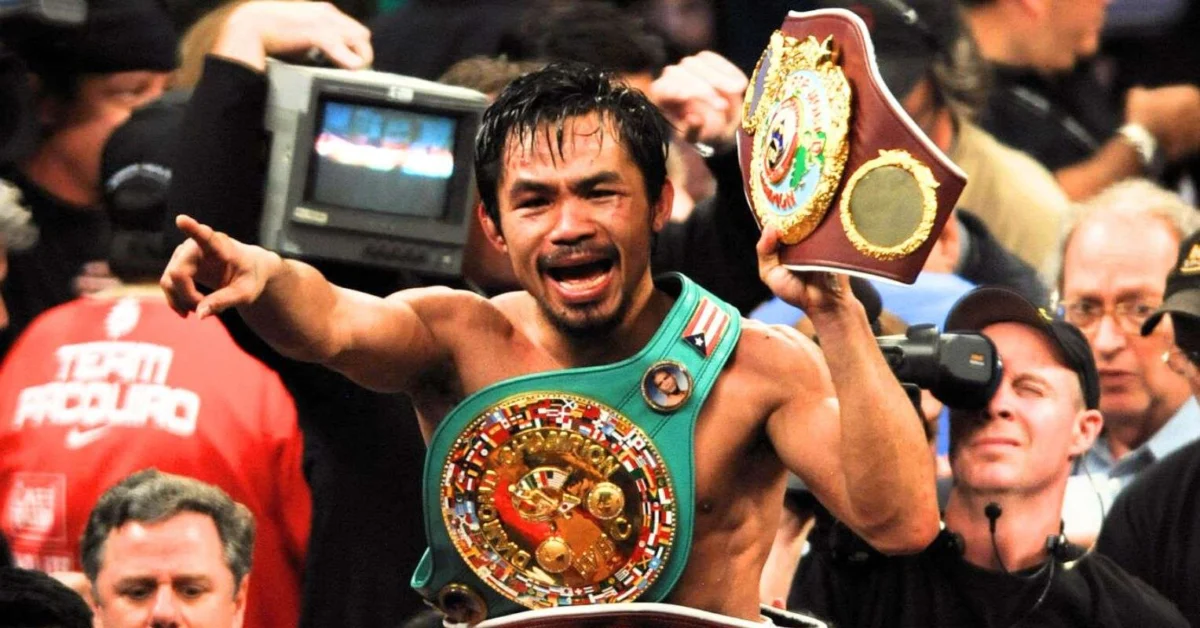
Manny Pacquiao stands as an undeniable titan in the annals of boxing history, a pugilistic marvel whose journey from the impoverished streets of the Philippines to global superstardom is the stuff of legend. Revered as the "Pacman," he transcended the sport, becoming an eight-division world champion – a feat unmatched by any other fighter. His southpaw style was a whirlwind of relentless speed, blurring combinations, and devastating power, all delivered with an aggressive, fan-friendly approach. Beyond the ropes, his humility, captivating smile, and eventual foray into politics further cemented his status as a national hero and an international icon. His name became synonymous with courage, perseverance, and electrifying performances, drawing millions to witness his every fight.
Yet, even the greatest champions often find their defining moments forged in the crucible of rivalry. For Pacquiao, his most enduring and arguably most challenging adversary was the stoic, technically brilliant Mexican warrior, Juan Manuel "Dinamita" Marquez. Marquez, a fellow multi-division world champion, was renowned for his masterful counterpunching, impeccable timing, and a granite chin. Their rivalry wasn’t just a series of fights; it was a saga, a deeply personal and hotly contested narrative woven across four epic encounters that captivated the boxing world for nearly a decade.
Their first three clashes were masterpieces of skill, will, and raw drama, each one leaving a lingering sense of unfinished business and fueling an insatiable demand for more. The initial encounter in May 2004, fought for the WBA and IBF Featherweight titles, immediately set the tone for their legendary rivalry. Pacquiao, a burgeoning sensation, dropped Marquez three times in the very first round, seemingly on the verge of an early knockout. However, Marquez, displaying incredible fortitude, not only survived the onslaught but remarkably adjusted, outboxing Pacquiao for much of the remaining rounds, using his precision counter-attacks to land scoring blows. The fight ended in a controversial split draw, a decision that left both camps feeling aggrieved and the fans clamoring for a rematch. One judge famously scored the first round 10-7 for Pacquiao instead of the customary 10-6 for three knockdowns, effectively denying Pacquiao a victory.
The second installment arrived nearly four years later, in March 2008, this time contested for the WBC Super Featherweight title. The animosity had simmered, and the stakes were higher. Pacquiao once again scored a knockdown in the third round, but Marquez rallied fiercely, landing numerous clean punches and forcing Pacquiao to fight on the back foot at times. The fight went the distance, ending in another razor-thin split decision, this time awarded to Pacquiao by the slimmest of margins – a single point on one judge’s scorecard. The verdict was met with a chorus of boos from a significant portion of the crowd, with many pundits and fans believing Marquez had done enough to secure the win. The controversy only deepened, solidifying Marquez’s belief that he was being unfairly judged against the more popular Pacquiao.
The third chapter of their epic rivalry unfolded in November 2011, fought for the WBO Welterweight title. By this point, both men were firmly established legends, and the anticipation was immense. The fight was another tactical chess match, punctuated by explosive exchanges. Marquez showcased his refined counter-punching prowess, often catching Pacquiao as he lunged forward. Many observers felt Marquez landed the cleaner, more impactful shots throughout the twelve rounds. When the judges’ scorecards were read, a majority decision was announced in favor of Pacquiao, sparking outrage among Marquez’s supporters and a significant portion of the boxing media. The decision was widely debated, with some calling it one of the most controversial in recent boxing history. Marquez was visibly frustrated, convinced he had been "robbed" for the third time. The narrative of an unaddressed injustice, a phantom victory for Marquez, became the driving force for what would inevitably be their fourth, and final, encounter.
By the time their paths converged for a fourth time on December 8, 2012, at the MGM Grand Garden Arena in Las Vegas, the atmosphere was electric with an almost primal sense of vengeance and destiny. Both fighters were in their late 30s, past their absolute prime perhaps, but neither had lost the ferocious competitive spirit or the honed skills that defined their careers. This wasn’t just another fight; it was the culmination of a blood feud, a desperate quest for definitive closure, particularly for Marquez who felt the weight of three contentious outcomes. The "rubber match" had evolved into something far more profound: a chance for redemption, a final, undeniable statement.
From the opening bell, the fourth bout lived up to its monumental billing, exploding with an intensity that defied the age of the combatants. Pacquiao, true to form, was aggressive, darting in and out, using his trademark angles and blistering combinations to try and overwhelm Marquez. He attacked the body, tried to establish his left hand, and pushed the pace. Marquez, however, was a picture of calculated patience and deadly precision. He moved subtly, absorbing Pacquiao’s initial flurries and patiently waiting for openings.
The fight took a dramatic turn in Round 3. As Pacquiao pressed forward, perhaps with a touch too much abandon, Marquez unleashed a perfectly timed, short, looping overhand right. The punch landed flush on Pacquiao’s temple, sending the Filipino icon tumbling to the canvas. The crowd erupted in a mix of shock and exhilaration. It was a significant moment, marking the first time Pacquiao had been knocked down by Marquez in their entire rivalry. Pacquiao, ever the warrior, rose to his feet, shaken but determined, and survived the round.
Undeterred, Pacquiao showcased his legendary resilience. He stormed back in the subsequent rounds, adjusting his attack and finding his rhythm. In Round 5, he landed a powerful left hand that visibly hurt Marquez, sending the Mexican legend reeling and forcing him to touch the canvas, though it was ruled a knockdown. Pacquiao seized the momentum, pressing his advantage and continuing to punish Marquez. By the end of the fifth round, Marquez’s nose was bloodied and potentially broken, and he was clearly feeling the effects of Pacquiao’s renewed assault. It appeared as though Pacquiao had weathered the storm and was beginning to assert his dominance, seemingly taking control of the fight as he had in previous encounters. The crowd was on its feet, sensing another potential Pacquiao masterclass unfolding.
But then, in the dying seconds of Round 6, everything changed in an instant that would forever be etched into boxing lore. With just one second remaining on the clock, Pacquiao, confident from his recent successes and sensing an opportunity to finish his beleaguered rival, lunged forward with a left hand. It was a characteristic aggressive move, a calculated risk he had taken countless times before. However, Marquez, with the wisdom of 42 rounds shared with Pacquiao, anticipated the precise moment. He had studied Pacquiao’s tendencies for years, trained specifically to counter that exact motion. As Pacquiao committed to his punch, Marquez unleashed a devastating, perfectly timed counter right hand.
The punch was a thing of terrifying beauty and brutal efficiency. It landed flush on Pacquiao’s chin with the full force of Marquez’s body behind it. The impact was immediate and catastrophic. Manny Pacquiao, known for his incredible chin and ability to absorb punishment, collapsed face-first to the canvas, his body going rigid, completely unconscious before he even hit the ground. The arena, moments before a cacophony of cheers and roars, fell into a stunned, deathly silence. It was a knockout so definitive, so sudden, and so dramatic that it sent shockwaves through the boxing world. Pacquiao remained motionless for what felt like an eternity, his wife Jinkee in tears at ringside, the concern palpable among everyone present. He eventually regained consciousness and was helped to his feet, but the image of him lying prone was a stark, unforgettable reminder of the brutal power of the sport. For Juan Manuel Marquez, it was the ultimate vindication, the undisputed closure he had sought for nearly a decade, finally extinguishing the gnawing feeling of being "robbed." He stood triumphant, arms raised, having delivered arguably the most dramatic and significant knockout of his era.
The impact of that knockout was profound for both fighters. For Pacquiao, it was a moment of humbling vulnerability, but also a testament to his human courage. Remarkably, he returned to the ring less than a year later, demonstrating incredible resilience. He went on to secure victories over Brandon Rios, Timothy Bradley (avenging an earlier controversial loss), and Chris Algieri, ultimately culminating in the mega-fight against Floyd Mayweather Jr. in 2015, which shattered all pay-per-view records. He continued fighting at an elite level, capturing the WBA (Super) Welterweight title from Keith Thurman in 2019 at the age of 40, thereby setting the record as the oldest welterweight world champion in history. His ability to recover from such a devastating defeat and continue to compete and win at the highest level speaks volumes about his character and enduring greatness.
For Marquez, the knockout was the crowning achievement of a stellar career. It solidified his legacy as one of Mexico’s finest, a master counter-puncher who finally authored the perfect ending to his most storied rivalry. He fought only a few more times before retiring in 2017, content in the knowledge that he had delivered the definitive statement against his greatest foe.
Now, years after that epic encounter, Manny Pacquiao is once again looking to defy Father Time and make another improbable return to the ring. He is slated to face Mario Barrios later this year, aiming to once again challenge for a welterweight world title. If successful, he would not only reclaim his record as the oldest welterweight champion but further cement his legendary status as an athlete who simply refuses to quit.
The prospect of Pacquiao’s comeback has naturally drawn opinions from across the boxing spectrum, including from his old rival, Juan Manuel Marquez. Speaking to Pro Box TV, Marquez offered a remarkably optimistic, yet cautiously analytical, perspective on his former adversary’s chances:
“If Pacquiao feels good, no shoulder, knee, or foot injuries, and he’s perfectly fine – let’s give him the benefit of the doubt. Let’s see what kind of fight he has to put up against Mario Barrios.” Marquez’s statement reflects a deep understanding of the physical toll boxing takes, acknowledging that Pacquiao’s health will be paramount. He hints at the unknown variables of age and ring rust, but also recognizes Pacquiao’s inherent capabilities.
He continued, “Will he be aggressive? Will he rely on his power? Because power is the last thing a fighter loses. Let’s give the benefit of the doubt to a historic fighter.” Here, Marquez astutely points to one of Pacquiao’s most enduring attributes. While speed and reflexes may diminish with age, punching power often remains. Pacquiao’s southpaw power, particularly his left hand, has been a weapon throughout his career, and Marquez believes it could still be a decisive factor against Barrios. He champions the idea of granting a legend the opportunity to prove himself once more.
Marquez concluded with an emphasis on Pacquiao’s intrinsic qualities: “What matters is the integrity of the fighter. Pacquiao still hits hard. Let’s see how Barrios handles that.” This speaks volumes about the respect Marquez holds for Pacquiao. Despite their bitter rivalry, Marquez recognizes the underlying integrity and warrior spirit that defines Pacquiao. He acknowledges that Pacquiao’s power is real and will pose a serious threat to Barrios, a younger, strong contender. The challenge, as Marquez sees it, lies not just in Pacquiao’s ability, but in Barrios’s capacity to withstand the enduring power of a boxing icon.
Manny Pacquiao’s journey, marked by both soaring triumphs and a few crushing defeats like the one delivered by Juan Manuel Marquez, is a testament to the indomitable spirit of a true champion. As he prepares for another historic return, the world watches with bated breath, eager to see if the "Pacman" can once again defy expectations and add another incredible chapter to his already legendary career, even as the echoes of his most dramatic rivalry continue to resonate.