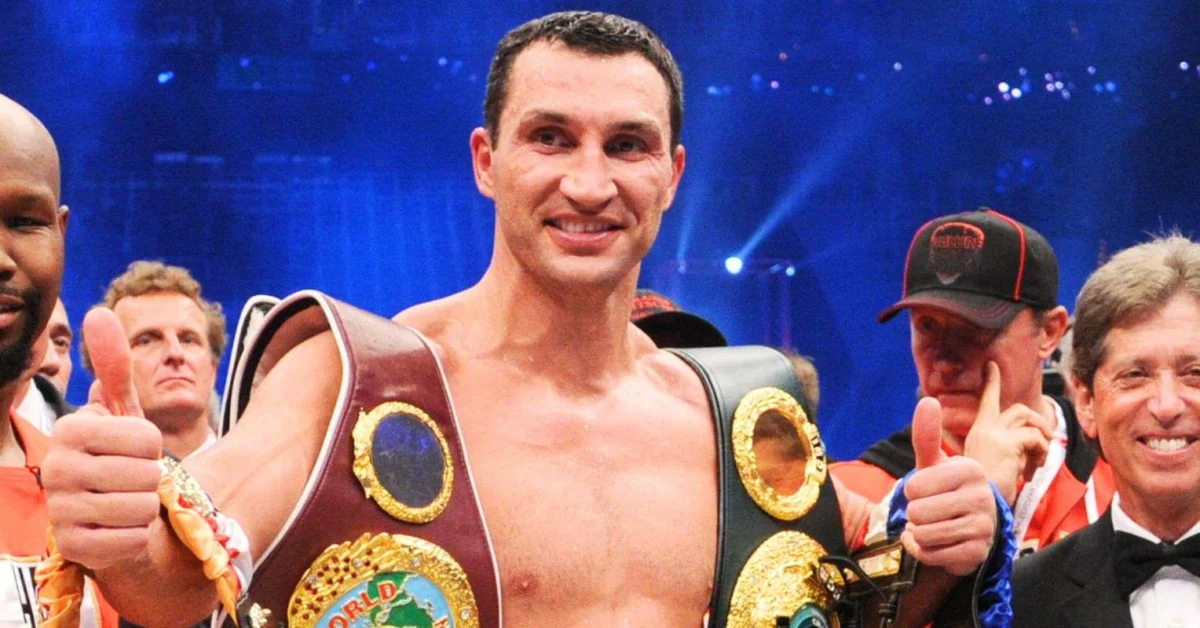
In the annals of boxing, few heavyweight reigns have matched the dominance and longevity of Wladimir Klitschko. Standing an imposing 6’6", armed with a piston-like jab, formidable right hand, and a meticulously disciplined style, "Dr. Steelhammer" carved out an era of unparalleled supremacy in the 2000s and early 2010s. Yet, before he ascended to global icon status, before he unified titles and became synonymous with heavyweight excellence, Klitschko was a raw, albeit highly touted, prospect. In 1998, a fateful night in his home city of Kyiv would deliver a brutal, unforgettable lesson, courtesy of an unheralded American journeyman named Ross Puritty, a man who would indelibly stamp his name on Klitschko’s early narrative.
Wladimir Klitschko arrived on the professional scene draped in the glory of an Olympic gold medal, secured at the 1996 Atlanta Games. His amateur pedigree was impeccable, and expectations were stratospheric. Under the guidance of his older brother, Vitali, and trainers, he quickly amassed an undefeated record, dispatching opponents with the kind of power and precision that hinted at a future world champion. By November 1998, Klitschko was 24-0 with 22 knockouts, his professional career seemingly on an inexorable path to the summit. He was the darling of Ukrainian boxing, a national hero in the making, and the fight against Ross Puritty was widely perceived as another routine stepping stone, a showcase for his burgeoning talent before bigger challenges beckoned.
Ross Puritty, on the other hand, embodied the quintessential boxing journeyman. Hailing from Arkansas, Puritty’s professional record spoke volumes about his career trajectory: a labyrinthine path littered with more losses than wins, yet punctuated by an unwavering willingness to step into the ring with anyone, anywhere. His record stood at 24 wins, 13 losses, and 3 draws coming into the Klitschko fight. He was known not for his knockout power or dazzling technique, but for an attribute far more formidable in its own way: an iron chin and relentless tenacity. Puritty had faced a litany of contenders and champions, including former WBA heavyweight champion Michael Moorer, future world champions Chris Byrd and Larry Donald (whom he had lost to earlier that year), and even a young John Ruiz. He rarely folded, often going the distance, absorbing punishment with stoic resilience. Just 29 days before his encounter with Klitschko, Puritty had secured a knockout victory over Mark Hulstrom, a rare stoppage win in a career often defined by going the distance. He was a survivor, a spoiler, and the kind of fighter who could, on any given night, make a star look ordinary.
The atmosphere in Kyiv on that November evening was electric, charged with anticipation for their undefeated hero. The arena buzzed with the confidence that Klitschko would deliver another highlight-reel knockout. The initial rounds played out precisely as expected. Klitschko, utilizing his significant reach advantage and potent jab, controlled the distance, peppering Puritty with sharp, snapping shots. Combinations followed, landing with visible force, and Puritty’s head snapped back repeatedly. Klitschko moved well, showing flashes of the dominant style he would later perfect. The Ukrainian landed power shots that would have felled lesser men, but Puritty, true to his reputation, absorbed every blow, his expression unwavering, his resolve unbroken. He kept coming forward, a slow, inexorable force, occasionally throwing a wide, looping punch that rarely connected with significance in the early going.
As the fight progressed into the middle rounds, a subtle but critical shift began to occur. Klitschko, accustomed to dispatching opponents quickly, found himself in uncharted territory. The effort required to try and put away the indestructible Puritty began to take its toll. The early expenditure of energy, combined with a potential lapse in conditioning for a longer fight, started to tell on the young Klitschko. His movements became less fluid, his punches less crisp. Puritty, meanwhile, maintained his plodding, relentless pressure. He wasn’t flashy, but he was effective, slowly closing the distance, landing body shots that sapped Klitschko’s strength and occasionally finding the mark with heavy, clubbing blows to the head. The crowd, initially boisterous, grew increasingly restless and concerned as their champion’s early dominance began to wane.
By the ninth and tenth rounds, Klitschko was visibly exhausted. His arms hung heavy, his breathing became labored, and his defensive guard, never his strongest suit in his early career, began to unravel. Puritty, sensing the shift, ramped up his aggression. His punches, while perhaps not possessing the same concussive power as Klitschko’s, were accumulating, finding a vulnerable target in the fading Ukrainian. The tenth round proved to be a turning point, a brutal awakening for Klitschko. Puritty landed a series of hard, unanswered blows, and for the first time in his professional career, Wladimir Klitschko went crashing to the canvas. He rose, visibly dazed and on unsteady legs, but the relentless Puritty was on him again, overwhelming him with a flurry. Klitschko hit the deck a second time, a shocking sight for the partisan crowd. He managed to beat the count again, surviving the round on sheer will, but the writing was on the wall. He was spent, battered, and utterly overwhelmed.
Entering the eleventh round, Klitschko was a shadow of the fighter who had started the bout. His legs were gone, his eyes glazed over. Puritty, remarkably fresh for a man who had absorbed so much punishment, stalked his prey. He cornered Klitschko and unleashed another torrent of punches. Seeing their fighter in deep distress, suffering a sustained barrage with no way to defend himself, Klitschko’s corner, led by Fritz Sdunek, made the difficult but humane decision. The white towel flew into the ring, signaling a surrender. The referee officially stopped the contest at 1:13 of the eleventh round. The arena fell into stunned silence, then a murmur of disbelief. Wladimir Klitschko, the undefeated Olympic gold medalist, had been stopped, outfought, and ultimately humbled by a journeyman. It was a shocking defeat, one of the most significant upsets of the year, and a stark reminder that even the most promising talents are not immune to the unforgiving realities of the prize ring.
For Ross Puritty, this victory was the undeniable highlight of his long and arduous career. He had proven his mettle against a future legend, defying expectations and etching his name into boxing history as the man who handed Wladimir Klitschko his first professional loss. While Puritty would never reach elite status, finishing his career with a modest record of 31 wins, 20 losses, and 3 draws, he would forever be remembered for that night in Kyiv, a testament to his grit and unwavering spirit. He continued to fight, often against challenging opposition, until his retirement in 2007, his "granite chin" remaining his most reliable weapon.
For Wladimir Klitschko, the defeat was a bitter pill, but in retrospect, it proved to be a pivotal, albeit painful, crucible that forged his championship mettle. The loss exposed critical flaws: an over-reliance on power, a lack of defensive discipline, and potential conditioning issues for longer, grueling fights. The journey back to the top would not be easy. He would suffer two more high-profile knockout losses in the early 2000s – to Corrie Sanders in 2003 and Lamon Brewster in 2004 – setbacks that threatened to derail his career permanently.
However, it was precisely these humbling defeats that forced a profound transformation. Klitschko sought out legendary trainer Emanuel Steward, a move that would define the rest of his career. Steward, a master strategist and technician, meticulously rebuilt Klitschko from the ground up. He instilled an unparalleled sense of discipline, tightened his defense, emphasized the potent jab as a range-finder and defensive tool, and perfected the "peek-a-boo" style that minimized exposure to counter-punches. Under Steward’s tutelage, Klitschko evolved into "Dr. Steelhammer," a calculated, methodical, and devastatingly effective heavyweight. He learned to manage his energy, control the ring, and deliver punishing blows with surgical precision.
From 2006 onwards, Wladimir Klitschko embarked on one of the most dominant reigns in heavyweight history, a period of sustained excellence that saw him unify multiple world titles and defend them against a generation of challengers. Alongside his equally formidable brother, Vitali, the Klitschko brothers ruled the heavyweight division with an iron fist, their combined reign lasting over a decade.
The loss to Ross Puritty, initially a source of immense disappointment and a blot on his pristine record, ultimately became a crucial chapter in Wladimir Klitschko’s story. It was the first harsh lesson, a wake-up call that forced him to confront his vulnerabilities and ultimately led him down a path of reinvention. It proved that sometimes, the most profound victories are born from the ashes of crushing defeat, transforming a talented prospect into an enduring legend. The journeyman Ross Puritty, on that cold night in Kyiv, didn’t just win a fight; he inadvertently helped to forge a champion.