
Former undisputed heavyweight champion Evander Holyfield has offered his expert assessment of the long-awaited Battle of Britain between Tyson Fury and Anthony Joshua, presenting a balanced perspective on a heavyweight clash that continues to divide opinion across the boxing landscape. Scheduled to take place on December 11 at Cardiff’s Principality Stadium in Wales, the high-stakes encounter will see the two domestic icons collide for the opportunity to claim the WBA ‘super’ world title and establish themselves as a three-time world champion.
Despite the monumental scale of the event, the upcoming showdown arrives at a nuanced phase in both combatants’ careers. Neither heavyweight is currently viewed as being in the absolute prime of his career, leading many observers to characterize the contest not as a meeting between peak champions, but rather as an overcooked matchup that nevertheless retains immense public intrigue and commercial appeal. The sense of finality surrounding the event is heightened by the widespread belief that, regardless of the ultimate result in Cardiff, either or both men could choose to hang up their gloves shortly after the bout concludes.
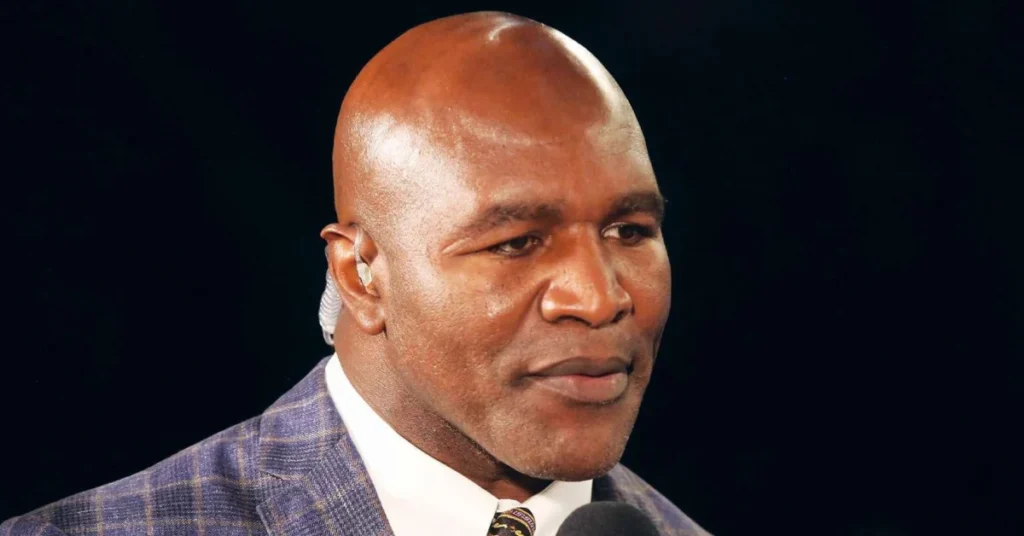
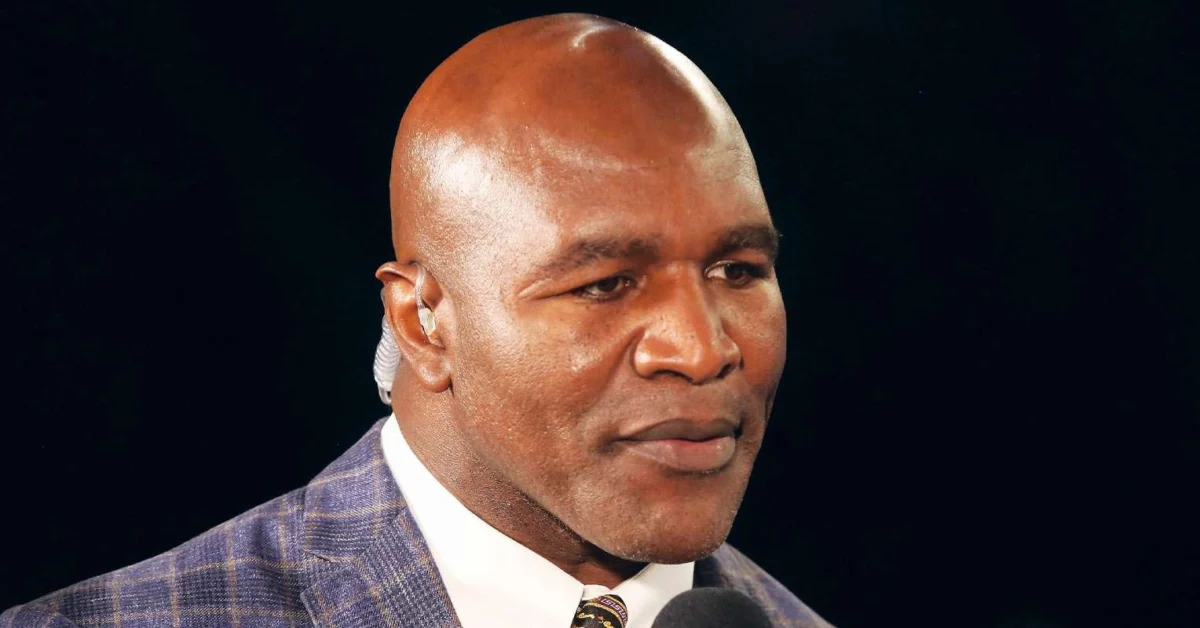
Speaking to Sky Sports, Holyfield refrained from declaring a definitive favorite, emphasizing that the outcome will depend far more on tactical execution on fight night than on past achievements or statistical advantages. The legendary American ring master, whose own historic career was defined by his ability to conquer diverse boxing styles in major heavyweight encounters, expressed deep respect for both fighters while highlighting how narrow the margins will be inside the ring.
"I like Anthony Joshua, and Tyson Fury’s a good fighter – he’s one of the only guys I’ve seen who’s shown that he can fight anybody," Holyfield stated in his assessment of the December 11 contest. The former champion stressed that at this level of elite competition, success will hinge entirely on which fighter effectively carries out the correct tactical plan under the stadium lights. "I think it [comes down to] which guy just so happens to be fighting the right fight at that time, because both guys are just that good."
Holyfield’s evaluation mirrors the central dilemma that has kept boxing analysts and fans divided since the fight was first discussed. While Fury has earned a reputation as a highly versatile and ring-savvy technician, Joshua brings devastating power capable of ending any fight in an instant. Consequently, picking a clear winner remains a formidable task, with one half of the boxing public leaning toward Joshua’s explosive punch resistance and stopping capability, while the other side favors Fury’s technical nuances and boxing acumen.
The debate surrounding Fury’s prospects is further complicated by his recent performances inside the squared circle. Throughout much of his career, ‘The Gypsy King’ established himself as an exceptionally adaptable heavyweight who could adjust his strategy to negate the strengths of virtually any opponent. Whether using his length and movement on the outside or using his weight to grind down foes on the inside, Fury routinely demonstrated a high boxing IQ capable of unraveling varied ring styles.
However, recent outings have prompted questions regarding whether the 38-year-old retains the full spectrum of those dynamic capabilities. In his last two ring appearances against Arslanbek Makhmudov and Mariusz Wach, Fury appeared noticeably more one-dimensional than in previous years. Rather than displaying the fluid footwork, constant feinting, and rapid defensive reactions that once defined his style, Fury leaned on a more rigid, straightforward approach against both Makhmudov and Wach. While he emerged with his record intact, those performances left observers wondering if age and wear have reduced his ability to shift tactics mid-fight.
For Fury to validate Holyfield’s praise and outbox Joshua, he may need to summon the high-level adaptability that characterized his finest performances, proving that his tactical instincts remain intact despite his recent, more limited displays.
Anthony Joshua’s recent trajectory presents its own set of intriguing factors and technical questions. The former champion enters Cardiff driven by the ambition to become a three-time world champion by securing the WBA ‘super’ belt, a milestone achieved by only an elite fraternity of heavyweights throughout boxing history. Yet Joshua’s path to this championship opportunity has featured significant turbulence, emphasizing both his formidable offensive tools and his lingering ring vulnerabilities.
This duality was on full display during Joshua’s most recent outing in July against Kristian Prenga. The bout produced immediate drama as Joshua was caught early, suffering two shocking knockdowns in the opening round against Prenga. The early moments of that fight exposed familiar defensive gaps, illustrating that Joshua remains susceptible to heavy incoming fire when pushed into frantic exchanges.
Despite facing early disaster, Joshua demonstrated the terrifying power that makes him a perpetual threat against any heavyweight in the world. Shaking off the early knockdowns, Joshua regrouped in the second round and landed a series of devastating punches to score a rapid second-round finish. The chaotic victory over Prenga underscored the reality of Joshua’s current profile: he remains vulnerable to clean strikes, yet possesses explosive stopping power capable of wiping out an opponent in a split second.
This dynamic creates a fascinating tactical puzzle for the Cardiff clash. If Joshua can establish his range early and land his heavy punches, his power could pose severe problems for a 38-year-old Fury whose defensive reflexes may have slowed. On the other hand, if Fury can avoid Joshua’s early power shots and exploit Joshua’s defensive flaws, his superior boxing craftsmanship could allow him to control the tempo, dictate the distance, and gradually wear down his domestic rival.
The physical realities facing both fighters add an undercurrent of tension to the event at the Principality Stadium. For years, a potential clash between Fury and Joshua was viewed as the ultimate showdown to unify the division during their peak years. The long delay in making the fight reality means that their December 11 encounter occurs well after both men reached their physical zeniths, leading critics to label the bout an overcooked matchup that arrives late in their respective careers.
Paradoxically, the physical decline and recent vulnerabilities of both combatants have arguably increased the unpredictability of the contest. During their younger years, clear cases could be made for either man’s dominance, but the current context strips away any aura of invincibility. With both fighters showing distinct flaws in their recent outings, the matchup has evolved into a genuine 50-50 affair where a single mistake or tactical adjustment could decide the outcome.
The inclusion of the WBA ‘super’ title provides substantial championship stakes to what would already be a major domestic event. Achieving a third world championship reign would serve as a career-defining validation for Joshua after experiencing major setbacks, while for Fury, capturing another world title would solidify his legacy among the defining heavyweights of his generation.
Yet the shadow of potential retirement remains a defining backdrop for the Cardiff spectacle. At 38, Fury has repeatedly acknowledged the closing window of his fighting career, while Joshua also faces a critical juncture where the result on December 11 could determine his future in the sport. With both fighters approaching the end of their boxing journeys, the Battle of Britain offers a final stage to capture heavyweight glory.
As fight night approaches, Holyfield’s assessment serves as a realistic framework for what to expect when the bell rings in Cardiff. Beyond the promotional buildup and the debate over their respective primes, the contest will ultimately belong to the fighter who best executes his strategy. Whether Joshua’s explosive finishing ability or Fury’s tactical experience proves decisive, the December 11 clash at the Principality Stadium promises to deliver a definitive conclusion to one of modern boxing’s most enduring rivalries.