

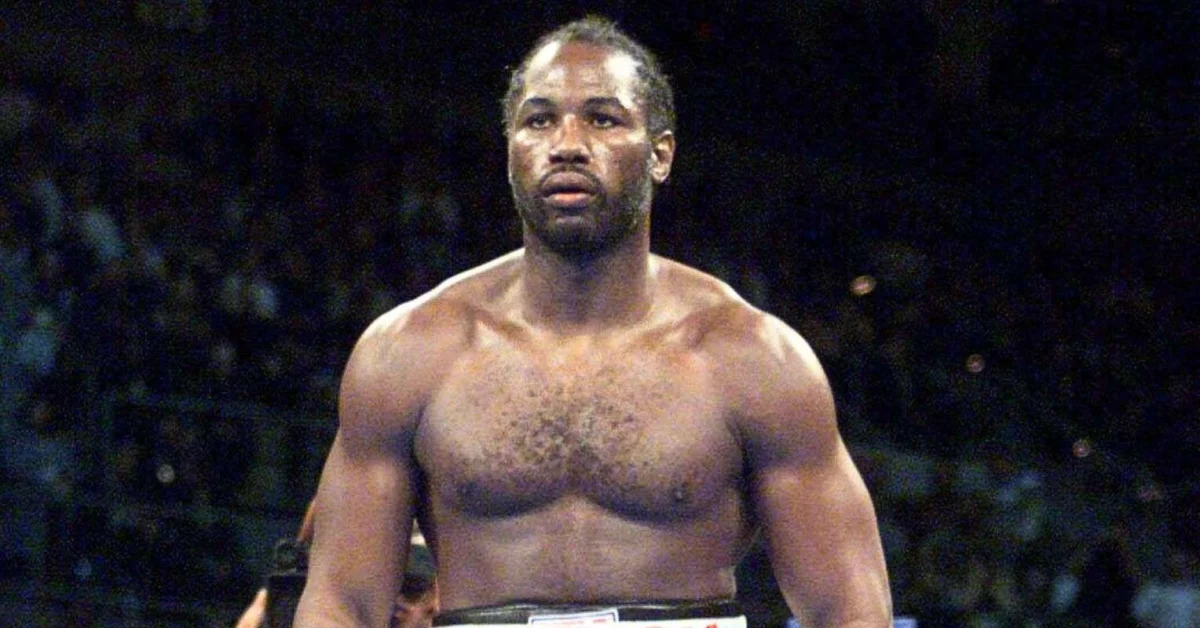
Lennox Lewis stands firmly as one of the most accomplished and dominant heavyweight boxing champions of the modern era. Standing at six-foot-five with an imposing physical frame, a surgically precise and devastating jab, exceptional defensive acumen, and a formidable ring IQ, Lewis carved out a legendary career. He eventually unified the division to become the undisputed champion, systematically defeating nearly every elite contender of his generation. Yet, the sport of boxing has long taught a merciless lesson: even the most gifted and decorated fighters remain vulnerable, particularly when the invisible trap of complacency is set and an opponent is carelessly underestimated.
That timeless lesson materialized in dramatic fashion in April 2001, when Lewis traveled to South Africa to make a routine defence of his heavyweight crown against Hasim Rahman. At the time, the bout was widely perceived by the global boxing establishment not as a perilous test, but merely as a lucrative tune-up fight. Promoters, analysts, and fans alike were looking far beyond the challenger, keeping their eyes firmly fixed on an anticipated, multi-million-dollar mega-showdown between Lewis and the fearsome Mike Tyson.
Hasim Rahman, while recognized as a talented and respectable contender with a dangerous punch, stepped into the squared circle with significant disadvantages. Crucially, he had never before fought for a world title, lacking the high-stakes championship experience that a veteran like Lewis possessed in abundance. Consequently, oddsmakers installed Rahman as a heavy 15-to-1 underdog. The consensus among observers was that Lewis would dispatch the challenger with relative ease, clearing the runway for the blockbuster Tyson encounter that loomed on the horizon.
However, behind the scenes, the preparation for the defense in South Africa had been severely compromised. Lewis, known affectionately by his supporters as "The Lion," had diverted a significant portion of his training camp schedule toward filming a motion picture. This distraction meant his physical conditioning and focus were far from the meticulous standards that had carried him to the pinnacle of the sport. Compounding the issue, Lewis arrived in Johannesburg late, leaving him painfully ill-prepared to adjust to the demanding high altitude and environmental conditions of the region.
In stark contrast, Hasim Rahman approached the assignment with absolute professionalism and unrelenting hunger. Rahman arrived in South Africa well in advance, allowing his body to fully acclimatize to the altitude and climate while he dedicated himself entirely to the task of a lifetime. He entered the ring on fight night focused, conditioned, and fiercely determined to defy the overwhelming odds stacked against him.
As the opening bell sounded and the early rounds unfolded, the consequences of Lewis’s disrupted preparation became glaringly apparent. The champion looked uncharacteristically sluggish, flat-footed, and lethargic, lacking the crisp timing and fluid movement that usually defined his performances. Rahman capitalized on the opening, pressing the action and growing more confident with every passing minute as he realized the champion was vulnerable.
The turning point of the fight arrived in the fifth round. Rahman spotted an opening and threw a thunderous, clean overhand right that caught the champion flush on the jaw. The impact was devastating. Lewis went down hard to the canvas, crashing heavily with no visible defensive reaction. He was knocked out cold, unable to beat the referee’s count as the arena erupted in sheer disbelief.
The result instantly reverberated across the global sporting landscape, going down in history as one of the most astonishing upsets in heavyweight boxing annals. Rahman was crowned the new unified heavyweight champion of the world, thrusting himself into the global spotlight.
While Rahman’s reign at the top proved to be brief—as Lewis exercised his contractual rematch clause later that same year and decisively reclaimed his titles with a brutal knockout—the initial upset remained a profound cautionary tale. It stood as an enduring reminder of the perils of complacency and the reality that in the unforgiving environment of professional boxing, a single punch can alter the course of history in a fraction of a second.
Reflecting on the dramatic two-fight saga and the profound psychological impact it left on his career, Lewis later opened up about the lowest moment of his professional journey and the grueling path to redemption.
"When Hasim Rahman knocked me out in 2001, it was the lowest point of my career," Lewis later said. "I’d been champion, undefeated for years, and I got careless. People said I was done, that I’d never get the title back. I took it personal, he talked about my mom, my life, and I couldn’t let that stand."
The bitter taste of defeat and the intense public scrutiny fueled a ferocious drive within the former champion as he prepared for the inevitable rematch. The stakes were no longer just about reclaiming a lost belt; they were about restoring a legacy that had taken a lifetime to build.
"Training for the rematch was hell, I had to prove I wasn’t a fluke," Lewis explained. "When I knocked him out in the fourth round, it wasn’t just about the belt, it was about showing the world I could come back from a loss and still be the best. That’s what boxing is: you fall, you rise."