

When it comes to forging a powerful lower body, sculpting balanced leg musculature, and elevating overall functional stability, few movements rival the classic lunge. Yet, even among seasoned gym-goers and elite athletes, a persistent debate remains regarding the subtle yet significant variations of this staple exercise. Specifically, fitness enthusiasts often wonder about the precise differences between the forward lunge and the backward lunge, and how each variation uniquely impacts muscle development.
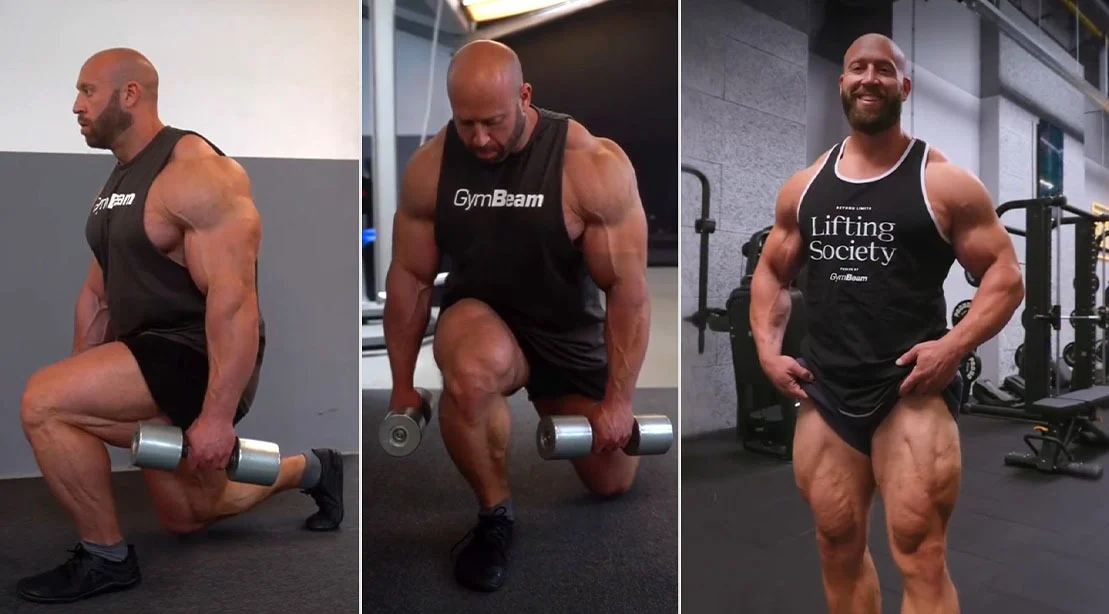
To shed light on the mechanics of these lower-body movements, IFBB Pro, endurance athlete, and transformation coach Petar Klancir recently took to social media to break down the anatomical details. In an instructional post shared with his massive following, the professional bodybuilder examined the distinct biomechanical profiles of both exercises, offering valuable insights into how fitness enthusiasts can optimize their leg training routines.
What Is the Difference Between Forward and Backward Lunges?
"What is the difference?" asked Petar Klancir, widely known to his audience as the Croatian Colossus. Having built an expansive Instagram following of more than one million users through his highly informative training demonstrations, Klancir frequently uses his platform to demystify complex lifting mechanics for everyday fitness enthusiasts.
In essence, both the forward lunge and the backward lunge belong to the category of compound movements. This means that both variations tax multiple muscle groups simultaneously, making them exceptionally efficient additions to any lower-body regimen. Whether an athlete chooses to lunge forward or backward, the exercise invariably engages the quadriceps, hamstrings, calves, and core musculature, while also requiring dynamic flexion at the hip joints.
However, as Klancir demonstrated in his breakdown, the crucial variable lies in the specific emphasis placed on each muscle group. While the primary movers remain largely consistent across both exercises, the direction of the movement shifts the biomechanical load, altering how the muscles are recruited and ultimately how they build and strengthen the legs over time. Understanding these nuanced differences allows athletes to tailor their workouts to address specific muscular weaknesses or aesthetic goals.
The Benefits of Forward Lunges
To fully appreciate the unique value of the forward lunge, one must examine the specific mechanics that govern the movement. According to Klancir, stepping forward fundamentally changes how the body interacts with gravity and momentum during the exercise.
"Front step lunges target the quads more, due to the mechanics of the exercise," explained Klancir. "The emphasis is on stepping forward, which requires the quads to control the impact of the foot’s landing. And there is a high degree of flexion."
During a forward lunge, the quadriceps take on the overwhelming majority of the physical load. Because the body is moving forward and downward, the quadriceps muscles are forced to actively decelerate the forward momentum of the body upon impact. Following this deceleration phase, the quads must then contract forcefully to lift the entire center of mass upward and backward, returning the body smoothly to the standing starting position. This combination of heavy eccentric loading—lowering the body under control—and concentric lifting makes the forward lunge a premier choice for developing quadriceps size, strength, and functional resilience.
Despite its undeniable effectiveness for quad hypertrophy, the forward lunge requires careful attention to execution to safeguard the joints. To avoid undue stress on the knee joint, fitness practitioners must be mindful of their stride length. Stepping out excessively far forward can compromise joint alignment and place unnecessary pressure on the patellar tendon. At the deepest point of the lunge, the front knee should remain positioned just slightly ahead of the chin, maintaining a safe and efficient vertical line of travel.
The Benefits of Backward Lunges
In contrast to its forward-stepping counterpart, the backward lunge shifts the biomechanical emphasis toward the posterior chain, offering a distinct set of advantages for lower-body development.
"Back step lunges target the glutes and hamstrings," noted Klancir, attributing this muscular shift to the "emphasized hip-hinge movement" inherent in the reverse variation.
When executing a backward lunge, the mechanics alter the way the load is distributed across the lower body. Because the stepping leg moves backward away from the torso while the front foot remains stationary, the hips naturally initiate a hinge pattern. This structural shift allows the glutes and hamstrings to engage more deeply, taking over a larger share of the workload compared to the quadriceps-dominant forward lunge.
Furthermore, reverse lunges are frequently regarded by trainers and physical preparation coaches as more accessible or easier to execute for individuals with certain mobility or stability limitations. Because the front foot remains firmly planted flat on the floor throughout the entire movement, the body enjoys a much more stable foundation of support. This enhanced stability reduces the demand for intense core balance, allowing the lifter to focus purely on muscular recruitment rather than stabilization. Additionally, reverse lunges are generally considered to be significantly more forgiving on the knees, as the load is shared more equitably and shifted toward the robust musculature of the hamstrings and glutes.
To maximize the biomechanical efficiency of the backward lunge, Klancir emphasizes the importance of proper alignment. Practitioners should keep the front foot entirely stable, ensuring that the front knee remains stacked directly over the ankle at all times during the descent and ascent.
For athletes looking to design a complete, well-rounded leg blaster workout, Klancir suggests incorporating both movements into a single routine by placing a strict focus on pristine form and controlled execution. Once a lifter has mastered the foundational movement patterns and feels completely comfortable with their foot placement during both forward and reverse variations, they can progressively overload the muscles to stimulate further hypertrophy. This can be achieved safely and effectively by introducing a pair of dumbbells to the overall training load, challenging both the primary movers and the core stabilizers to new heights of strength and endurance.
Fitness enthusiasts interested in viewing the original instructional video and following Petar Klancir’s ongoing training content can find his updates on his official Instagram profile.