


In the punishing landscape of professional combat sports, a single defeat can shatter a fighter’s confidence, alter their career trajectory, and prompt difficult questions about the future. For most athletes, a string of losses is an unmistakable signal to hang up the gloves. Yet, Russian heavyweight Ivan Aratsky inhabits a different reality entirely. Across a bruising career spanning both professional boxing and mixed martial arts, the 30-year-old has accumulated 32 recorded defeats without a single victory to his name. Despite a statistical record that would have forced almost anyone else into permanent retirement, Aratsky continues to lace up his boots, climb through the ropes, and step into the cage, embodying a level of persistent defiance that has baffled and concerned observers in equal measure.
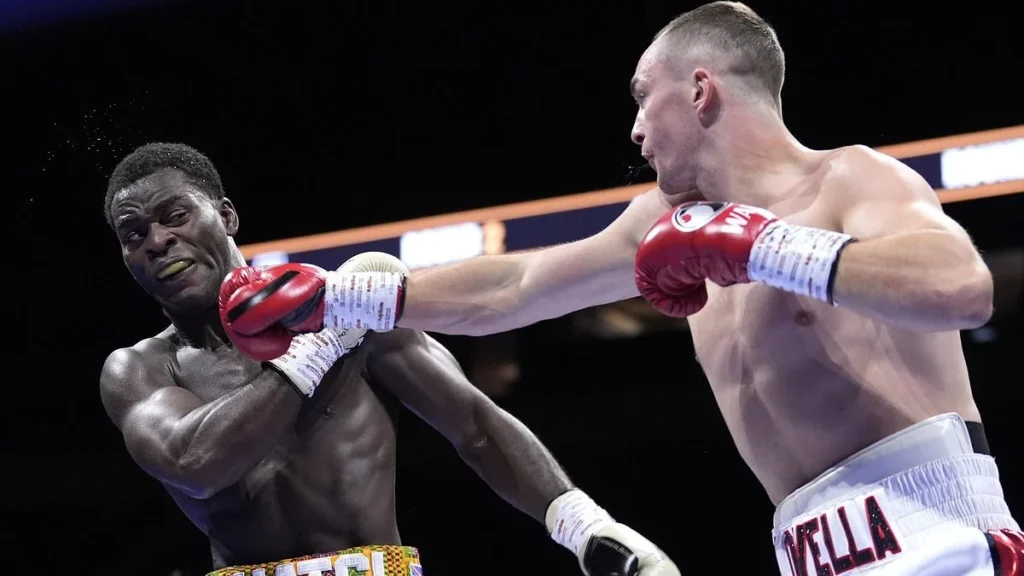
Recent documentation by World Boxing News has highlighted the extraordinary nature of Aratsky’s losing skid, bringing renewed attention to the sheer speed and frequency with which his bouts conclude. Within the squared circle of professional boxing, Aratsky’s career is defined by 14 defeats. Every single one of those losses has come by way of knockout or technical knockout, and remarkably, every single one of them transpired in the opening round.
The brevity of these contests is particularly striking. Nine of Aratsky’s 14 boxing matches have ended in under 60 seconds. These rapid stoppages mean that the Russian heavyweight is routinely denied even the most basic opportunity to establish a rhythm, find his range, or settle into the flow of a competitive bout before the referee is forced to wave off the action. His transition to mixed martial arts offers no statistical sanctuary. According to combat sports database Tapology, Aratsky has suffered another 18 defeats in MMA without registering a win, though various regulatory nuances mean certain bouts fall outside official calculations.
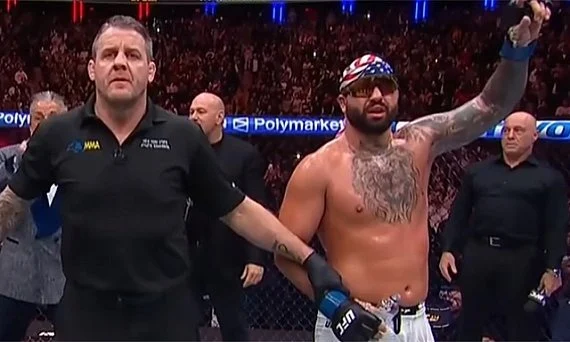
Yet, the passage of time and the accumulation of punishment have done nothing to curb his appetite for competition. Most recently, on October 10, 2026, Aratsky was back in action in Moscow, facing promotional debutant Ilya Efremov. The outcome was entirely consistent with the trajectory of his career: Efremov dispatched the veteran heavyweight via stoppage, bringing a decisive end to the contest after just 65 seconds.
A Remarkable Contradiction
For a competitor who has never experienced the sweet taste of victory in a professional bout, Ivan Aratsky carries himself with an unwavering, almost jarring sense of self-assurance. He does not project the haunted hesitation of a journeyman worn down by the sport; instead, he steps into arenas with the posture of a dangerous contender.
This duality is etched quite literally onto his skin. Aratsky’s physique is heavily adorned with tattoos, but one prominent piece of body art dominates his presentation. Across his chest, rendered in massive, bold black lettering, is the word “HARDCORE.”
It is a monumental statement for any athlete to wear across their torso, but it carries an especially poignant irony when applied to a fighter whose 14 boxing appearances have all failed to survive past the opening round, compiling a cumulative ring time that barely scratches the surface of competitive endurance. And yet, dismissing the tattoo as mere bravado would be to misunderstand the peculiar psychology of the combat sports underworld. Perhaps the ink tells a deeper, truer story about Aratsky than his bleak professional record ever could—a testament to a threshold of pain, resilience, and stubborn endurance that transcends win-loss columns.

Determination Beyond Defeat
In the brutal economy of combat sports, the human cost of a career like Aratsky’s is immense. Most fighters find it exceptionally difficult to summon the physical and mental fortitude to continue after experiencing a handful of devastating stoppage losses. To endure 32 recorded defeats across two distinct and punishing disciplines—and to continuously reject the option of walking away—requires a psychological makeup that defies ordinary comprehension.
Aratsky is intimately familiar with the most abrupt and unforgiving side of combat sports. He knows the exact sensation of having a fight brought to a sudden halt almost as soon as the opening bell echoes through the arena. He has absorbed the concussive force of elite heavyweight punches, recovered from the brink of unconsciousness, and yet, time and time again, he has found the internal resolve to return to training camps, pass medical clearances, and climb back through the ropes.
Whatever internal motivations drive Aratsky forward—whether it is a genuine love for the discipline, the camaraderie of the gym culture, or financial necessity—the sheer willpower required to keep stepping into the fire after three dozen defeats is undeniable. In that specific regard, the "HARDCORE" proclamation stamped across his chest may be far more appropriate than his match results suggest. However, a profound philosophical divide separates raw determination from the pragmatic reality of safe competition.
Time to Protect Aratsky
As Aratsky’s career extends deeper into uncharted territory, his staggering statistical record has shifted the conversation from bewildered fascination to genuine, urgent concern. The compounding accumulation of repeated first-round stoppages in boxing, when stacked alongside a mountain of defeats in MMA, paints a picture of a fighter absorbing a disproportionate and dangerous amount of physical punishment. The prospect of sanctioning and justifying further bouts for the 30-year-old heavyweight becomes increasingly difficult to defend.
World Boxing News has repeatedly raised valid alarms regarding the circumstances under which Aratsky continues to be matched against active opponents. In a sport governed by athletic commissions and regulated for the fundamental safety of its participants, there inevitably arrives a critical threshold where the collective responsibility of promoters, managers, corner men, and sanctioning bodies must supersede a fighter’s own willingness to compete.
When a competitor reaches 32 recorded defeats without a victory—featuring a staggering frequency of early knockout losses—the question is no longer about testing one’s limits. Aratsky has nothing left to prove regarding his grit, his toughness, or his willingness to face dangerous opposition on short notice. He has demonstrated that he will step up to fight whenever called upon.
Ultimately, the most resolute and genuinely "hardcore" decision Ivan Aratsky could make at this juncture in his life may not be stepping into the ring for another 65-second bout, but rather finding the strength to walk away for good.