

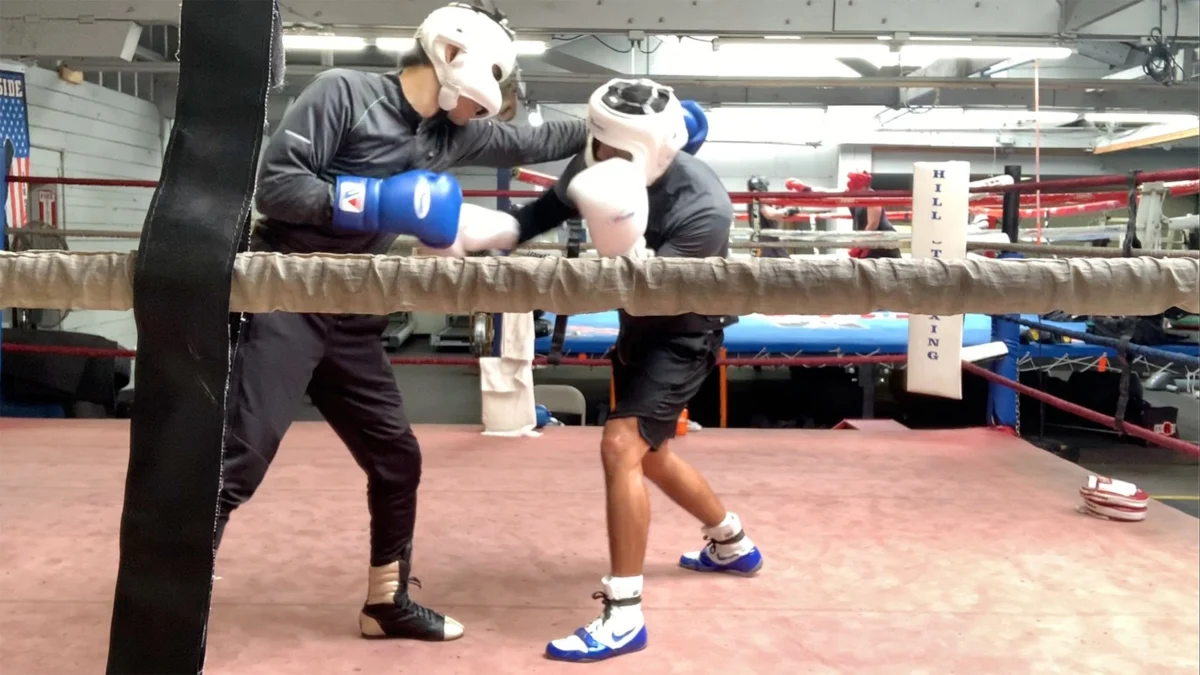
For decades, modern boxing instruction has heavily favored a specific defensive aesthetic: the flashy, distance-managing outside slip. Seen constantly on social media highlight reels and taught widely in contemporary gyms, fighters pull their heads dramatically to the outside of incoming punches, creating clear space to fire back with high-impact counter-punches. It is a style that has dominated the sport through successive eras, most notably shaped by the explosive dominance of Mike Tyson in the 1980s and later refined by the masterclass defensive wizardry of Floyd Mayweather Jr.
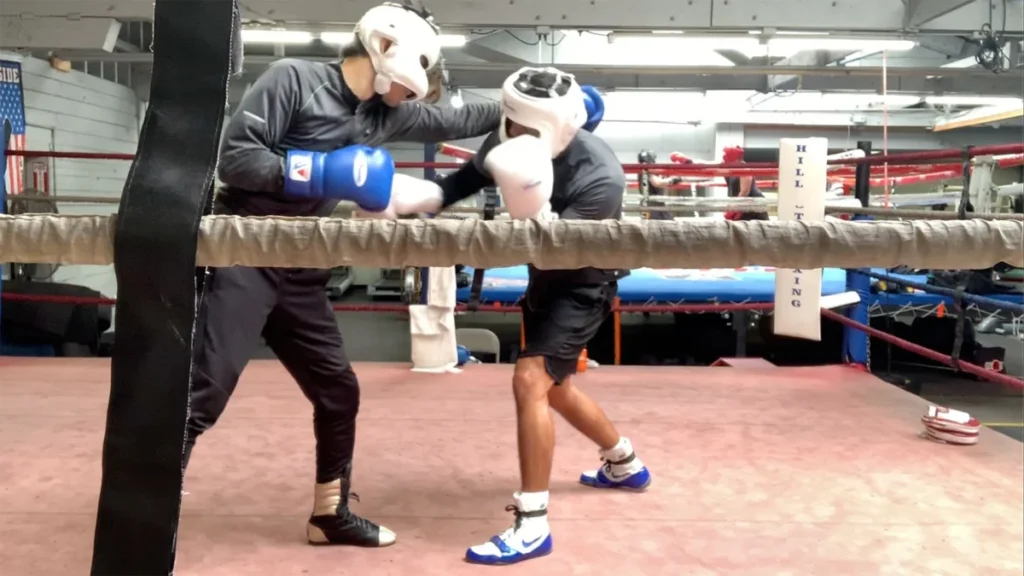
Yet, beneath the surface of mainstream modern coaching, a subtle shift is occurring. Inside slipping—a foundational, old-school defensive maneuver where a fighter moves toward the interior of an incoming strike rather than away from it—is steadily reclaiming its place in the sport. While modern recreational gyms and amateur point-scoring systems have largely marginalized the technique in favor of hit-and-run athleticism, elite technicians such as Vasyl Lomachenko, alongside legendary Soviet and Cuban-style fighters, have consistently demonstrated the devastating effectiveness of working from the inside. Far from being a modern innovation, inside slipping is an ancient pillar of the sweet science that is simply being rediscovered by a new generation of fighters.
The Historical Roots of Inside Slipping
To understand why inside slipping feels novel to many contemporary fighters, one must examine how boxing instruction has evolved over the past half-century. Historically, inside slipping was a standard, default component of a boxer’s defensive toolkit. Archival footage of old-school fighters reveals a seamless integration of both inside and outside defenses, utilized according to the tactical demands of the round.
However, the landscape of boxing instruction shifted dramatically with the rise of generational icons. Mike Tyson’s explosive emergence in the 1980s fundamentally altered public perception and gym culture worldwide. Tyson popularized a style centered on explosive outside slips, powerful head movement, and devastating knockout counter-punches delivered from a distance. Because Tyson’s style was so remarkably effective and visually captivating, boxing coaches across the globe began standardizing these methods.
For the past thirty years, the prevailing boxing curriculum has largely skipped from basic blocking straight to outside slipping, omitting the nuanced mechanics of working inside punches. This trend was further reinforced by the commercial demands of television and pay-per-view models, which rewarded flashy, distance-oriented fighters and clean knockouts. Later, the defensive revolution sparked by Floyd Mayweather popularized the shoulder roll and the Philly Shell, cementing a low-risk, outside-heavy paradigm that dominated the sport for another generation. Consequently, contemporary fighters raised within this system often view their foundational training as the absolute standard, remaining largely unaware of the rich tradition of inside combat that preceded it.
Why Inside Slipping Fell Out of Fashion
The decline of inside slipping in mainstream gyms can be attributed primarily to two converging factors: the evolution of amateur scoring systems and the shifting physical profiles of modern competitors.
In amateur boxing over the last twenty years, the prevailing strategy has leaned heavily toward a hit-and-run style. Three-round amateur bouts favor explosive athleticism, long limbs, and high-mobility fighting. Slipping to the outside produces clean, easily identifiable movements that judges can spot instantly from ringside. When a fighter pulls their head across and away from a punch, the defensive action is unmistakable.
Conversely, inside slipping is notoriously difficult for the untrained eye to evaluate. To a casual observer or a busy referee, a fighter diving inside a punch can look messy, often resembling an awkward lurch toward a clinching position. Furthermore, amateur scoring systems historically favored clean, visible blows struck from a distance rather than the gritty, high-energy exchanges that occur on the inside.
At the professional level, however, the demands of endurance tell a different story. While modern amateurs benefit from short, three-round bursts of high-speed running, professional fighters contesting twelve-round bouts often display stockier, more durable physiques designed to absorb the grueling nature of close-quarters combat. Looking further back into boxing history—when championship bouts routinely stretched to fifteen rounds—endurance was paramount. Inside fighting inherently demands less energy than constant lateral movement and running around the ring. By neutralizing an opponent’s reach and smothering their punching space, inside slipping offers a profoundly energy-efficient alternative to the physical toll of outside mobility.
Technical Advantages and Strategic Applications
Despite its absence from many modern curricula, inside slipping offers distinct biomechanical and tactical advantages that can transform a fighter’s defensive repertoire.
First, the technique is fundamentally more intuitive regarding human instinct and vision. When an opponent throws a right hand, turning the torso away from the incoming limb—the core motion of an inside slip—feels natural. Attempting to slip to the outside, by contrast, requires a fighter to turn their torso directly toward the incoming punch, a movement that often triggers a flinch reflex and feels counter-intuitive to beginners.
Additionally, inside slipping dramatically reduces the energy and athleticism required to evade attacks. While elite fighters can manage outside slips with minimal movement, achieving that level of proficiency is exceptionally difficult. Slipping inside, however, immediately compresses the distance, effectively placing a fighter in a safe zone where the opponent’s arms are too smothered to generate further punching power. Rather than expending vast amounts of energy to slip outside only to find themselves pushed further away, a fighter utilizing inside techniques can neutralize an onslaught and dictate the pace of the engagement.
From a safety perspective, inside slipping aligns with the natural flow of a strike rather than fighting against its momentum. If a fighter miscalculates an outside slip, the head moving against the trajectory of the punch often maximizes the impact, frequently resulting in a knockout. When an inside slip or shoulder roll absorbs a glancing blow, the rotation of the body rolls off the impact, significantly mitigating the damage.
Tactically, mastering inside movement unlocks entirely new dimensions in fight strategy. It serves as the most effective method for closing distance against a taller or longer opponent. Novice fighters frequently attempt to bypass a lanky opponent’s reach by slipping to the outside of the jab, a maneuver that inherently drives them backward and opens up space for the opponent’s rear cross. By slipping inside the jab instead, a fighter cuts the distance immediately, trapping the opponent in close quarters, forcing exchanges, and setting up effective body-punching rhythms.
A Lasting Tradition
Ultimately, the tradition of inside slipping never truly vanished from the sport; rather, it became obscured by the mainstream media’s preference for flashy knockouts and the dominance of outside-fighting aesthetics. Fighters seeking to master this overlooked craft need only look to historical masters like Roberto Duran, James Toney, and Bernard Hopkins, or modern technicians who seamlessly integrate inside defense into their footwork. By reintroducing inside slipping to their defensive frameworks, fighters can expand their tactical horizons, proving that true defensive mastery lies not in a single style, but in the complete command of movement in every direction.