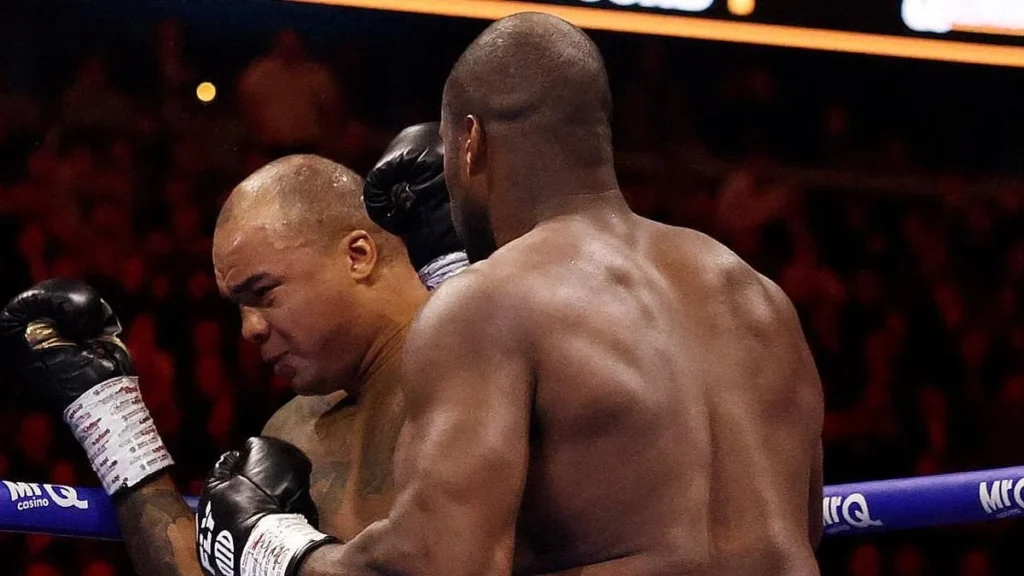


South Dakota is primed to host a compelling 147-pound title bout this Friday, November 13, as American contender Deonte Walker squares off against dangerous opponent Arnold Gonzalez with the vacant WBA NABA Gold Welterweight title on the line. The championship encounter showcases a classic boxing matchup, pitting the sharp speed, calculated footwork, and outside boxing ability of Walker against the relentless forward pressure, interior body work, and heavy-handed output of Gonzalez. With championship hardware and significant divisional momentum hanging in the balance, both welterweights enter the ring with distinct strategic paths to victory that highlight the fundamental contrasts of professional boxing.
The 147-pound welterweight division has long been defined by its demanding blend of athletic speed and concussive power, requiring contenders to possess either elite defensive craft or overwhelming physical force. This Friday’s championship clash brings those competing fight styles into direct opposition. For fight fans in South Dakota, the event offers a clear look at ring tactics, where every round will serve as a continuous battle over distance, pacing, and spatial control. The WBA NABA Gold belt represents an essential stepping stone for both competitors, offering the winner an elevated stature within the global rankings and placing them squarely in line for major opportunities in the division.
For Deonte Walker, success in this high-stakes contest will be defined by crisp technical execution, quick movement, and sharp analytical control from the outside. The American boxer relies heavily on a fluid combination of hand speed and active footwork to dictate terms inside the ring. Walker’s tactical foundation begins with his jab—a fundamental tool he uses not only to score points and measure distance, but also to disrupt his opponent’s rhythm and probe for subtle vulnerabilities in their defensive posture. By continually establishing his jab from long range, Walker aims to force his opponent into a defensive stance, gradually breaking down defensive guards and creating cleanly defined windows for quick, sharp flurries from mid-range.
Walker’s offensive output is built on timing and rapid-fire execution rather than singular, heavy power blows. When operating at his preferred distance, he excels at darting into mid-range, landing crisp combination punches, and pivoting away before his opponent can mount a counterattack. His ability to launch multi-punch combinations while maintaining balance allows him to accumulate scoring shots without leaving himself exposed to immediate retaliation. However, achieving this rhythm requires supreme physical conditioning and sharp spatial awareness, as Walker must continually calibrate his distance to stay just beyond the reach of heavy return fire while remaining close enough to strike when openings present themselves.
Despite his technical gifts, Walker faces a strict set of defensive imperatives if he is to secure victory. His entire system relies on maintaining open canvas and avoiding the perimeter of the ring. Being trapped in the corners or pinned along the ropes against a heavy hitter can prove fatal to a mobile fighter’s strategy, as it eliminates lateral escape routes and forces an inside fight. Furthermore, Walker must resist any emotional urge to engage in premature toe-to-toe exchanges. When facing a formidable puncher, the temptation to trade heavy punches in the pocket presents immense risk. Walker’s path to victory depends on discipline, adhering strictly to a hit-and-not-get-hit methodology, utilizing reset pivots, and refusing to settle into stationary exchanges.
In sharp contrast to Walker’s outside movement stands Arnold Gonzalez, a rugged and determined contender whose fighting identity is defined by aggressive, uncompromising forward movement. Gonzalez enters the matchup with an approach designed to neutralize movement through sheer physical imposition, heavy volume, and unrelenting pressure from the moment the opening bell rings. Rather than allowing Walker the space needed to establish a long-range boxing rhythm, Gonzalez will look to immediately press the action, stepping across the canvas to cut off the ring and systematically shrink the usable area available to his swift opponent.
The craft of ring cutting requires patience, defensive responsibility, and intelligent footwork. Rather than chasing a mobile fighter in circles around the canvas, Gonzalez’s objective will be to take away lateral exit angles, stepping diagonally to block escape routes and continuously pushing Walker toward the ropes and corners. By trapping his opponent against the boundaries, Gonzalez can limit Walker’s mobility and force him into close-quarters warfare. Once inside the pocket, Gonzalez’s offensive arsenal becomes particularly dangerous, as his short-range power punches and aggressive mindset thrive in tight quarters where space for defensive maneuvering is eliminated.
A primary focal point of Gonzalez’s strategy revolves around a concentrated, heavy body attack. Body punching is a proven equalizer against fleet-footed opponents, designed to sap stamina, lower the opponent’s guard, and slow down fluid movement over the course of a hard fight. By targeting the midsection early and often with powerful hooks, Gonzalez seeks to wear down Walker’s core strength and energy reserves. Every successful blow to the body acts as an investment for the later rounds, gradually reducing the agility that Walker relies upon to escape danger. If Gonzalez can successfully weaken Walker’s legs through sustained body work, the mobile boxer will find it increasingly difficult to maintain the lateral movement required to stay off the ropes.
Complementing his body attack is Gonzalez’s reliance on powerful, sweeping hooks to both the head and torso. Operating with high punching volume, Gonzalez aims to overwhelm defensive guards through sheer force and continuous work rate. By throwing punches in heavy sequence, he creates chaos inside the pocket, making it difficult for an outside boxer to find the composure needed to set up clean counterpunches. Gonzalez’s strategy is designed to transform the fight into a grueling test of physical endurance and durability, forcing Walker into uncomfortable, high-contact exchanges where power and strength take precedence over speed and finesse.
The matchup presents a classic clash of boxing styles, pitting Walker’s speed, footwork, and precise distance management against Gonzalez’s raw power, high volume, and aggressive pressure. The early rounds are expected to feature a fierce battle for control over spatial geometry and fight rhythm. Walker will attempt to establish his long-range jab early, using lateral shifts to keep the contest in the center of the ring where his speed can flourish. Conversely, Gonzalez will attempt to establish control through immediate forward movement, seeking to impose physical dominance and turn the contest into a tight, inside brawl.
The key variable in this tactical dynamic centers on distance management. If Walker successfully dictates the range, he can use his jab to control the tempo, breaking up Gonzalez’s advances before they can gather momentum. From the outside, Walker’s mid-range flurries can accumulate points and build a lead on the scorecards while minimizing physical wear and tear. However, maintaining long-range control for the entirety of a championship fight demands flawless concentration and constant movement. If Walker falters even briefly in his movement, or if he allows himself to be driven into the corners, Gonzalez stands ready to capitalize with devastating hooks to the body and head.
Beyond the mechanical contrasts, the championship fight will serve as a profound test of mental and physical fortitude for both combatants. For Walker, the challenge lies in remaining disciplined under heavy physical pressure. He must resist the urge to answer Gonzalez’s heavy punches with his own power shots in the heat of the moment, as engaging in a brawl favors the heavier puncher. For Gonzalez, the mental test involves maintaining composure and persistence in the face of rapid movement and counter jabs. Chasing a mobile opponent can lead to frustration and fatigue if punches miss their target, requiring Gonzalez to remain systematic and patient in his forward press without overextending himself into dangerous counterpunches.
As the fight progresses into the middle and late rounds, the cumulative impact of each fighter’s strategy will become increasingly apparent. If Walker’s movement and jab remain crisp, he will likely attempt to bank rounds by out-speeding Gonzalez from the outside and slipping away before damage can accumulate. However, if Gonzalez’s body attack succeeds in sapping Walker’s legs, the fight could undergo a dramatic shift in the second half. A tired boxer with compromised mobility becomes a stationary target, playing directly into the hands of a relentless pressure fighter like Gonzalez who thrives in deep, physical battles.
With the WBA NABA Gold Welterweight title on the line, the stakes could not be higher for both Deonte Walker and Arnold Gonzalez as they prepare to collide in South Dakota this Friday, November 13. Every round will test the balance between speed and strength, finesse and power, dynamic footwork and relentless pressure. Whether Walker’s quick hands and nimble footwork can out-maneuver the storm, or whether Gonzalez’s crushing hooks and body attack can break down the outside boxer, this 147-pound title showdown promises to deliver an intriguing, high-stakes battle that highlights the pure tactical essence of professional boxing.