


The modern digital sports landscape presents a fascinating paradox for emerging disciplines. These sports rarely suffer from a lack of compelling content, passionate fans, or inherent commercial potential. Instead, the primary bottleneck lies within a fragmented digital ecosystem where fans frequently discover competitions through bite-sized clips and social media content, only to find themselves forced to watch live events somewhere else entirely.
For rights holders operating outside the traditional mainstream broadcasting giants, the challenge extends far beyond merely making content discoverable across various platforms. The true test is creating a dedicated, unified destination where that initial spark of interest can be cultivated into a direct, repeatable, and economically viable relationship with the sport.
This is precisely where specialized streaming platforms can play a decisive, transformative role. By centralizing distribution, a single live tournament instantly doubles as a permanent replay catalogue, laying the groundwork for sustainable subscriptions, targeted advertising, and lucrative sponsorships. For emerging sports, streaming is not merely an alternative broadcast outlet; it is a critical growth engine that enables rights value to compound steadily over time.
SquashTV: Building a Media Product Around the Sport
The Professional Squash Association (PSA) offers a clear, real-world example of this model in action through its official streaming platform, SquashTV. Initially launched in 2010, the service was designed from the ground up as a branded digital destination anchored around the PSA’s global calendar, extensive content catalogue, and international audience.
For the sport of squash, this centralized approach creates much-needed consistency between live tournaments, giving fans a compelling, reliable reason to return week after week. Over the course of a typical season, SquashTV has generated impressive engagement metrics, including more than 2.7 million video views and over 800,000 hours of total streamed content. While these are substantial figures for a specialist sport, industry observers note that the more revealing metric is the platform’s ambitious target of achieving 16 per cent year-on-year growth in both subscribers and active viewers.
Raw viewership figures confirm that squash commands sustained attention, but consistent subscriber growth demonstrates that the platform is successfully converting casual onlookers into a durable, paying audience. For modern rights holders, the core operational question is no longer simply about how many individual eyeballs tuned into a single event. Instead, the focus has shifted to what each viewer contributes to the platform over the long term: new viewer acquisition, returning subscriber loyalty, and enduring catalogue value.
Through this strategic lens, the streaming platform evolves far beyond a conventional broadcast outlet. It becomes a comprehensive ecosystem that systematically increases user frequency, audience retention, and overall commercial value.
From Event Coverage to an Owned Audience Relationship
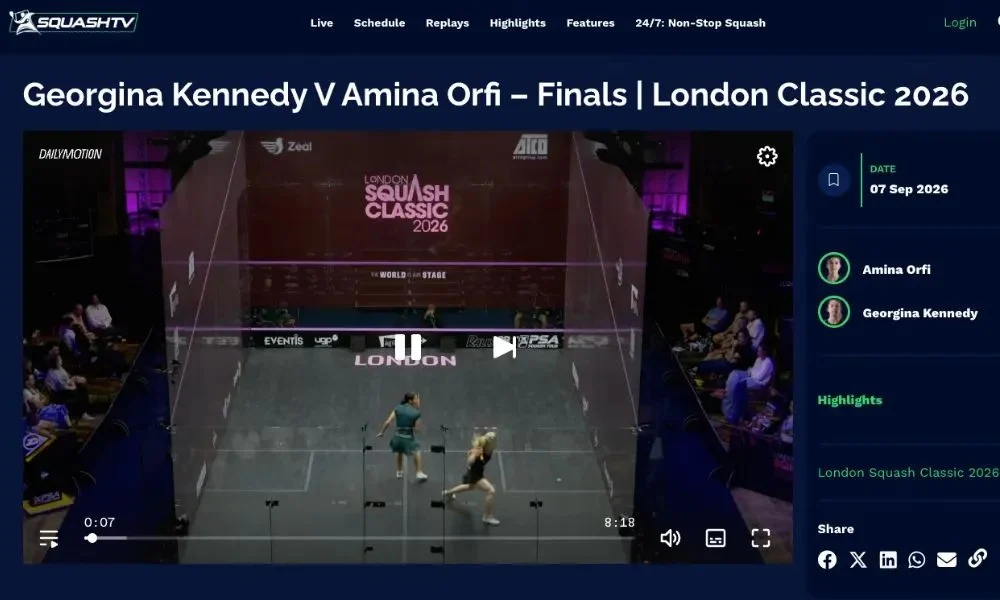
The ongoing development of SquashTV also highlights the vital importance of brand ownership and control in the digital age. A properly branded destination seamlessly connects live matches, instant replays, and deep archive content under a single, recognizable identity. The video player itself serves as the primary interface where fans experience that destination.
Advanced video technology, such as the Edge infrastructure developed by Dailymotion, supports that experience through robust live and on-demand delivery combined with a player that can be entirely tailored to the rights holder’s proprietary brand guidelines. This technology allows media owners to embed high-definition video directly into their own official websites and dedicated mobile applications, customizing its aesthetic appearance to ensure the viewing experience remains consistent with their established brand identity.
Depending on the maturity of the audience and prevailing viewing behaviors, this commercial model can evolve organically over time. Rights holders can transition seamlessly from free access supported by advertising to subscription models, pay-per-view options, or hybrid structures. However, this sophisticated commercial evolution only succeeds if the underlying viewing experience consistently supports repeat behavior.
A modern sports fan might discover squash through a viral highlight of a championship final, return to the platform for the next major tournament, and eventually convert into a paying subscriber. That crucial progression depends entirely on technical reliability and trust during high-stakes moments.

For SquashTV, dependable streaming infrastructure forms an essential part of the core product offering. Dailymotion has maintained a close technological partnership with the service for nearly a decade, continuously adapting the architecture as audience expectations and technical requirements evolved.
At high-profile events such as the PSA Squash Tour Finals in Paris, the platform successfully delivered high-definition feeds to subscribers in 1080p resolution at 60 frames per second through its custom-branded player. This deployment featured real-time technical support and flexible pass options ranging from one to four days. While this advanced technology remains intentionally invisible to the casual viewer, reliability, fluidity, and superior playback quality are precisely why viewers return event after event.
For a fast-moving, high-intensity sport like squash, 60-frame-per-second playback is not a luxury; it is a necessity that helps fans physically follow the ball and appreciate the blistering pace of each rally. Consequently, the video player itself becomes a core component of the service’s perceived value, particularly when consumers are paying hard-earned money to watch live professional sport.
A Partnership That Compounds Over Time
The long-standing relationship between SquashTV and Dailymotion stands out in the industry because it was never built around a single product launch or a one-off promotional event. Over the span of a decade, their collaborative focus has shifted dynamically from basic live streaming, video-on-demand (VOD), and global delivery to high frame rates, DVR functionality, and vertical video integration.
The introduction of vertical video formats was a direct response to younger audiences who wanted to scroll through snackable sports content directly on the rights holder’s owned properties just as naturally as they would on mainstream social media platforms. More recently, the integration of artificial intelligence tools for automated captions, translations, and metadata tagging has made the extensive historical archive vastly more accessible and discoverable in a matter of seconds, entirely eliminating the need for labor-intensive manual cataloging.
Modern edge-player infrastructure also supports adaptive streaming technology, which automatically adjusts video quality in real time based on the viewer’s available network bandwidth. Furthermore, live rewind features allow viewers to effortlessly pause, rewind, and revisit pivotal points during an ongoing live stream. Combined with secondary capabilities such as custom playlists, interactive subtitles, chapter markers, and detailed playback analytics, media owners are equipped with the precise tools needed to make their extensive catalogues easily navigable while gaining deep insights into how their audiences consume content.
This long-term perspective is critical because truly valuable streaming products are systematically refined through repeated live events and shifting fan behaviors, rather than being built overnight in a single season.
The practical lesson for other emerging sports is clear: digital infrastructure must do far more than simply deliver a live broadcast feed. It should actively make content discoverable, turn every single match into valuable replay and short-form inventory, support the appropriate commercial monetization model, and give fans compelling reasons to return.
For an emerging sports property, this philosophy dictates building broad audience reach before attempting to aggressively extract revenue. Rights holders must transition smoothly from initial free discovery models toward registrations, hybrid offerings, and full subscriptions as audience loyalty solidifies. The supporting technology infrastructure must follow organic audience behavior rather than imposing a rigid, inflexible framework.
Ultimately, SquashTV demonstrates why emerging sports organizations do not need to wait for traditional mainstream broadcast scale before establishing a thriving, independent media business. What they require is a passionate audience, a clear digital destination, and a technology partner capable of evolving alongside the ways fans watch, discover, and pay for content.
Streaming provides the foundational architecture to make this possible, transforming raw live rights into a cohesive branded destination, individual sporting events into a growing content catalogue, and fleeting audience interest into measurable, compounding commercial growth.