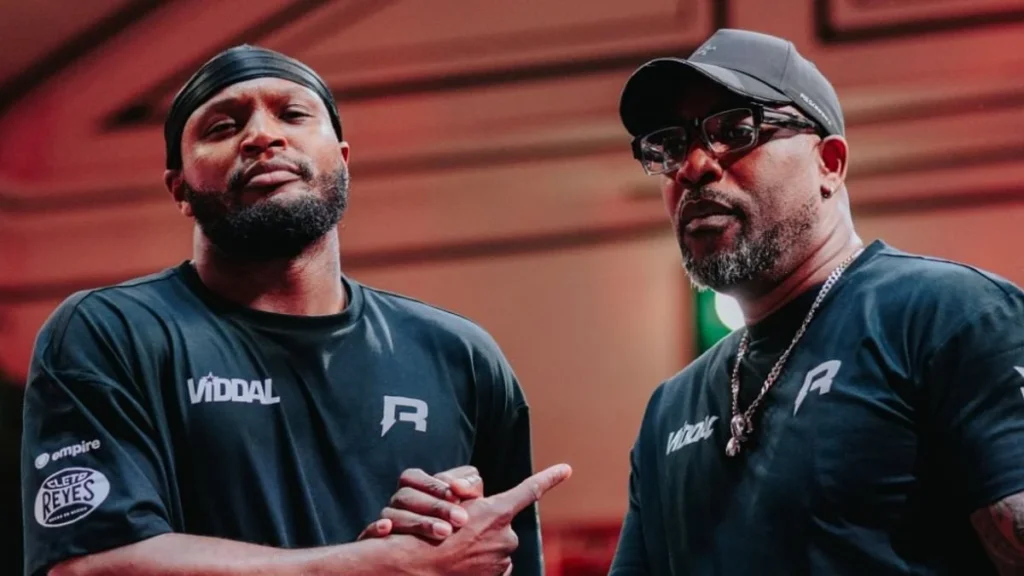
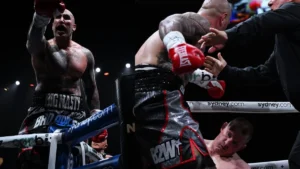
The topic of cross-promotion and the evolution of bare-knuckle fighting naturally drew focus toward BKB 61, where Amado Vargas is set to re-enter the trigon. As the sport continues to attract decorated veterans from traditional gloved boxing, current titleholders like Herring are paying keen attention. Herring’s interest is not merely that of a casual spectator; it is analytical, deeply rooted in shared experiences, and driven by the realities of modern combat sports where athletes frequently cross disciplinary boundaries.
When asked about his awareness level regarding what BKB has been doing as of late, Herring pointed to a direct connection from his own amateur and professional roots. Speaking on an episode of Bare Knuckle Bowker, the champion explained how he closely monitors the performances of his peers, particularly those who share a similar background in the sport.
"I’m aware of it because again, Joseph Diaz, my Olympic teammate, Joseph Diaz just fought a week before I fought, and he came off a tough loss," Herring shared. "So I watch those things, and I look to see, okay, how did he lose? So we have similar backgrounds. He’s a southpaw as well, a left-handed fighter. We were in the same Olympic class. We’ve both been world champions in boxing, but he came up with a tough break within his own brand of his career."
The observation highlights the mutual respect and cautious curiosity shared by elite fighters who see their contemporaries test the waters in different combat environments. For veterans of traditional boxing, the transition to bare-knuckle fighting introduces unique variables, ranging from defensive adjustments to the absence of hand-wraps and gloves, which fundamentally change the math of striking exchanges.
BKB’s Vargas is being closely watched by BKFC’s Herring
Further delving into his BKB-related thoughts in the context of his connection to Amado Vargas, Herring elaborated on how he studies these bouts not just for entertainment, but as tactical reconnaissance. The strategies utilized by opponents, the successes, and the vulnerabilities exposed inside the ring all serve as valuable data points for any boxer navigating the modern landscape of combat sports.
"So, I’m watching the things, what he’s doing, and what’s working, what’s not working," Herring explained. "As well as in terms of his opponent, okay, what is his opponent doing well that was working against him? Because again, a guy might see me as a boxer and may use those same tactics. So, how do I counter if I come across a guy like that in my own career?"
Herring’s analytical approach demonstrates the mindset of a seasoned champion. Rather than viewing alternative bare-knuckle organizations as entirely separate entities divorced from traditional boxing, top-tier athletes recognize the interconnected nature of today’s fight business. Tactics, tendencies, and physical adaptations observed in one promotion often translate directly to challenges that could arise in another.
Beyond distant observation, Herring’s insights are also informed by direct, personal interactions with fighters preparing to make the leap. Before Amado Vargas and his family members stepped into alternative fighting organizations, they sought out the counsel of veterans who understood the nuances of the transition. Herring revealed that he had spoken with the Vargas brothers well before their official entry into the sport.
"So, yeah, I actually look at all those guys that I came up with in boxing or like again, I’ve spoken with the Vargas brothers before they joined," Herring said. "I knew long before they were joining because again, Fernando Jr. came to me on the side and was asking for my, like I said, for my advice and just the same thing I just told you. I just told them what to look out for and what to do."
For fighters accustomed to the defensive shells, pillow-like gloves, and pacing of traditional professional boxing, shifting to bare-knuckle or specialized trigon rulesets requires a mental and physical recalibration. Younger fighters stepping into these arenas frequently look to established champions like Herring to bridge the knowledge gap.
According to Herring, the most common inquiry from fighters eyeing the transition revolves around the gym doors—specifically, how drastically one must alter their training regimen to succeed without standard boxing equipment.
"They always ask, ‘Do you change anything up in training camp from boxing?’" Herring recalled. "I said, ‘I still approach training camps like I did in boxing. I just do sparring a little bit different than what I did from a regular boxing camp.’"
This distinction underscores a vital truth about modern crossover fighters: the foundational skills built over decades in traditional boxing—such as footwork, distance management, timing, and ring generalship—remain the most valuable assets a combatant can possess. However, the application of those skills, particularly regarding impact absorption, hand placement, and the tactical pacing of sparring sessions, requires subtle yet critical adjustments.
As Amado Vargas prepares for his upcoming appearance at BKB 61, and as athletes like Jamel Herring continue to dominate within the BKFC banner, the dialogue between traditional boxing and bare-knuckle fighting grows increasingly relevant. With elite veterans actively studying each other’s successes and setbacks, the bridge between these combat sports continues to shrink, driven by mutual respect, tactical evolution, and the shared experiences of fighters who have seen it all at the highest levels of the sport.