


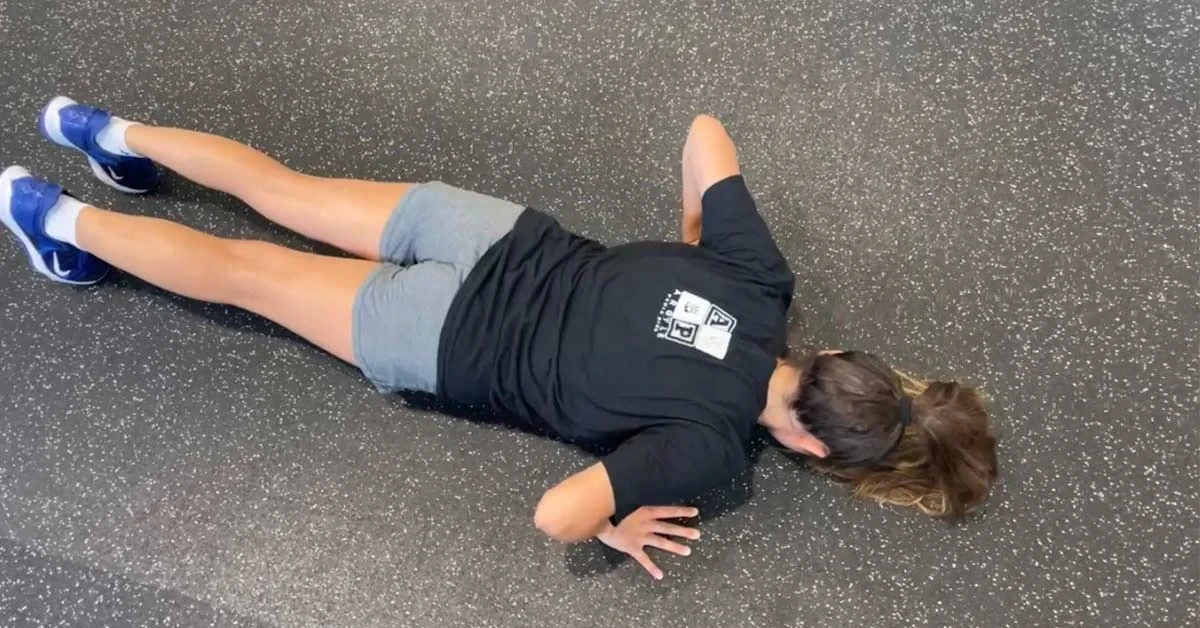
Push-ups remain a classic, foundational movement in athletic training, often standing alone as one of the few exercises to escape the overly simplistic labels of "good" or "bad." Traditional, demanding, and technically complex, push-ups require global dynamic stability and full-body coordination from head to toe. Performers rely heavily on a relatively small joint—the elbow—to lower the body to the ground and press back up. Yet, despite their reputation as a basic bodyweight staple, they cannot be dismissed as a simple indicator of upper-body strength if athletes lack the foundational control to execute them properly.
According to strength and conditioning coach Rachel Hayes, push-ups function more as a reflection of an athlete’s existing strength than a fundamental exercise used to build it, particularly in the case of female athletes. Hayes argues that coaches must carefully guide developing athletes to master this full-body movement progressively rather than forcing generic programs onto both male and female competitors. Programming the exact same routine for both sexes overlooks critical developmental differences and ultimately underserves everyone involved.
To provide the highest standard of training, coaches must understand and respect natural variations in physical capacity and long-term athletic progression. While biological differences between males and females do not imply that female athletes cannot perform push-ups, they do dictate that the prescription of upper-body strength training must be approached with nuance and individualized care.

Developmental Considerations Through Puberty
Puberty is a highly complex and dynamic biological process marked by significant hormonal, anthropometric, and neuromuscular shifts that directly influence physical performance. For practitioners overseeing athletic training or physical education programs for adolescents, understanding these overlapping transformations is vital. Girls typically enter puberty and experience developmental changes earlier than boys, usually between the ages of nine and eleven, though the timing and pacing vary widely among individuals.
Among the numerous transformations occurring during adolescence, two stand out as having the most profound impact on the development of relative upper-body strength in young athletes. The first is Peak Height Velocity, commonly referred to as the adolescent growth spurt. During this phase, long bones such as the femur and tibia experience rapid vertical growth, resulting in a higher center of mass that makes trunk control considerably more challenging. Because push-ups demand a coordinated effort across nearly every joint from the hips upward—with the pelvis and spine providing essential core support—this rapid shift in stature alters fundamental movement mechanics.
The second major factor involves post-growth strength and neuromuscular control. Research indicates that following Peak Height Velocity, girls do not experience an equivalent neuromuscular surge to match their sudden increases in body mass, height, and center of mass. While male adolescents often adapt with a disproportionately massive surge in muscular power to control their larger frames, females do not display the same proportional neuromuscular adaptation, particularly in the upper extremities. Although absolute strength continues to follow a steady linear increase in girls, it lacks the distinct acceleration phase commonly observed in boys. Recognizing these differences allows coaches to tailor upper-body training effectively rather than relying on a one-size-fits-all approach.

Establishing Positional Awareness
Before teaching athletes to execute a global movement pattern like a push-up, foundational positional awareness regarding the pelvis, head, and scapulae must be established. Neglecting this crucial preparatory phase often leaves athletes hanging passively on their skeletal structures, leading to improper movement patterns during subsequent lifts and exercises.
Proper execution requires mastering specific skeletal positions, beginning with posterior pelvic tilt and anti-extension. Many athletes struggle with planks or push-ups because an anterior pelvic tilt causes the lower back to hyperextend, dropping the abdomen toward the floor. This places undue stress on the lumbar facet joints and frequently forces the shoulder blades forward. Introducing anti-extension movements, such as dead bugs, helps athletes learn how to properly brace the spine before moving to more demanding prone positions.
Cervical retraction represents another vital piece of the puzzle. Athletes frequently exhibit pronounced cervical extension, pushing the head forward or looking upward during upper-body movements. Teaching proper neck retraction—starting in seated positions before progressing to prone variations—introduces gravitational resistance and builds necessary postural endurance. Similarly, scapular protraction and retraction must be intentionally taught so athletes understand how the shoulder blades move dynamically around the rib cage. Without addressing scapular control early on, movements ranging from push-ups to rowing variations remain deficient.

Tailoring Progresions and Training Methods
Developing the capacity to perform a proper push-up is a gradual process that requires diligent, methodical training. A reliable progression model begins with establishing a robust isometric foundation before transitioning into simultaneous eccentric and concentric phases using varied approaches.
Observations in athletic settings highlight distinct training needs between sexes. Female athletes often require additional time dedicated to developing concentric pushing strength before they can successfully perform a full push-up, whereas male athletes frequently need more emphasis on basic positional control. Coaches must meet athletes at their current capability level rather than rushing them toward arbitrary milestones.
Utilizing available equipment creatively bridges the gap between basic bodyweight holds and traditional bench press variations. For instance, incorporating rubber weight plates for floor presses provides an optimal starting point for younger or developing athletes who may lack access to appropriate dumbbell loads. Furthermore, emphasizing eccentric training—the lowering phase of a movement—widens the performance gap between eccentric and concentric strength. By intentionally accentuating the eccentric phase while maintaining strict spinal and pelvic positions, coaches can stimulate greater neuromuscular coordination and prepare athletes for the demands of concentric pressing.

Isometric training serves as the initial classroom for developing positional strength. Planks, while sometimes viewed as monotonous, offer a powerful prerequisite for push-ups when properly coached. They allow athletes to practice posterior pelvic tilt, cervical retraction, and shoulder protraction under a static load. Once athletes maintain these positions effectively, eccentric variations such as band-assisted lowerings or elevated hand placements can be introduced to preserve the full range of motion without sacrificing form.
Concentric variations follow naturally as foundational strength improves, ensuring that progressions act as bridges rather than hurdles. By integrating exercises thoughtfully into a broader training session—such as pairing primary upper-body lifts with band-assisted push-ups—coaches can cultivate both skill and confidence. Ultimately, rushing beginners toward full push-ups before they have established adequate control and strength contradicts
long-term athletic development. Respecting individual needs and adapting programming accordingly ensures that developing athletes build lasting strength, safety, and physical competence.