



Published: November 9, 2026
The transition period from late pre-adolescence to early adolescence represents an ideal window to introduce more organized training to the developing athlete. At this age, physical and cognitive maturity has advanced to a level where a young athlete can genuinely comprehend the purpose of a performance training program. Generally speaking, athletes in this age group are typically capable of lining up, paying attention, and following basic instructions.
According to strength and conditioning coach Jeremy Frisch, the warm-up period serves as the ultimate opportunity to introduce and teach numerous fundamental athletic skills. Frisch contends that the warm-up is actually the single most important part of a training session within a youth athletic development program. Working with younger populations requires an entirely different approach than training elite adults, highlighting a distinct gap between warming up for athletic performance versus warming up for youth athletic learning.
The primary objective of shifting this perspective is to encourage coaches to look far beyond standard foam rollers and fascial stretching. Instead, trainers must introduce age-appropriate warm-up modifications that make movement both fun and deeply enriching for kids. Developing coordination demands challenging tasks and motivated athletes. Consequently, coaches need to move past simple activation exercises and basic self-care routines for children, treating them instead as developing young athletes rather than miniaturized older patients or clinical rehabilitation clients.
The Right Mentalty for Youth Athletic Warm-Ups
While athletic performance remains the ultimate goal for most coaches, ignoring the mental and developmental needs of young athletes risks losing their engagement entirely. Many traditional training principles matter very little at early ages because a child athlete fundamentally wants to have fun. Their psychological and physical needs differ vastly from those of a seasoned veteran or an elite collegiate competitor.
For older athletes, a warm-up prepares the body for an intense upcoming training session, as well as the broader demands of the week, month, or subsequent years. A warm-up is precisely what its name implies—a time to elevate core body temperature and impart elasticity to muscle tissue through active movement. When executed correctly, it also serves to develop critical physical and neurological factors that take years of repetition to build.
Although some young athletes might look physically prepared for high-level training and competition, they frequently harbor significant gaps in their overall athletic development. These deficiencies usually stem from a lack of foundational movement exposure and the modern sedentary lifestyle. The ultimate goal of a quality physical preparation program is to develop speed, agility, strength, and endurance to their maximum potential. However, trainers must first ensure that the young athlete possesses a baseline level of mobility, stability, coordination, and balance.
These elements form the bedrock of athletic development, and youth athletes require dedicated time to bridge these developmental gaps. This reality underscores why the warm-up is such a crucial block of time, providing a seamless opportunity to introduce and refine essential athletic qualities. While speed development and the early fundamentals of strength training certainly belong in youth programs as part of a smart long-term strategy, coaches must simultaneously ensure they cover immediate athletic bases.
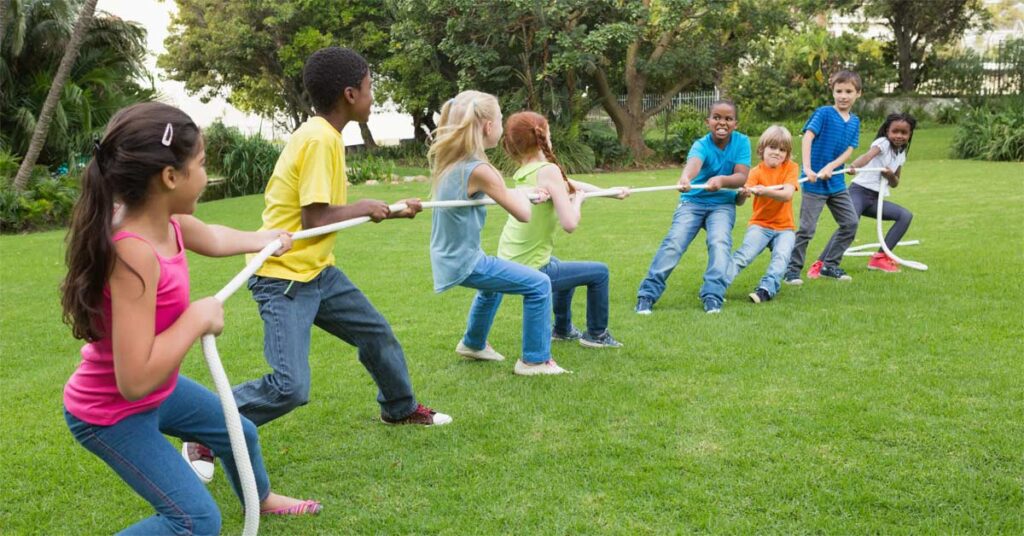
Incorporating dynamic movements like a multidirectional A-skip or a bear crawl allows coaches to improve rhythm and timing almost immediately. Gone are the days when a quick lap around the field, an agility ladder, and static stretching could adequately address every movement skill a growing athlete needs to develop. Treating young athletes like miniature professional or Olympic competitors fails to respect their unique developmental stage. Coaches must recognize that the warm-up is a critical period that profoundly prepares the athlete for sports, training, and lifelong physical activity.
The Core Structure of a Youth Warm-Up Session
An effective athletic warm-up consists of a multi-part framework designed to build comprehensive athletic capacity. Throughout each sequence, young athletes cycle through a variety of novel and diverse motor skill sets. To keep athletes continually challenged and motivated, coaches keep each sequence brief while constantly introducing fresh movement variations.
Many sports and competitive games frequently require athletes to move through unusual positions and unfamiliar movement patterns. Practicing movement variability allows participants to master basic movements alongside numerous adaptations, better preparing them for the unpredictable chaos of actual competition. This adaptability ensures they can make the correct postural adjustments whenever the need arises on the field or court.
Locomotor skills form one of the primary pillars of this developmental framework. These foundational movement patterns provide the athlete with spatial awareness and feedback regarding their position relative to objects and other people. Basic locomotor skills—such as walking, marching, skipping, single-leg hops, lateral shuffling, broad jumps, and galloping—allow humans to travel efficiently from point A to point B.
While children once mastered these movements naturally in elementary school physical education classes, modern youth often lack sufficient exposure to them. The beauty of these straightforward movements lies in the infinite ways they can be performed, challenging coordination across multiple vertical and horizontal planes. Coaches can instruct athletes to move limbs at specific speeds and ranges of motion, such as executing high knees while simultaneously drawing arm circles. This develops inter-limb timing and the ability to execute unrelated simultaneous movements.
Transitioning children into active movement early in the warm-up helps burn off accumulated physical and mental energy following a long day of sitting. Unstructured movement and free running serve as key components of youth development because children require safe spaces to be creative and active.
Athletic Mobility and Real Coordination
Athletic mobility remains one of the most misunderstood aspects of modern training. Over recent years, a wave of fitness trends introduced static stretching, foam rolling, and corrective exercises as blanket replacements for actual movement. This shift led many to believe that the vast majority of healthy children were inherently fragile and dysfunctional, resulting in a watered-down approach to physical training.
Healthy children do not need to be treated like clinical patients during a warm-up; instead, they require consistent exposure to fundamental movement training. The objective of mobility work is to subject joints to varied directions, ranges of motion, and muscle tensions to prepare them for competitive play. This is achieved through full-body movements across natural human patterns such as squatting, lunging, reaching, and twisting.
For young athletes experiencing rapid growth spurts, mobility work becomes even more vital as they temporarily lose coordination and relative flexibility. When combined with hours spent sitting at school desks, dedicating a few minutes to full-range movement significantly benefits both immediate performance and long-term joint health. Simple tools like PVC pipes and mobility sticks introduce wide ranges of motion while teaching fundamental motor skills without requiring overly complicated instructions.
Core stability and balance represent another vital pillar, encompassing whole-body strength and stability rather than isolated abdominal work. Training targets the body from fingertips to toes through static and dynamic postures, utilizing varied points of contact with the ground. Exercises reflecting bear and crab positions reinforce athletic postures and serve as smooth transitions between standing and floor-based movements.
Gymnastics, Acrobatics, and Connection Strength
A comprehensive warm-up also incorporates basic gymnastics, tumbling, and animal movements to help athletes master ground-based control. Many young athletes have largely forgotten how to navigate the floor safely, having moved past crawling and rolling into upright locomotion. However, field and court sports frequently require players to drop to the ground, absorb contact, or recover from sudden falls.
Young athletes must feel comfortable controlling their body weight on the floor and possess the confidence to protect themselves during a collision or accidental tumble. Introducing basic tumbling, rolls, and floor transitions builds physical self-assurance and resilience.
Connection strength rounds out the developmental framework through simple bodyweight exercises that prepare athletes for more intense training down the road. Rather than rushing straight into heavy external loads, these foundational movements lay the groundwork for future athletic performance.
Ultimately, structured warm-ups for younger groups strike a balance between allowing freedom of expression and instilling discipline, attention, and proper behavioral habits. By redirecting children’s natural energy toward engaging movement patterns, coaches can foster both athletic literacy and a lifelong enjoyment of physical activity.