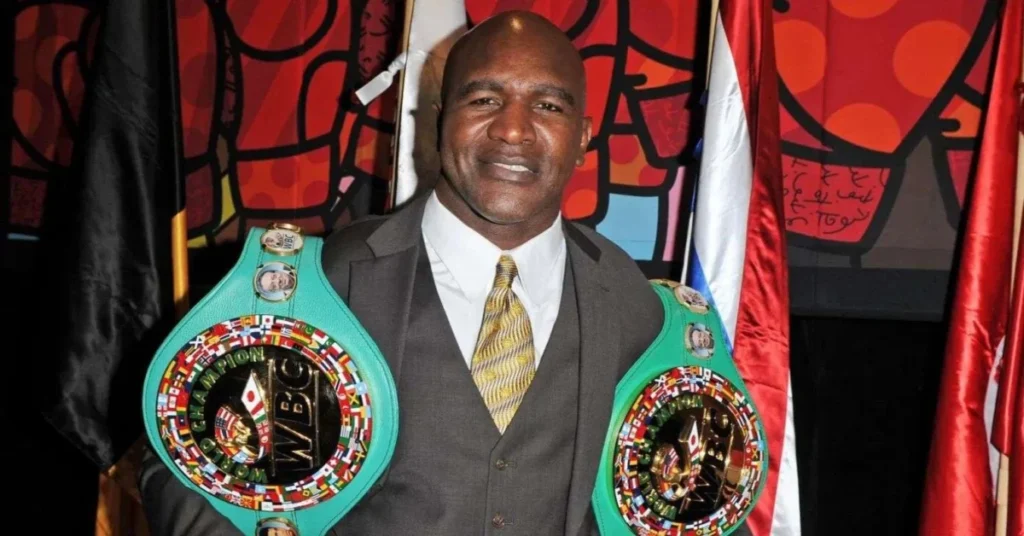

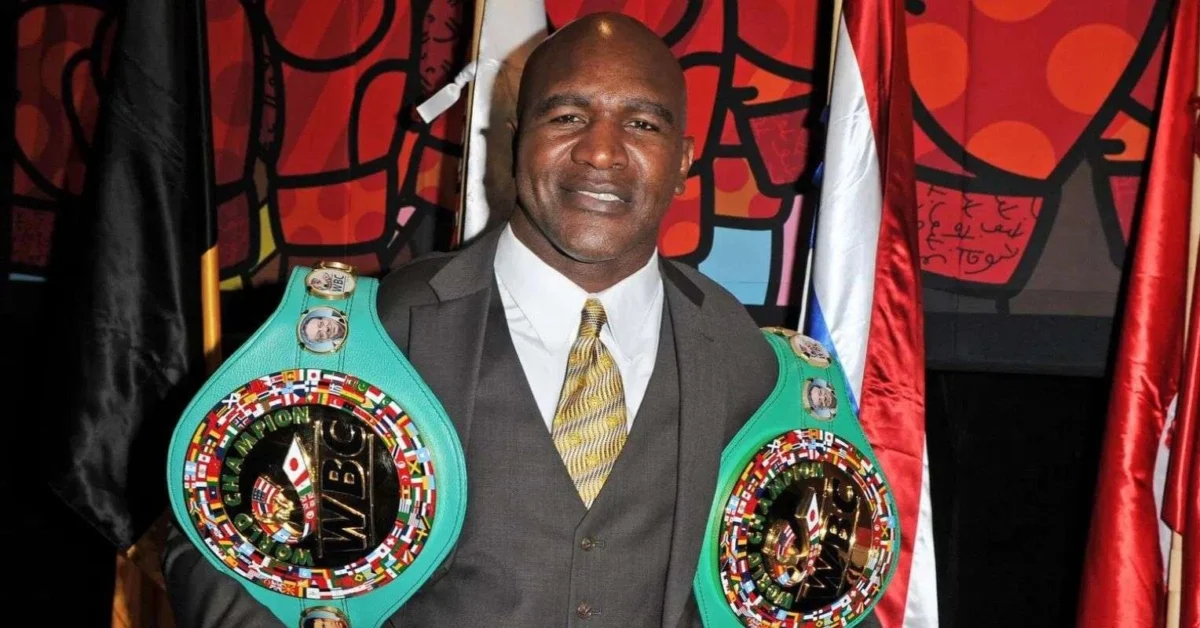
Evander Holyfield stands unquestionably as one of the most remarkable and decorated heavyweights of the last four decades, etching his name deeply into the annals of boxing history through sheer determination, technical brilliance, and an unmatched competitive spirit. Known universally by his famous moniker “The Real Deal,” Holyfield achieved a feat in 1990 that had never been accomplished before in the storied history of the sport: he became the first fighter to unify the undisputed championship at both cruiserweight and heavyweight.
To this day, Holyfield remains the only individual in boxing history to capture the world heavyweight championship on four separate occasions, a testament to his longevity, resilience, and extraordinary skill set. Throughout a career that spanned decades at the elite level, he stepped into the ring with an absolute who’s who of legendary heavyweights, securing defining victories over an abundance of iconic champions. His resume features legendary triumphs against elite warriors such as Larry Holmes, Riddick Bowe, and George Foreman, proving time and again that he could adapt to any style and conquer any challenge placed before him.
Among the pantheon of heavyweight legends he crossed paths with during his illustrious tenure is the once-ferocious “Iron” Mike Tyson. The two titans collided twice during the late 1990s in a pair of high-stakes, globally anticipated bouts that captured the imagination of the entire sports world and delivered unforgettable moments of high drama inside the squared circle. Holyfield emerged victorious on both occasions, securing his legacy as one of the very few men capable of solving the complex and terrifying puzzle that was prime Mike Tyson.
However, in a revealing and reflective YouTube clip that has since drawn widespread attention from boxing fans and analysts alike, “The Real Deal” offered a candid assessment of those historic encounters. Rather than attributing his victories solely to his own tactical brilliance, Holyfield offered immense plaudits to his former rival, openly admitting that he was “lucky” to have crossed paths with Tyson at a specific juncture when the fearsome puncher was past his formidable prime.
Reflecting on the unpredictable nature of Tyson during the absolute zenith of his career, Holyfield offered deep insight into what made the former champion so dangerous and how that danger eventually shifted. “Unpredictable. When you didn’t know what Tyson was gonna do, everybody was in trouble,” Holyfield shared in the video clip. He went on to explain how Tyson’s approach evolved over time, noting, “He changed up and got into a rhythm that everybody knew and became beatable. I was fortunate enough to fight him when he was beatable.”
This remarkable level of sportsmanship and historical self-awareness highlights the immense respect that exists between two of the most iconic figures the sport has ever produced. To understand the weight of Holyfield’s comments, one must look back at the meteoric rise of “Iron” Mike, who burst onto the professional boxing scene back in 1985 when he was barely an adult. Coached by the legendary Cus D’Amato, Tyson swept through the heavyweight division with a terrifying combination of speed, power, and head movement that left opponents demoralized before the opening bell had even faded.
Tyson was just 20 years old when he achieved immortality by defeating WBC heavyweight champion Trevor Berbick via a devastating second-round knockout in November 1986. That historic victory made him the youngest heavyweight champion in boxing history, a record that still stands today and continues to symbolize one of the most dominant ascents in athletic history. During his early years, Tyson was not merely winning fights; he was obliterating elite competition, unifying titles, and striking fear into the hearts of everyone who dared to step into the ring with him.
While the later stages of his career were subsequently marked by controversy, personal struggles, and promotional battles, Tyson’s status as one of the greatest heavyweights of all time has never been seriously disputed. His cultural impact extends far beyond the boundaries of the sport, making him one of the most influential figures in modern combat sports history. Even decades after his peak championship years, the mere mention of his name commands global attention, proving that his legacy remains as potent as ever.
Demonstrating that his competitive fire and drawing power have never truly faded, Tyson made a sensational return to the ring last November to participate in a high-profile matchup. He faced social media star-turned-boxer Jake Paul in an eight-round heavyweight bout staged at the massive AT&T Stadium in Arlington, Texas. The event drew millions of global viewers and dominated sports headlines across the mainstream media. Despite showing flashes of his legendary power and determination throughout the contest, the veteran icon was ultimately defeated via unanimous decision by the former YouTuber, adding another unique chapter to a career that has continually defied conventional expectations.