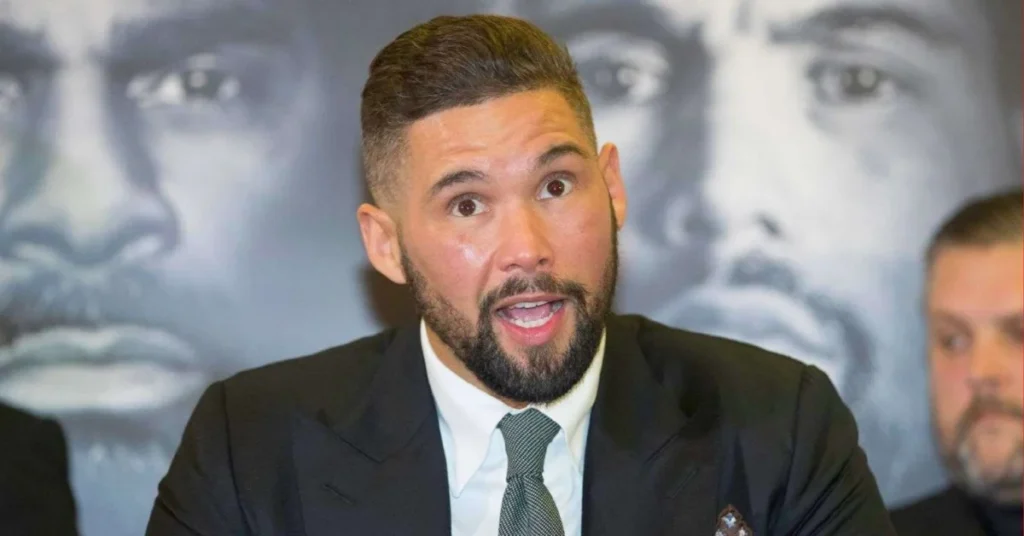

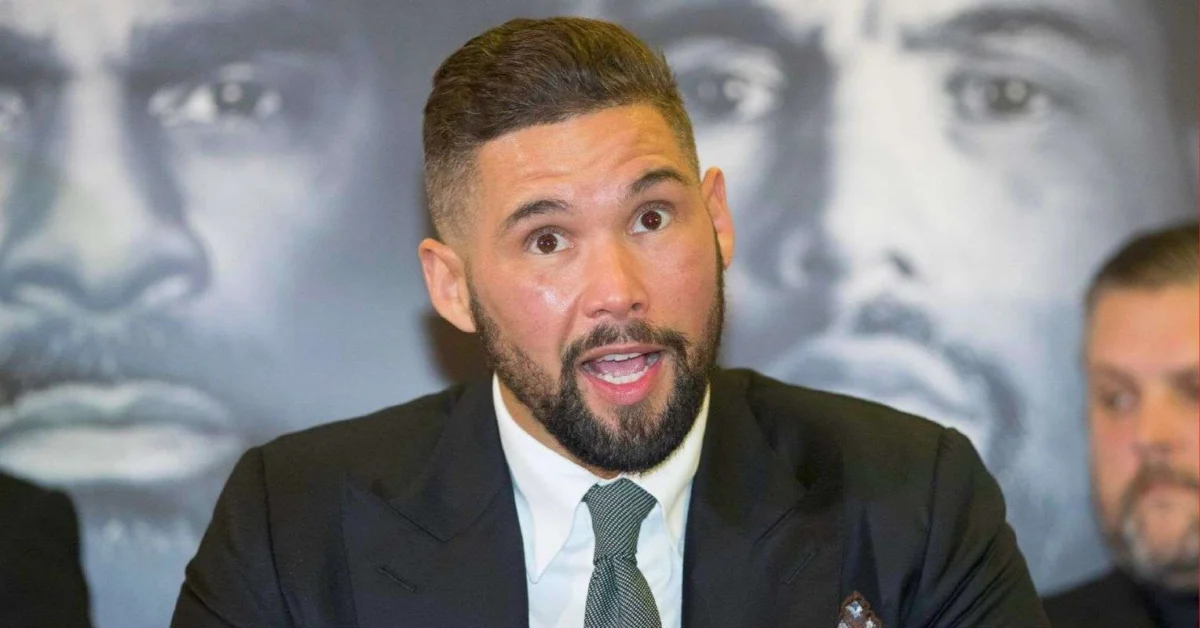
Former WBC cruiserweight world champion Tony Bellew has singled out his former Great Britain amateur teammate Frankie Gavin as the single biggest underachiever in the history of British boxing. Despite Gavin establishing himself as one of the most decorated amateurs the nation has ever produced and eventually challenging for world honours in the paid ranks, Bellew believes the Birmingham fighter never came close to fulfilling the immense, generational talent he displayed when the two men were first making their mark in the sport.
The assessment carries particular weight coming from Bellew, who has long viewed his own professional career through the prism of grit, dedication, and maximized potential. While Gavin entered the professional arena with peerless credentials and widespread acclaim, Bellew often considered himself an overachiever—or, at the very least, a prizefighter whose unyielding commitment and mental fortitude allowed him to extract every single ounce of ability from his frame. That determination ultimately carried the Liverpudlian to the pinnacle of the sport, ensuring he walked away from boxing with his ultimate ambition realized, whereas Gavin’s professional journey concluded with a lingering sense of what might have been.
Bellew’s crowning moment arrived in 2016, when he secured the vacant WBC cruiserweight title in unforgettable fashion against Ilunga Makabu. Overcoming a first-round knockdown, Bellew rallied to produce an explosive third-round stoppage finish over the dangerous Congolese contender in front of his home supporters. It was a triumph that validated years of grueling sacrifices and banished the bitter memories of his previous attempt at world honours, when he suffered a punishing sixth-round stoppage defeat at the hands of Adonis Stevenson at light-heavyweight. By stepping up to the 200-pound division, Bellew proved that sheer resolve, adaptability, and unwavering self-belief could overcome stylistic and physical limitations.
Having reached the summit and defended his status on the world stage, Bellew was able to hang up his gloves on his own terms, content that he had squeezed everything possible out of his career. However, when surveying the careers of his peers—especially those with whom he shared the gym during their formative years on the elite amateur circuit—Bellew cannot help but draw a sharp and unforgiving contrast with Gavin.
Speaking during an appearance on Fight Your Corner, Bellew was asked about the fighters who failed to match their celestial gifts with commensurate accomplishments in the professional ranks. Without hesitation, the former cruiserweight kingpin pointed to Gavin as the premier example of wasted promise, reflecting on the dazzling talent the talented southpaw exhibited during their early days together.
Bellew explained that Gavin is always the first fighter who springs to mind when discussing unfulfilled potential, stating that when they were all starting out, Gavin had such a remarkable start and looked truly amazing inside the ring. Yet, as Bellew noted, the transition from the amateur system to the paid ranks proved to be an insurmountable obstacle for his former squadmate, pointing out that the pro game is simply a different beast entirely. It was this harsh reality that led Bellew to deliver his definitive verdict, labeling Gavin as the biggest underachiever in British boxing.
To understand why Bellew holds such a strong view, one must look back at the unprecedented trail Gavin blazed in the amateur vest. During an era of tremendous growth for the national squad, the gifted Birmingham stylist reached heights that no British boxer before him had ever attained. In 2007, Gavin carved his name indelibly into the record books by capturing the gold medal at the World Amateur Championships in Chicago, becoming Great Britain’s first-ever world amateur champion. His exceptional ring craft, sublime counter-punching, and natural ring generalship made him the standard-bearer for British amateur boxing, earning him global recognition as one of the most technically gifted operators in the sport.
That historic triumph was not an isolated peak. Gavin’s amateur pedigree was reinforced by gold medal victories at both the Commonwealth Games and the European Championships, confirming his status as an international tour de force. Backed by elite hand speed, pinpoint accuracy, and a defensive acumen that left world-class opponents flailing at thin air, Gavin was widely tipped to crown his amateur journey with the ultimate prize: an Olympic gold medal at the 2008 Games.
Yet it was precisely on the eve of that Olympic tournament that the discipline issues that would come to plague his career first surfaced in devastating fashion. Tipped by experts and teammates alike to top the podium, Gavin’s Olympic dream evaporated before he even stepped into the ring. Struggling to make the lightweight limit, he was unable to shed the final pounds, ultimately missing weight and ruling himself out of the competition. It was an unprecedented blow for both the fighter and the national program, serving as an early and troubling indicator that natural talent alone could not compensate for a lack of nutritional and lifestyle discipline.
Turning professional shortly thereafter with vast fanfare, Gavin was expected to follow the traditional blueprint of world-class amateurs by smoothly transitioning into a multi-time world champion. In the early stages of his professional run, the glimpses of pure genius remained evident. He displayed the same elusive movement and sharp combinations that had confounded international amateurs, steadily progressing through the domestic ranks.
Over time, Gavin went on to capture the coveted British welterweight title and turned back a collection of capable domestic rivals, showcasing his class against respected opposition. In ordinary circumstances, conquering the domestic circuit and holding the historic British title would represent the absolute pinnacle of an athlete’s boxing life. For countless prizefighters, winning the British championship is a lifelong dream fulfilled. But for a talent of Gavin’s caliber—a man who had stood atop the amateur world and outperformed the finest boxers on the planet—domestic supremacy should never have been the absolute ceiling of his professional journey.
Instead, the professional ranks increasingly exposed the discrepancies between amateur brilliance and the relentless demands of the pro game. As Bellew highlighted, professional prizefighting requires a level of round-the-clock dedication that extends far beyond technical mastery. It demands strict year-round lifestyle maintenance, rigorous conditioning for championship distances, the physical resilience to absorb heavy punches in smaller gloves, and an unyielding commitment to the scales.
Throughout his professional tenure, Gavin frequently struggled to marry his sublime technical repertoire with the ascetic lifestyle required of an elite world-class professional. The recurring difficulties with conditioning and weight management often left him vulnerable against fighters who possessed a fraction of his natural talent but twice his discipline and professional drive.
The definitive reality check of Gavin’s professional career arrived in May 2015, when he finally secured his solitary shot at world honours against then-IBF welterweight champion Kell Brook. Staged at the O2 Arena in London, the all-British showdown presented Gavin with the defining platform to silence his detractors and convert his amateur mastery into professional immortality. For Brook, it was a routine championship defense; for Gavin, it was the moment of truth.
Inside the ring, however, the gulf between a dedicated, fully realized world champion and a challenger who had cut corners became painfully apparent. Brook’s superior physical strength, discipline, and sustained punching power gradually overwhelmed Gavin’s elusive footwork and defensive reflexes. Unable to keep the heavy-handed champion at bay or produce the physical output required to mount a sustained offensive threat, Gavin was systematically broken down. In the sixth round, the referee intervened to halt the contest, handing Gavin a sixth-round stoppage defeat that firmly underscored the brutal divide between domestic titleholder and world-level elite.
In the aftermath of the Brook defeat, there would be no redemption story, no secondary resurgence, and no further opportunities for Gavin to fulfill the immense potential that had once captured the imagination of the boxing community. Rather than regrouping to mount another sustained run at the world scene, his career drifted without the singular focus required to re-enter championship contention.
It is this sharp divergence in trajectory that fuels Bellew’s candid reflection. Bellew, who openly acknowledges his own limitations inside the squared circle, managed to maximize his abilities by embracing the relentless grit of the professional sport, ultimately retiring as a revered cruiserweight champion. Gavin, endowed with arguably the most natural technical ability of his generation, concluded his career without ever realizing his true ceiling. For Bellew and many who observed Gavin’s mercurial rise, the Birmingham man’s story serves as an enduring reminder that while amateur pedigree can provide a head start, the professional game remains an entirely unforgiving arena where talent without total discipline is rarely enough.