Sports media is notoriously littered with failed athletes and chancers—individuals who, while deeply passionate about their chosen discipline, are acutely and realistically aware of their own physical strengths and limitations. Boxing is certainly no exception to this rule. Many young competitors, upon realizing they fall short of the elite 0.1% capable of earning anything above a basic minimum wage in the professional ranks, ultimately decide to pivot toward a more pragmatic and sustainable career path. That innate passion for the sport, however, is a flame that rarely diminishes entirely. Consequently, many former competitors pursue vocations that, while diverging from their original childhood aspirations, remain closely intertwined with the world they initially set out to conquer.
For Joe Brett, a former amateur fighter who later transitioned successfully into the high-stakes realm of public relations, the journey began with a simple boyhood ambition. Reflecting on his early years, Brett recalls that his absolute dream was to become a professional boxer. Before reality set in, he laced up his gloves for approximately seven unlicensed fights. Realistically, however, he recognized that he was nowhere near the caliber required to turn professional and carve out a viable living in the squared circle.
Even so, boxing remained his enduring passion. He vividly remembers a bout against an opponent named Billy Jackson, who did indeed successfully transition to the professional ranks. Their fierce encounter earned them the coveted Fight of the Night honors at the historic York Hall venue—a tangible reminder that still sits on display, as Brett notes he can still see the trophy today. It was around that pivotal juncture in his fighting days that he approached his coach to broach the subject of turning professional. However, catching a subtle micro-expression of doubt flicker across his coach’s face made him fundamentally rethink the trajectory of his athletic ambitions.
While the wider sports media landscape is indeed filled to the brim with chancers and opportunists, Brett stands out as one of those rare former athletes who pairs his practical industry experience with rigorous academic qualifications. Perhaps most impressively, he achieved a first-class honours degree in international political economy. Building on this academic foundation, he emerged from a competitive pool of some 800 applicants to secure a highly sought-after, prestigious internship in public policy, setting the stage for an unconventional corporate career.
Explaining his initial steps into the professional world, Brett notes that his first major role involved handling government affairs for corporate giant Airbnb. The work was demanding and intellectually heavy, requiring the drafting of comprehensive 50-page documents detailing complex topics such as tourism taxation. Yet, during his time there, he frequently conversed with the internal PR and communications team, gradually realizing that their dynamic day-to-day responsibilities were much better suited to his personal speed and interests. This realization prompted a strategic shift. He began taking on public relations work for corporate entities, as well as clients in the entertainment and music industries. Still, the overarching, ultimate goal remained firmly in sight: to find a way to merge his professional expertise in PR with his lifelong passion for boxing.
That long-held boxing dream eventually materialized, albeit in a format that required considerably more administrative paperwork and meticulous logistical planning than he had originally envisioned. Even with the bureaucratic realities of modern sports promotion, there remained plenty of genuine "pinch me" moments when Brett experienced his very first high-profile fight week from behind the scenes.
An opening arrived when an opportunity emerged to work for an agency that had recently signed Boxxer, promoted by Ben Shalom, as a major client. While there were certainly more lucrative professional opportunities sitting on the table at the time, Brett knew he simply could not pass up the chance to immerse himself fully in the professional boxing industry.
His baptism by fire came on a monumental scale. The very first major event he worked on was the historic undisputed clash between Claressa Shields and Savannah Marshall, hosted at London’s iconic O2 Arena in October 2022. Everything was running smoothly at first—the team had just successfully executed a high-profile open workout session on the River Thames—when the shocking news broke that Queen Elizabeth II had passed away. Consequently, the entire fight card had to be postponed. When the rescheduled event finally took place, it landed awkwardly on Brett’s birthday, yet he recalls feeling purely grateful just to be present and working in the environment he loved.
While deeply enjoying his tenure at the PR agency where Boxxer served as a primary client, Brett had always nursed a long-term ambition to eventually branch out and run his own enterprise. That opportunity duly arrived in the form of Black Book PR, a specialized global agency designed to offer comprehensive communication services to elite athletes, high-profile promoters, and major corporate brands alike.
Establishing his own agency allowed Brett to cultivate and deepen relationships with other key power players across the international boxing landscape. Among them was former two-weight world champion Amir Khan, who took a calculated gamble to promote his maiden African boxing show in June 2025. At a time when many traditional promoters and mainstream PR agencies were myopically focused on the massive financial investments flowing out of Saudi Arabia, both Khan and Brett possessed the vision to recognize the untapped value of exploring entirely new territories and emerging markets.
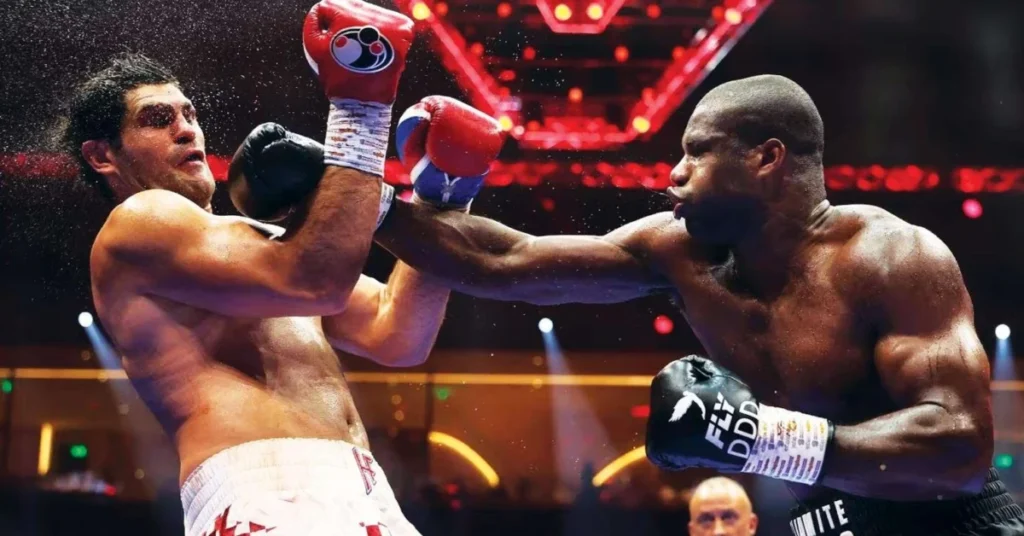
One of those pioneering territories was Ghana, where AK Promotions staged a landmark fight card headlined by a compelling cruiserweight clash between Andrew Tabiti and Jacob Dickson at Accra’s famed Bukom Boxing Arena. Reflecting on the venture, Brett describes his first trip to Ghana as an incredible experience, noting with a sense of professional pride that he was the only dedicated PR practitioner working within the African boxing sphere for quite some time.
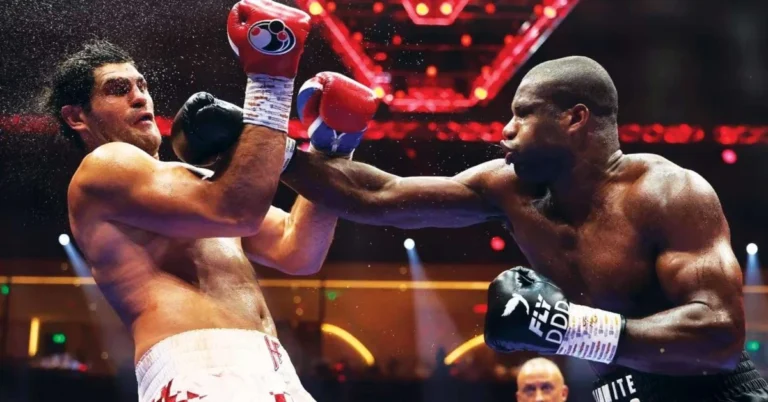
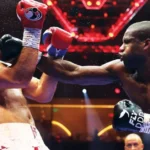
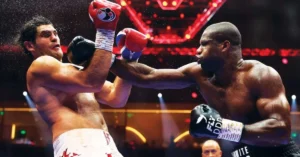
The event itself was an exercise in organized chaos. The fight card started three hours behind schedule, leaving Brett momentarily stressed out as he scrambled to resolve logistical hurdles behind the scenes. Yet, rather than letting the pressure overwhelm him, he stepped back, soaked in the unique atmosphere, and decided to enjoy the spectacle unfolding before him. Inside the arena, roughly 4,000 passionate fans packed the seats, while another 5,000 hopeful spectators gathered outside, all desperate to catch a glimpse of the undercard action. True to the unpredictable nature of outdoor and semi-open regional cards, the heavens opened up and a torrential downpour began. Undeterred, the cruiserweight competitors simply kept fighting through the driving rain, getting completely drenched in the process. At one point, as one fighter knocked the other down to the canvas, the impact sent a dramatic splash of water flying up into the air under the stadium lights—a singular, cinematic moment that Brett believes can quite simply never be replicated.
AK Promotions continued its expansion across West Africa, subsequently staging an event in Lagos, Nigeria, that prominently featured British fighters Michael McKinson and Samuel Antwi. Aside from navigating the usual array of regional logistical challenges, the operation appeared to be running smoothly right up until fight night. Then, as Newcastle’s Joe Laws was backstage preparing to make his anticipated ring walk, a sudden wave of commotion and tear gas unexpectedly infiltrated the venue.
Even amidst the unexpected disruption, Brett could not bring himself to begrudge the thousands of local fans who had turned out in droves, partly thanks to the effectiveness of his own promotional groundwork and PR campaigns. Reflecting on the incident, he points out that managing massive crowds has become a recurring theme at African boxing showcases. The situation felt almost like being a victim of his own success, proving unequivocally how well the event had been marketed to the local public. As fans surged toward the compound, some managed to force their way in, and amidst the resulting commotion, a small amount of tear gas drifted into the interior of the venue alongside the swelling crowd. Despite the overcrowding and the startling interruption, the overarching sentiment from the attendees was purely celebratory. Everyone had simply come out to have a good time, and while the situation was undeniably congested, it inadvertently helped forge one of the most electric, intense atmospheres Brett has ever witnessed in his career.
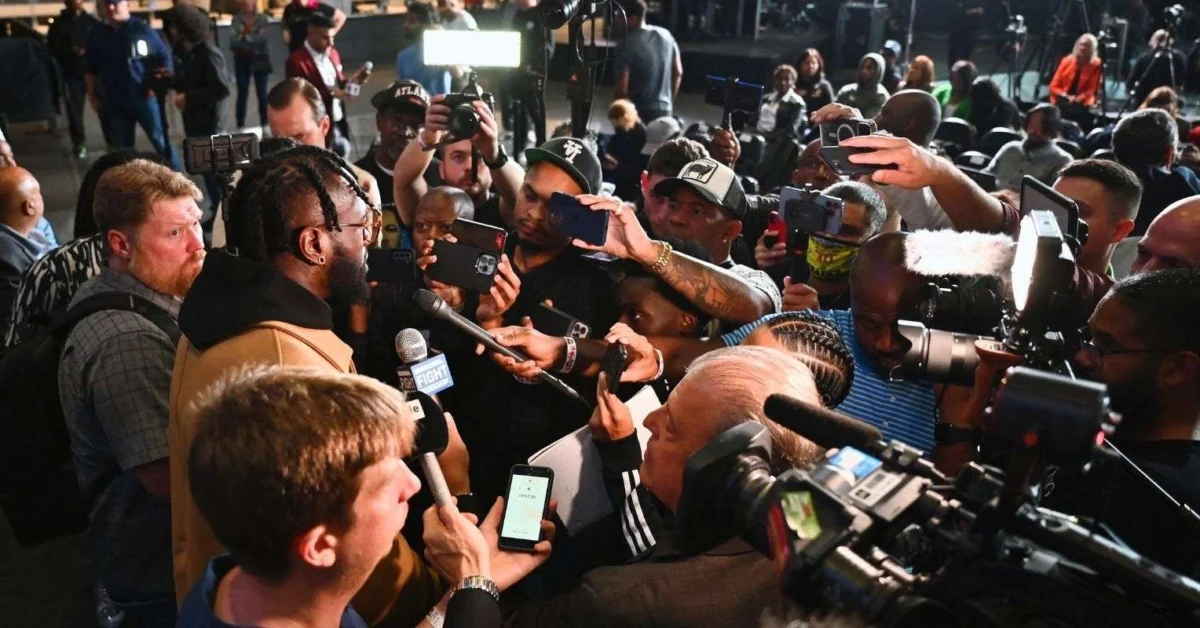
Away from the high-octane theater and occasional pandemonium of fight nights, Brett’s day-to-day responsibilities primarily revolve around orchestrating and managing delicate engagements between elite fighters and traveling journalists. This delicate balancing act is rarely straightforward. The core challenge of the role lies in generating maximum media exposure and public interest for the athletes without inadvertently interfering with their grueling training regimens and weight-cutting protocols.
As Brett readily admits, public and media interest in a fight card naturally peaks right during fight week, precisely at the moment when a fighter’s physical and mental energy levels tend to dip to their lowest points due to the intense demands of making weight. The goal of a skilled publicist is to navigate this pressure cooker so that by the time the official weigh-in arrives, all parties are satisfied—ensuring journalists have secured the interviews and access they require, while protecting the peace of mind of the competitors.
Building authentic trust is paramount in this ecosystem. If a publicist promises a journalist an interview will last ten minutes and it stretches to an hour, that hard-earned trust is instantly compromised. Conversely, it is equally vital to establish a rock-solid reputation of reliability with the media corps so that whenever reporters attend an event managed by his agency, they know they are guaranteed professional access and transparent communication.
While his professional trajectory did not lead him to the undisputed heavyweight championships he once dreamed of as a teenager in the gym, Joe Brett has undeniably secured the next best thing in the sport. At just 28 years of age, the future holds an abundance of opportunities for both him and Black Book PR—a professional outlook that is infinitely brighter and more secure than the one he would have faced had he stubbornly continued plugging away on the unforgiving unlicensed fighting circuit.