
As the mixed martial arts landscape continues to evolve, new promotions constantly face the challenge of carving out a unique identity in a crowded global market. Enter Ki MMA, an ambitious new organization preparing to make its grand entrance into the sport. In an effort to immediately distinguish itself from competitors, the promotion is currently considering adopting elements of the legendary Pride Fighting Championships’ historic rule set.
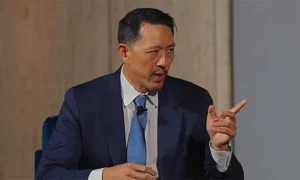
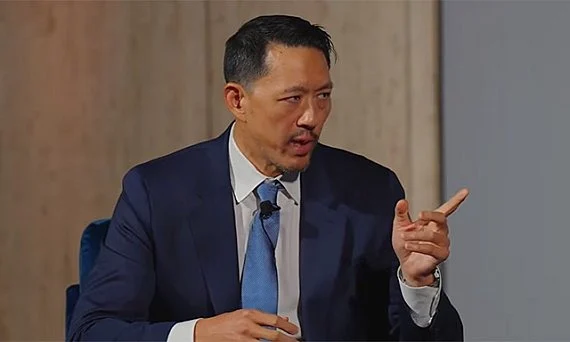
The possibility was recently brought to light by Rich Chou, the promotion’s executive vice president of athlete relations. Appearing as a guest on the "Bowks Talking Bouts" podcast, Chou discussed the inner workings of the organization’s strategic planning. He revealed that company officials are actively exploring innovative ways to make combat sports competition significantly more exciting and dynamic for both elite fighters and dedicated fans alike.
For purists and longtime followers of combat sports, the mere mention of Pride FC evokes powerful nostalgia. Operating out of Japan during the late 1990s and 2000s, Pride was widely celebrated for its grand spectacles, iconic fighters, and a rule set that encouraged a high-paced, aggressive style of fighting. By looking back at what made those legendary eras so captivating, Ki MMA hopes to channel some of that historic energy into a modern format.
Rich Chou discusses Pride-inspired rules for Ki MMA’s 32-fighter featherweight Grand Prix
During his appearance on "Bowks Talking Bouts," Chou elaborated on how the promotion is approaching its foundational design. He noted that Ki MMA is currently examining existing rule sets currently utilized across the industry, while simultaneously brainstorming entirely fresh ideas as it meticulously develops its comprehensive approach to competition.
"That is in the discussion," Chou stated candidly during the interview. "We’ve said Pride quite a bit. Yeah, who didn’t love Pride, right? Some of my favorite fights, some of the greatest fights in the history of the sport. There really was no greater spectacle for MMA and for us, it was the same kind of adoration and love for K1 on the kickboxing side. We’re looking at all those options and then some. Some that I think some people are not thinking about. We’re in the war room having all these conversations."
The invocation of both Pride and K1 highlights the nostalgic yet forward-thinking vision that Ki MMA’s leadership team is attempting to cultivate. Pride FC famously permitted certain techniques that are largely restricted under the modern Unified Rules of Mixed Martial Arts utilized by major North American promotions, such as soccer kicks and knees to the head of a grounded opponent in specific situations. While Chou did not explicitly confirm which specific rules might be adopted, the willingness to even entertain the philosophy of the Japanese organization signals a distinct departure from standard industry practices.
Furthermore, Chou strongly emphasized that the promotion has no intention of imposing these sweeping regulatory changes from the top down without input from the primary stakeholders. He noted that Ki MMA deeply intends to consult fighters extensively about potential rule changes and structural adjustments. Ensuring that the athletes feel comfortable and valued in a new environment is viewed by management as a vital step in building long-term trust and loyalty among the roster.
Logistical flexibility may also play a crucial role in how Ki MMA ultimately structures its bouts. Chou pointed out that regulatory differences among various United States athletic commissions, combined with the organization’s ambitious plans to host events on an international scale, could create unique opportunities to experiment with different rules depending on the jurisdiction. Navigating these diverse regulatory landscapes will require careful planning, but it also provides a framework for testing innovative concepts in real-time settings.
The stakes for these regulatory decisions are remarkably high, given the scale of the promotion’s intended debut. Ki MMA has officially announced its plans to launch in early 2027 with a massive, globally ambitious undertaking: a 32-fighter featherweight Grand Prix that will span across four distinct continents. A tournament of this magnitude requires a compelling presentation and a distinct competitive atmosphere to capture the global audience’s attention right out of the gate.
By blending the nostalgia and high-impact spectacle of early-2000s combat sports with a modern, globally distributed tournament format, Ki MMA is positioning itself as one of the most intriguing new arrivals on the horizon. As the organization continues its high-level strategic meetings in the war room leading up to its 2027 debut, fighters, media members, and fans alike will be watching closely to see how these ambitious concepts materialize inside the cage.