

In combat sports, where explosive movement and solid balance dictate the outcome of a bout, boxing shoes stand out as arguably the most critical piece of equipment a fighter selects after their gloves. Footwear connects the athlete directly to the canvas, governing everything from rapid directional changes and angular entries to firmly anchored defensive stances. Despite this, newcomers to the sport routinely overlook proper ring footwear, often opting to train in standard running, basketball, or cross-training sneakers to avoid early expenses.
However, an extensive technical review and market comparison spanning more than sixteen footwear brands—utilized across amateur gyms, national tournaments, and world title fights—demonstrates that specialized boxing footwear provides an immediate and substantial boost to an athlete’s balance, punching power, and agility. While conventional athletic shoes are engineered with thick foam midsoles designed for linear heel-to-toe running strides or multi-directional court traction, dedicated boxing boots are sculpted specifically for the subtle, repetitive pivots, weight shifts, and sudden planted stances inherent to the sweet science.
The Performance Benefits of Dedicated Boxing Shoes
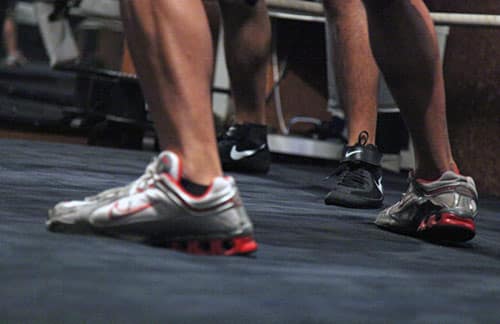
Beginners frequently resist purchasing specialized boxing footwear under the assumption that standard athletic sneakers provide adequate utility. In practice, generic trainers fundamentally compromise a fighter’s mechanics. Non-boxing athletic shoes incorporate cushioned, rounded outsoles that isolate the foot from the canvas and tilt the ankle forward or outward. This design severely hinders an athlete’s ability to "sit down" on punches to generate torque from the floor up.
Placing a developing boxer into proper ring footwear immediately alters their kinetic chain. A dedicated boxing shoe strips away superfluous cushioning in favor of a low-profile outsole that keeps the foot in direct contact with the floor. The reduction in unnecessary midsole material significantly lowers the foot’s center of gravity, minimizing ankle rollover risks while drastically reducing total shoe weight. When feet feel lighter and closer to the ground, fighters can maneuver across angles with enhanced fluidity, execute rapid retreats, and plant firmly to deliver powerful hooks and crosses without their feet sliding or rolling over thick rubber ledges.
Critical Engineering Features of Boxing Footwear
Selecting an appropriate ring shoe requires evaluating multiple interrelated technical characteristics, ranging from compound grip levels to upper height and structural rigidity.
1. Grip and Pivot Mechanics
The primary engineering challenge of a boxing shoe is balancing traction with rotational mobility. When a fighter transfers weight to throw a punch, the shoe must grip firmly enough to prevent slipping and loss of power. Conversely, delivering hooks, crosses, and shifting angles requires the ball of the foot to pivot smoothly without excessive friction.
Standard running and basketball shoes perform poorly under these conditions; their tread patterns either slip unexpectedly on canvas or grip so aggressively that the foot gets caught, increasing strain on the fighter’s knees and ankles. The ideal boxing outsole achieves a calibrated equilibrium: providing sufficient bite for abrupt braking and power transfer while allowing the forefoot to rotate freely during punches.
2. Sole Thickness, Density, and Outsole Geometry
The structural composition of the outsole dictates whether a fighter feels rooted "in" the ground or balanced "on" it. Thinner outsoles offer superior sensory feedback, allowing athletes to feel the canvas and respond quickly with agile movements. However, ultra-thin profiles demand greater foot conditioning and arch stamina, as reduced cushioning can fatigue the intrinsic muscles of the foot during long training sessions. Furthermore, overly pliable thin soles can allow the foot to spill over the edge if the base is too narrow for the wearer.
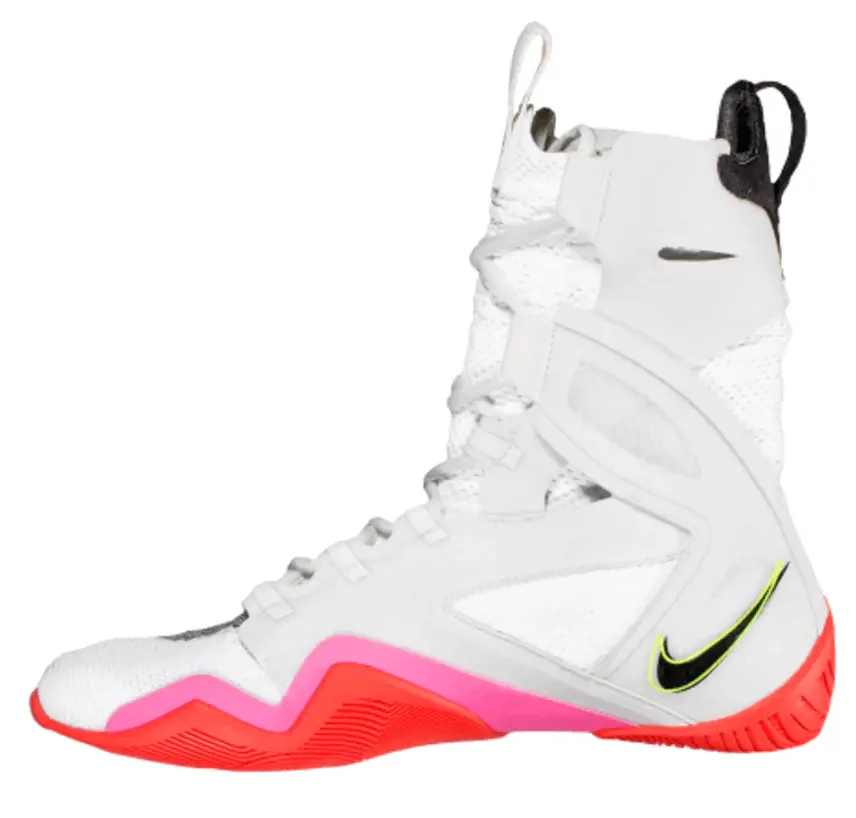
Thicker, firmer outsoles deliver an uncompromising, rigid platform. This rigidity prevents unwanted torsional flex, enabling the athlete to push off a solid surface for explosive movements rather than losing kinetic energy into soft cushioning. Elevated heels, frequently seen in standard sneakers, are particularly detrimental because they pitch the body weight onto the toes, preventing boxers from dropping their weight into their heels to anchor power or resist incoming pressure.
Outsole texture also plays a decisive role. While some designs feature pronounced cleats or raised rubber ridges for aggressive bite, these protrusions can feel uneven beneath the feet and diminish stability during flat-footed stances. Flatter, consistent rubber outsoles tend to provide the most reliable canvas contact. Additionally, models featuring outsoles that wrap upward around the toe and heel offer enhanced grip during deep forward pivots, though fighters with lower foot clearances may find wraparound toe rubber prone to catching on the floor during rapid lateral steps.
3. Weight Profile and Material Distribution
Boxing shoes vary substantially in total weight, driven by the materials chosen for the uppers and the density of the bottom unit. Ultralight designs incorporate breathable mesh, thin synthetic overlays, and minimalist rubber outsoles, delivering a nearly barefoot sensation that maximizes foot speed. In contrast, shoes built with structured synthetic paneling, heavier stabilizing plates, or natural leather provide a unified, locked-in feel that ties the foot, ankle, and lower leg together. While heavier shoes offer rigid support for heavy punchers, fighters who prioritize agility often view excessive upper reinforcement as cumbersome.
4. Collar Height and Ankle Stabilization
Boxing footwear falls into three primary silhouette profiles: low-top, mid-top, and high-top boots. Low-top variations terminate around or just below the ankle joint, affording uninhibited joint articulation for boxers who rely on rapid bounce and lateral agility. However, low-tops offer minimal mechanical protection against sprains, making them best suited for fighters with strong, conditioned ankles.

Mid-top and high-top boots extend several inches up the lower leg, with high-tops reaching well toward the calf. Traditional wisdom holds that taller boots provide superior structural stabilization, mitigating the risk of ankle roll during sudden shifts in momentum. High-tops also provide proprioceptive advantages; by maintaining continuous contact with the shin and lower calf, they increase the fighter’s kinetic awareness, naturally encouraging disciplined, upright stances and preventing awkward, over-contorted foot placements.
Fit remains critical with high-top footwear. Because calf circumference, shin length, and ankle width vary widely across athletes, an ill-fitting high boot can either constrict the calf muscle uncomfortably or sit excessively loose around the joint, negating its stabilizing purpose.
5. Stationary Stability and Punch Mechanics
A widespread misconception among casual observers is that boxing footwear should mirror the designs of tennis or running sneakers because fighters move constantly. Running shoes are engineered to guide forward rolling strides, whereas court shoes facilitate sharp linear deceleration across wide distances.
Boxing, by contrast, is primarily characterized by micro-adjustments, short explosive shuffles, and sudden stationary planting. A boxer must frequently drop their base, plant both feet flat on the canvas to deliver maximum torque, and instantly pivot or step before planting again. Soles that curve upward at the edges or feature rounded heels compromise this stationary stability, preventing the athlete from creating an immovable foundation during punch execution.
6. Fit, Width, and Upper Flexibility
Footwear width and upper elasticity are critical factors in training comfort and injury prevention. A boot that is excessively narrow restricts natural toe splay, preventing the forefoot from flattening against the canvas to generate stability. When a foot overhangs the outsole perimeter, lateral balance is compromised, and painful pinch points often form at the metatarsal heads or the heel, leading to blisters.
Uppers featuring flexible mesh around the forefoot naturally accommodate broader feet by stretching under load, whereas stiff synthetic leather, molded plastics, or thick rubber overlays maintain a rigid boundary that may cause severe pinching if the last does not match the athlete’s foot shape.
7. Arch Contouring and Ring Surface Interaction
Internal sole contouring must align with the user’s arch structure and the training surface. Fighters with elevated arches typically require anatomically contoured footbeds to prevent strain along the plantar fascia, whereas athletes with flat feet often perform better in flat, neutral footbeds that do not press awkwardly into their midfoot.
Gym conditions also dictate footwear needs. On hard, dense rings or unpadded timber training floors, flatter minimalist shoes can transmit high impact through the joints. Conversely, thick canvas rings with soft foam underlayments can swallow ultra-flat soles, in which case firmer, slightly elevated outsoles help the fighter sit on top of the surface rather than sinking into it.
8. Build Quality and Durability
The torsional forces generated during punching place unique stresses on footwear construction. High friction along the ball of the foot frequently causes delamination, where outsoles separate from synthetic uppers. Top-tier shoes employ reinforced stitching alongside heavy-duty adhesives to withstand prolonged lateral torque. In situations where soles begin to pull away after months of rigorous work, specialized adhesives such as Shoe Goo or professional cobbler repairs can extend the shoe’s service life.
Evaluation of Prominent Boxing Shoe Brands
The global boxing shoe market encompasses distinct categories, from mass-market sporting goods conglomerates to traditional leather workshops and bespoke European artisans.
1. Market Leaders: The Nike Lineup
Nike maintains a dominant position across professional training camps and amateur tournaments, combining modern athletic aesthetics with technical boxing lasts.
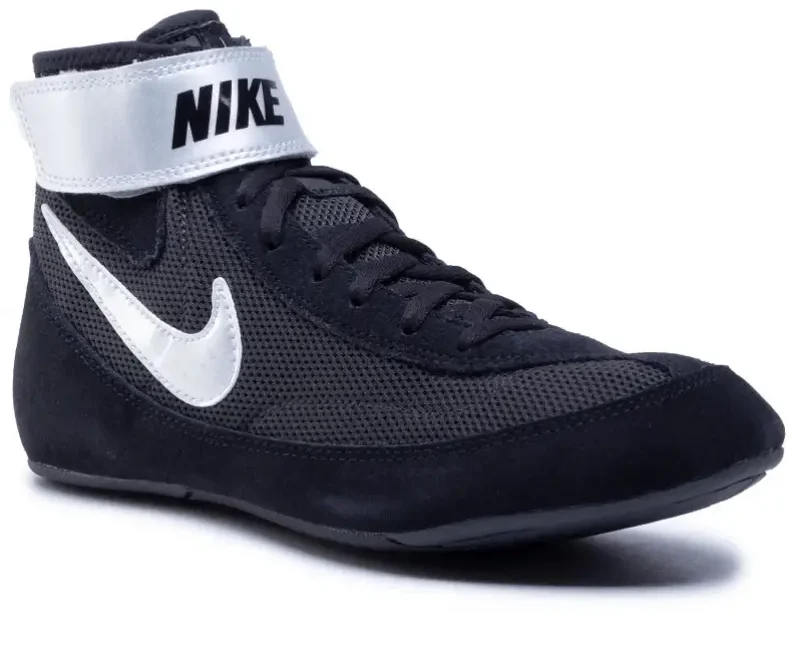
- Nike Speedsweep (Low-Top): Originally positioned as an entry-level crossover wrestling shoe, the Speedsweep has become a staple low-top option for boxers seeking an agile, stripped-back profile. Featuring a minimalist rubber sole with dependable traction and an unrestrictive ankle collar, it allows athletes with robust ankles to sit down on punches while pivoting effortlessly. Long-term users praise its durability relative to its modest price point.
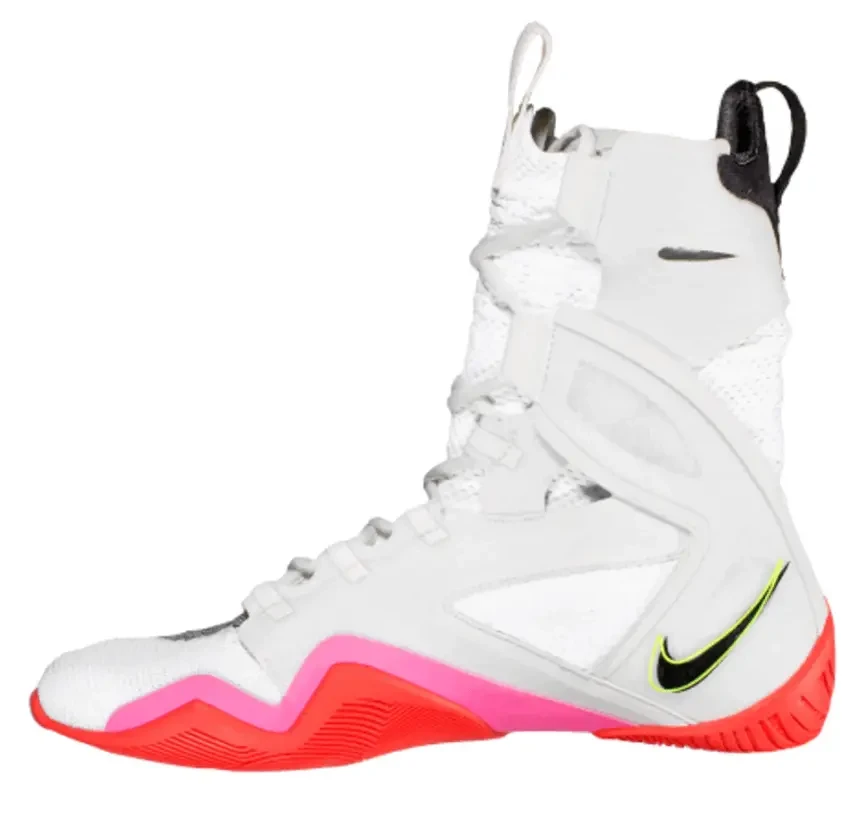
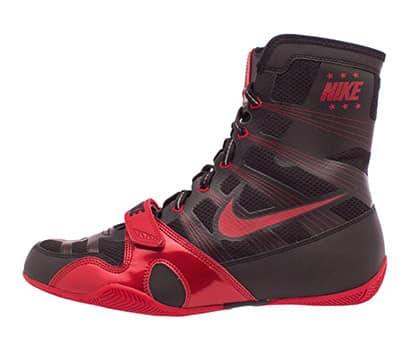
- Nike HyperKO (High-Top): Popularized globally by multi-division world champion Manny Pacquiao, the HyperKO serves as a benchmark for professional competition boots. It features an exceptionally rigid, boot-like outsole that moves as a single unified piece with the foot, paired with an ultra-thin, breathable upper extending up the lower calf. While offering lightweight support, fighters who prefer plush ankle padding may find its thin collar somewhat spartan, and those with narrow lower legs occasionally note modest space around the upper lacing area.
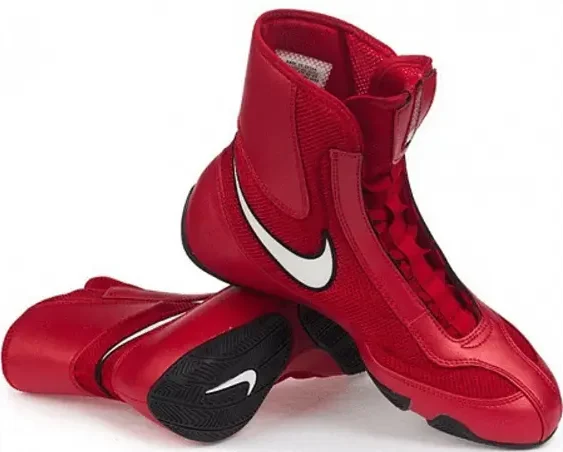
- Nike Machomai and KO Mid: The Machomai mid-top represents one of the most widely deployed competition models over the past decade, prized for its classic silhouette, balanced grip, and lightweight construction. The updated KO Mid series continues this design philosophy, offering an intermediate collar height that delivers ankle security without the bulk of a full-calf boot.
2. Mainstream Contenders: Adidas, Reebok, Rival, and Venum
A secondary tier of established manufacturers produces competitive models that challenge the dominant market leaders:
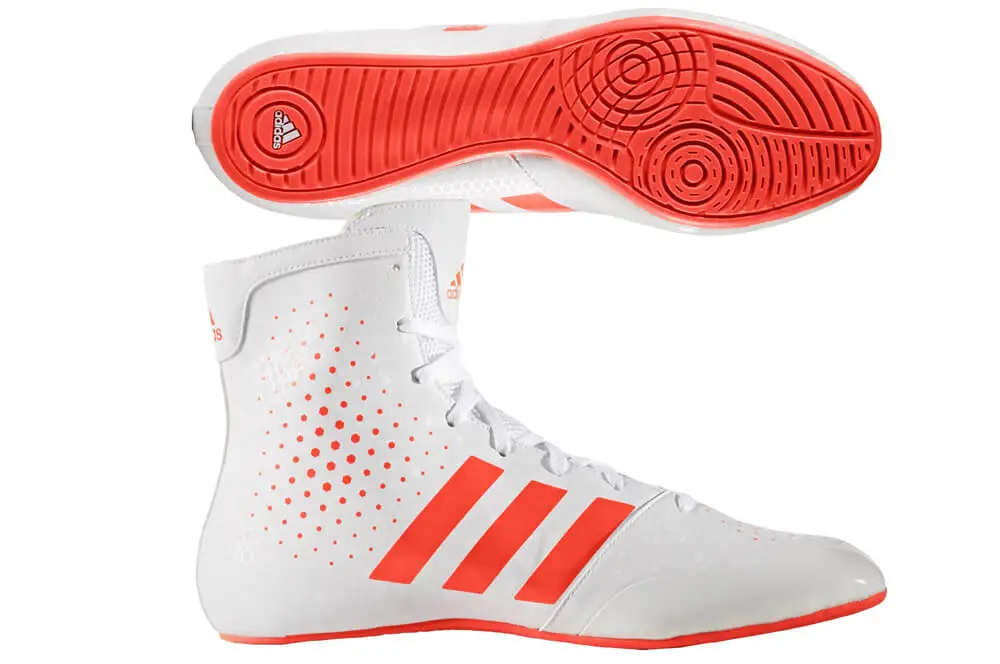
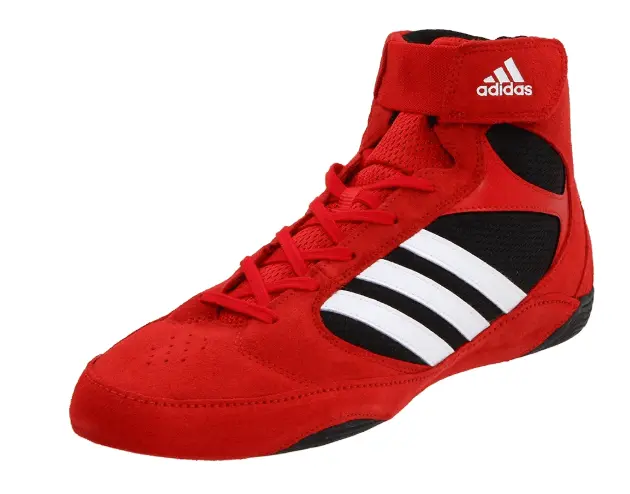
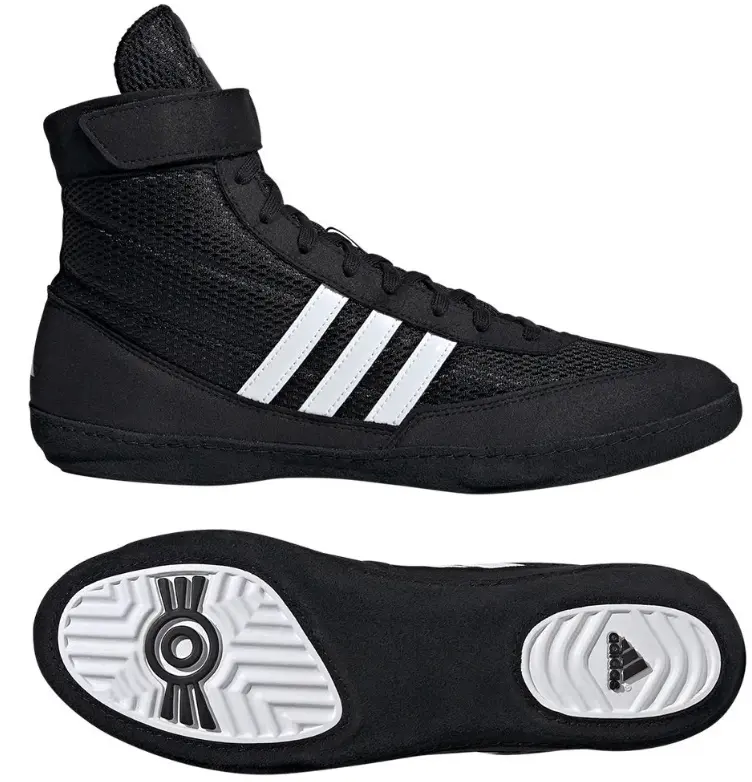
- Adidas: Strong throughout European gyms and international amateur circuits, Adidas delivers models known for distinct lasts and technical fabrics. The Speedex incorporates lightweight construction and sharp, aggressive styling in a low-top format. The KO Legend 16.2 provides balanced mid-top performance, while the long-standing Box Hog series remains a popular alternative to the Nike Machomai due to its lightweight mesh construction and flat ground feel. Entry models like the Combat Speed and Pretereo crossover well from wrestling, although wrestling-specific outsoles can occasionally prove overly tacky on soft canvas.
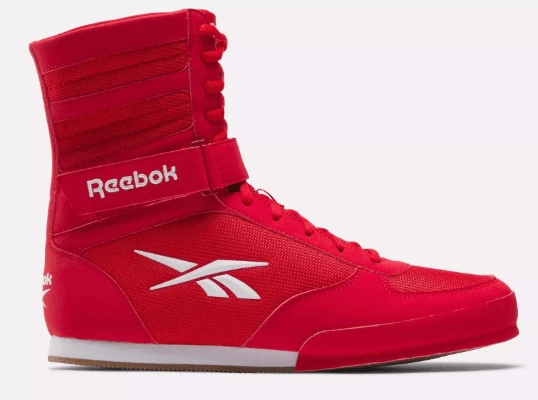
- Reebok: Endorsed at the elite level by fighters such as Floyd Mayweather and Amir Khan, Reebok’s dedicated boxing boot directly targets the high-top professional market. It features a supportive, structured chassis, though some athletes note that its narrow last can make putting the boot on time-consuming.
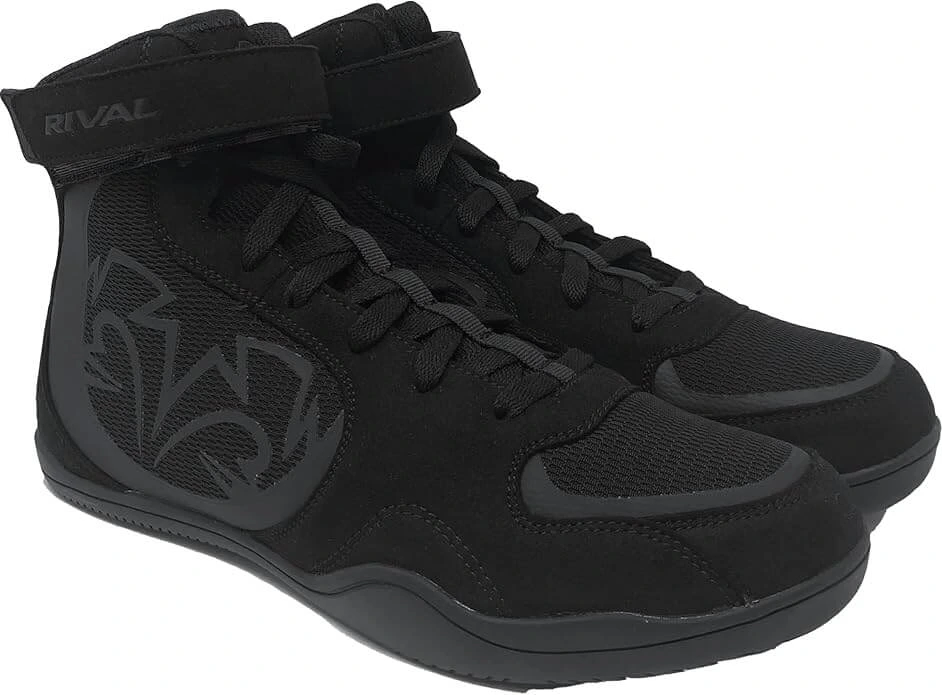
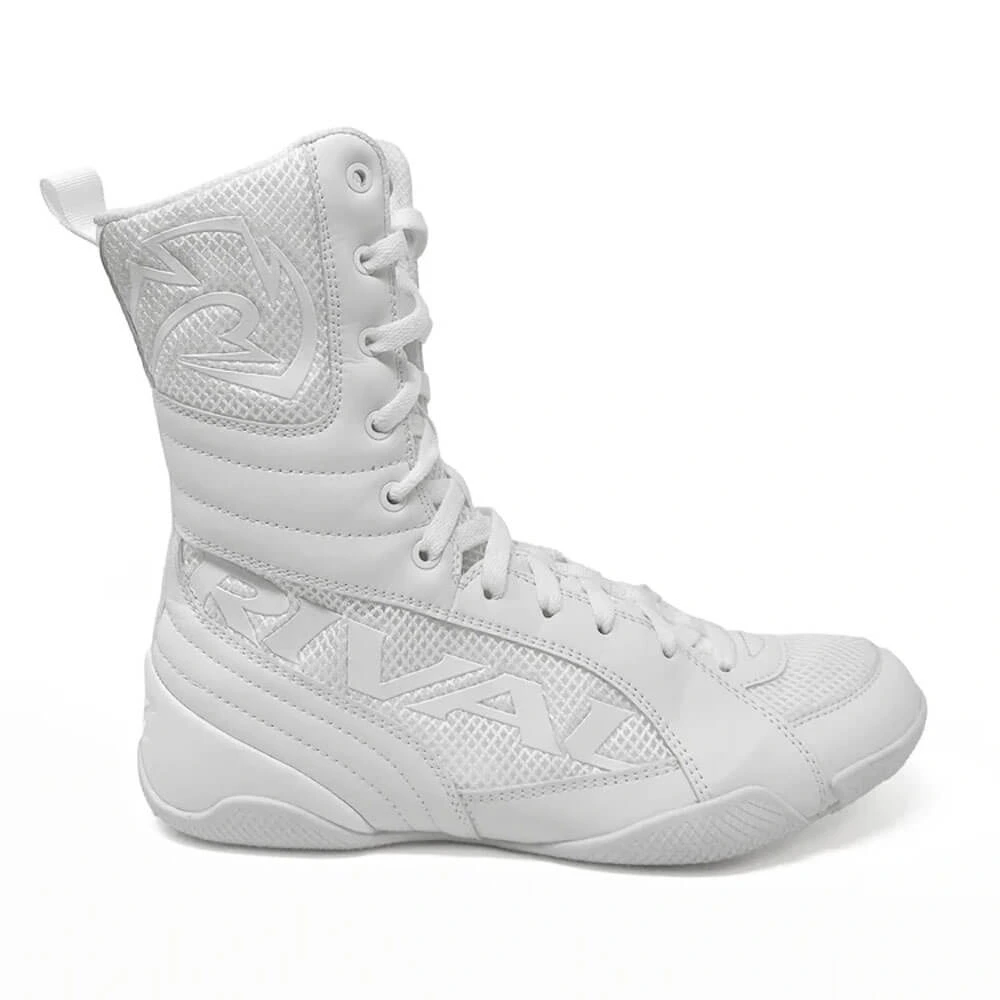
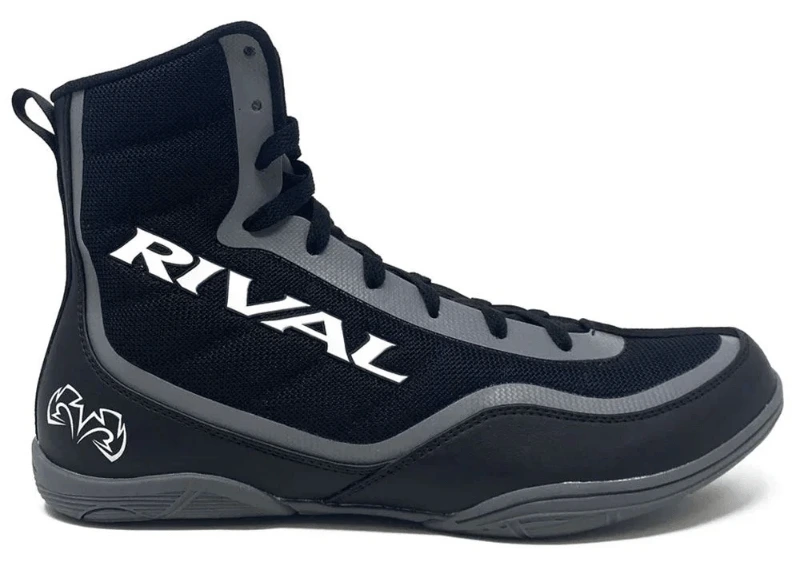
- Rival: Renowned for specialized boxing equipment, Rival’s Guerrero low-top offers varied styling and lightweight agility, while the high-top RSX provides substantial ankle stabilization and a flat, low-cushion ride. The RSX is heavier than models like the HyperKO due to thicker upper padding and protective materials, offering a secure feel, though suede-accented areas on the upper can show premature wear under intense training.
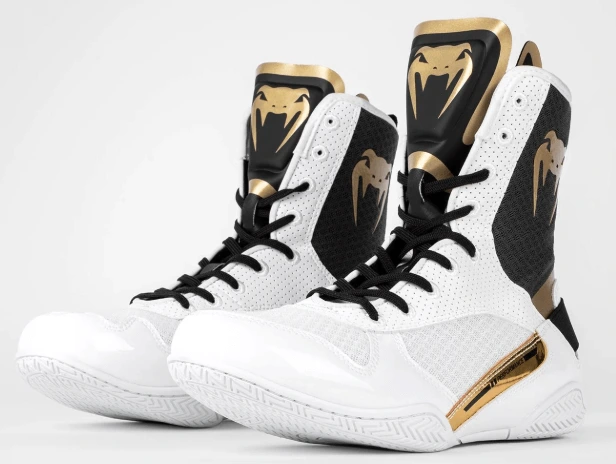
- Venum: The Venum Elite enters the premium price category as a mid-top designed to compete with industry-leading synthetics. While offering flexible materials and ankle support, the brand occasionally faces skepticism from traditional boxers due to its mixed track record across broader combat equipment lines.
3. Mexican Heritage Brands: Reyes and Adams
Mexican boxing equipment is recognized for durable, natural leather craftsmanship, offering an alternative to modern mass-market synthetic production.
- Cleto Reyes: Built primarily from genuine leather over rubber outsoles, Cleto Reyes high-top boots reflect classic ring aesthetics. While leather requires an initial break-in period to contour to the athlete’s foot, it delivers exceptional longevity and foot-molding comfort over time. Select high-top iterations include lateral zippers alongside traditional laces, significantly reducing the time needed to secure the boots for daily gym work.
- Adams Boxing: Operating as an American-designed brand produced in Mexico, Adams has captured a passionate niche following, even appearing on high-profile champions like Pacquiao. Unlike traditional Mexican all-leather designs, Adams focuses on contemporary synthetic builds featuring bold colorways and modern silhouettes, emphasizing forefoot cushioning and out-of-the-box comfort.
4. Bespoke and Luxury Performance: Winning, Mizuno, and Di Nardo
For elite professionals and gear connoisseurs, high-end manufacturers offer hand-assembled footwear commanding premium prices:
- Winning (Japan): Celebrated for protective headgear and gloves, Winning produces ultralight short boots (such as the RS-100) featuring understated designs, rubber outsoles, and synthetic uppers. While prized by some for their featherweight feel, opinions among technical staff and retailers are mixed, with some viewing them as straightforward synthetic designs compared to Japan’s other specialized footwear offerings.
- Mizuno (Japan): Long considered by elite fighters—including Canelo Alvarez prior to his custom apparel contracts—to be the apex of lightweight Japanese boot manufacturing. Mizuno models feature meticulously balanced weight distribution, sleek profiles, and precision-engineered outsoles that eliminate the bottom-heavy drag found in lesser footwear.
- Di Nardo (Italy): Occupying the bespoke luxury tier, artisan Filippo Di Nardo constructs custom boxing boots by hand in Italy using high-grade Italian leathers. Blending heritage craftsmanship with custom tailoring, these boots offer exceptional structural integrity and immediate, glove-like comfort, serving fighters seeking custom aesthetic detailing and artisanal durability.
5. Multi-Sport and Budget Alternatives: Asics and Otomix
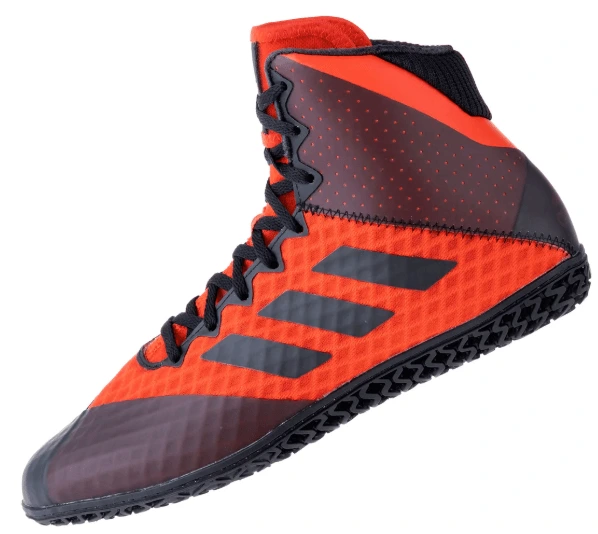
- Asics: While Asics does not heavily market dedicated boxing boots in Western territories, its wrestling line serves as an effective crossover option. Models like the Cael V7.0, JB Elite, and Matflex are frequently seen in boxing gyms, delivering reliable gum-rubber traction, thin outsoles, and durable uppers at entry-level to mid-range prices.
- Otomix: Originally catering to bodybuilders and traditional martial artists, Otomix promotes high-top training shoes into the boxing sphere. Offering wide color selections and varied sizing profiles, they feature flat bases, though their multi-discipline lineage means they lack some of the boxing-specific pivot profiling engineered into purpose-built boots.
6. Mass-Market and Entry-Level Equipment Brands
Generic combat gear brands like Everlast, Title Boxing, Ringside, and Lonsdale produce entry-level boxing shoes readily accessible in retail stores. While priced affordably for beginners, these models often feature basic, rigid soles that lack anatomical contouring, leading to unnatural foot positioning during pivots.
Durability concerns are more common in this category—highlighted by incidents in professional bouts, such as former cruiserweight champion Tomasz Adamek experiencing a complete shoe failure mid-fight. While specific models like the Title Predator offer serviceable entry-level utility, advanced competitors generally gravitate toward footwear specialists whose manufacturing processes emphasize long-term stress resistance and kinetic alignment.
Gym Trends and Crossover Footwear Considerations
In active gym environments, distinct footwear patterns emerge across weight classes, skill levels, and competitive experience. Lightweight athletes and fast-paced volume punchers frequently lean toward low-top options like the Nike Speedsweep or Adidas Box Hog to maximize ankle mobility and lower-leg speed. Heavier fighters and seasoned professionals overwhelmingly favor mid-to-high configurations, with industry observations indicating that approximately 80 percent of competing pros favor mid-tops, while the remaining 20 percent opt for full high-top boots.
For athletes evaluating alternatives, quality wrestling shoes remain a viable and common substitute for dedicated boxing boots. Because both sports demand high traction and low profiles on matting, wrestling shoes replicate the flat ground feel needed to plant for punches. However, fighters must inspect the tread patterns closely: wrestling shoes often feature aggressive rubber textures wrapping the sides of the foot, which can create excess friction and resist smooth pivots on standard ring canvas.
Conversely, standard running, tennis, or basketball shoes remain ill-suited for the sport. Their thick midsoles elevate the foot dangerously above the floor, soft foams absorb punching force before it travels up the kinetic chain, and rounded outsoles disrupt the planted stability fundamental to disciplined ring mechanics. For any boxer seeking to improve footwork, power generation, and balance, acquiring purpose-built ring footwear remains one of the most effective equipment upgrades available.