
The two epic encounters between Jack Dempsey and Gene Tunney remain forever etched in the annals of boxing history, ranking among the most storied championship bouts and the greatest sports spectacles ever witnessed in America. This week marks the one hundredth anniversary of their first monumental meeting, a milestone that invites a deep reflection on the lives, careers, and cultural impact of two extraordinary athletes who defined an era of unprecedented sporting fervor.
Dempsey stood as a bridge between boxing’s rugged, chaotic old era and its slick, modern incarnation, establishing himself as one of the most fiercely charismatic and terrifying fighters the sport has ever seen. Tracing his early life, biographer Randy Roberts noted the brutal hardships of the future champion’s youth, describing how Dempsey lived in mining camps and hobo jungles, rode the freight trains, and frequently begged for what little food he could find. What ultimately set him apart, however, was an unyielding willingness—and even eagerness—to perform any grueling manual labor available. He accepted everything from washing dishes, cutting lawns, and scrubbing floors to the backbreaking toil of coal-mining, digging ditches, and picking fruit.
Dempsey himself maintained a pragmatic view of those harsh formative years, famously declaring, “I was a hobo. But I was never a bum.”
Fighting under the early moniker “Kid Blackie,” Dempsey took part in roughly 100 grueling bouts across Colorado, Utah, and Nevada between 1911, when he turned just 16, and 1914. Looking back on those days, he recalled the pure economic desperation that fueled his resilience: “When you’re fighting, you’re fighting for one thing. To get money. When I was a young fellow, I was knocked down plenty. I wanted to stay down. I couldn’t. I had to collect that $2 for winning or go hungry. I had one fight when I was knocked down 11 times before I got up to win. I had to get up. I was a hungry fighter. When you haven’t eaten for two days, you’ll understand.”
Inside the squared circle, that raw, desperate hunger translated into an assault of unrelenting, terrifying ferocity. Legendary trainer Ray Arcel once likened him to “a saloon fighter,” observing that with Dempsey, every single part of an opponent’s body was a legal target. Sportswriter Paul Gallico echoed that assessment, painting a vivid picture of the champion’s chilling ring persona. Gallico wrote that Dempsey seemed to possess a constant, bottomless well of cold fury situated somewhere close to his throat, driven by tremendous courage, speed, determination, and raw punching power. Noting that Dempsey was never a traditional, polished boxer and possessed little to no defensive skills, Gallico explained that aggression was his only true protection. He never simply boxed an opponent; from the moment the opening bell rang, Dempsey charged forward and maintained an unceasing offensive barrage, trying to batter his rival to the floor until the final bell of the round. With a smoldering truculence etched across his face and undisguised hatred in his eyes, he operated without mercy or pity, asking for no quarter and granting none.
Summarizing his own philosophy, Dempsey stated simply: “To be a good fighter, you have to have three things. You’ve got to be able to give it. You’ve got to be able to take it. And you’ve got to have a fighting heart.”
When Dempsey burst onto the national scene, boxing was struggling through a period of low cultural standing as America approached the chaotic energy of the “Roaring Twenties.” The sport had lacked a truly popular heavyweight champion since the retirement of James Jeffries in 1904. Meanwhile, moral reformers were actively attacking boxing as a sinful blight on society, with their efforts to abolish the sport gathering intense momentum following Jack Johnson’s historic rise to the championship in 1908.
On 5 April 1915, Jess Willard decisively defeated Johnson in Havana, Cuba, positioning the towering new champion for immense national stardom. Yet, following his title victory, Willard embarked on extensive theatrical tours with Buffalo Bill’s Wild West Show and other performance companies, defending his coveted championship only once across an astonishing span of four years.

The stagnation finally ended in 1919 when Tex Rickard, America’s premier boxing promoter, lured Willard back to the ring by offering a guaranteed $100,000 purse to face Dempsey on 4 July in Toledo, Ohio. It marked the first major outdoor prizefight staged in the United States since Jeffries had emerged from retirement only to be battered into submission by Johnson on 4 July 1910. The physical disparity between the men was stark: Willard entered the ring weighing 245 pounds, while Dempsey scaled just 187. By the conclusion of a brutal three rounds, Willard’s jaw and nose were fractured, six of his teeth had been knocked out, and deep lacerations marred his face. Unable to continue, Willard surrendered his crown, making Jack Dempsey the new heavyweight champion of the world.
Rickard harbored a grand vision of transforming boxing into a respectable, high-status spectacle that would appeal across all social classes, and Dempsey’s electrifying fighting style and magnetic charisma made him the perfect vehicle for that ambition. As religious reform movements began to lose steam and an increasing number of states legalized the sport, the stage was set for an even grander showcase: a clash between Dempsey and the dashing French war hero Georges Carpentier.
Contested on 2 July 1921 inside a massive temporary arena erected at Boyle’s Thirty Acres on the outskirts of Jersey City, the Dempsey-Carpentier bout shattered records. More than 80,000 spectators—the largest crowd ever to attend an American sporting event up to that time—poured in, generating a live gate of $1,789,238, which more than doubled the previous financial record for a prizefight and equates to more than $32.5 million today. Furthermore, the event made history as the first world championship match to be broadcast live over the radio with blow-by-blow commentary.
Carpentier was universally celebrated as a man of destiny, revered not only in his native France but throughout Europe. As the reigning world light-heavyweight champion, his public image was burnished by his service as a military pilot during the First World War, an assignment for which he was decorated twice for valor. Handsome, graceful, highly intelligent, debonair, and capable of speaking reasonably good English, he was regarded by many contemporaries as the most glamorous fighter to ever lace up a pair of gloves.
In sharp contrast, public perception cast Dempsey as the villain. He had been indicted and tried—though ultimately acquitted—on charges of draft evasion during the war. Biographer Randy Roberts noted his rugged physical appearance, observing his dark complexion, coarse beard, thick eyebrows, and a face seemingly cast in a permanent iron scowl. While the reserve Dempsey exhibited later in life was eventually recognized as a manifestation of basic shyness, his public awkwardness in 1921 was widely misconstrued as the cold arrogance of a mean-spirited man.
The narrative practically wrote itself: hero versus villain, with the charismatic foreign challenger firmly occupying the preferred role. “The Frenchman was the hero,” Dempsey later reflected. “I was the flat-nosed bum.”
Dubbed “The Fight of the Century,” the event commanded global attention. On the morning of the bout, legendary sportswriter Grantland Rice captured the prevailing excitement, writing that it marked the greatest single day in the ancient history of an ancient sport, capturing the imagination of millions from crowded urban centers to the most remote outposts of the world in a way no contest had since the dawn of civilization.
The ringside crowd read like a registry of the American elite, featuring members of the Vanderbilt, Rockefeller, Whitney, and Astor families. The United States Senate and House of Representatives even adjourned early in anticipation of the spectacle, as 12 senators and 90 congressmen held tickets. Notably, women attended in unprecedented numbers; while female spectators at the earlier Willard-Dempsey fight had been relegated to a restricted section, at the Dempsey-Carpentier clash they mingled freely with male attendees.
In accordance with the traditions of the era, the champion was introduced first. Dempsey later recalled the moment vividly: announcer Joe Humphreys raised his megaphone and bellowed, “In this corner, weighing 188lbs, from Salt Lake City, Utah, the heavyweight champion of the world, Jack Dempsey.” The only response from an audience of 80,000 Americans was sparse applause and a low murmur. When Humphreys followed with, “And in this corner, weighing 172lbs, the challenger from Paris, France, Georges Carpentier,” the crowd erupted in a deafening roar that, as Dempsey admitted, truly hurt.
The opening bell rang at 3:16 pm, and by 3:30 pm, it was all over. Reflecting years later, Dempsey remarked on the poignant irony of the mismatch: “Carpentier had more charm, more good manners, and more class in his dress than anybody I had ever met. But it was probably the worst mismatch in the history of the heavyweight division.”
The New York Times devoted multiple pages to the historic outcome, splashing the news across page one with a massive, three-line headline. Yet the public acclaim continued to favor the vanquished challenger. “I read the stories about the fight in the next day’s papers,” Dempsey recalled. “Carpentier was the hero of the hour. Never before had anybody seen such courage. I was just a butcher who happened to win. I was a pretty bitter fellow. No matter what you’ve got, you want them to like you.”
Dempsey’s legendary status expanded further with his next defense against Luis Firpo, Argentina’s ferocious “Wild Bull of the Pampas.” On 14 September 1923, a crowd of over 88,000 fans packed the Polo Grounds in New York, while an estimated 35,000 more were turned away at the gates. America’s blue-blood aristocracy once again lined the ring, this time joined by baseball icon Babe Ruth.
Just ten seconds into the opening round, a devastating left uppercut from Firpo dropped Dempsey to his knees. The resilient champion rose, only to floor Firpo seven times in a chaotic flurry. Firpo retaliated with a relentless series of punches, punctuated by a monstrous right hand that knocked Dempsey entirely out of the ring. Landing in the press section and cutting his lower back on a typewriter, Dempsey was hoisted back into the ring by sportswriters just before the referee reached the count of 10—a dramatic moment immortalized on canvas by artist George Bellows in one of the most famous images in sports history.
“It was pitch dark for a few seconds,” Dempsey later recounted of the fall. “Then I managed to focus on Firpo’s fuzzy form. I don’t remember climbing back in the ring, but I remember seeing 20 Firpos standing in front of me.” In the second round, Dempsey settled the score by knocking the challenger down twice more, culminating in a knockout at 57 seconds of the frame.
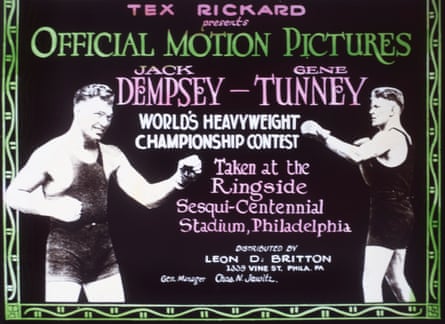
True to form, Dempsey subsequently placed his title on ice, remaining inactive for three full years before finally agreeing to defend his crown against Gene Tunney on 23 September 1926.
Tunney was a brilliant, meticulous tactician. The only blemish on his 67-bout professional career was a narrow decision loss to the great Harry Greb, whom he faced five times. As a young man, Tunney had knocked out Soldier Jones on the undercard of the Dempsey-Carpentier fight, afterward choosing to remain in his robe at ringside to watch the main event. Over the ensuing years, he studied countless films of Dempsey to decipher his fighting style.
An intellectual and complex figure, Tunney lacked a high school diploma yet was a voracious reader dedicated to self-improvement—a pursuit that occasionally drew mockery from sports journalists who viewed his literary interests as a stunt. During the buildup to their encounter, Paul Gallico famously criticized Tunney, writing that the challenger had harmed his own prospects with his "cultural nonsense." Gallico argued that a man stepping into the ring against Dempsey needed to be a pure fighter driven by a natural viciousness and a desire to commit violence, doubting whether someone who appreciated first editions and works of art possessed the necessary killer instinct.
Tunney offered a sharp rejoinder, declaring, “It never occurred to me that a habit of reading could be seen as a stunt or a joke. Wasn’t reading something we wanted to champion?”
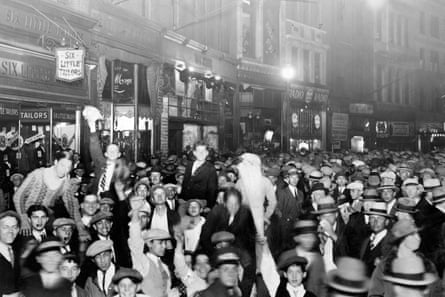
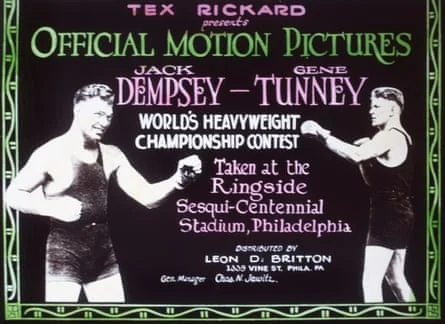
A staggering total of 120,757 fans jammed Philadelphia’s Sesquicentennial Stadium to witness the showdown, shattering previous financial and attendance records with a gate of $1,895,733—equivalent to more than $36 million today—while an estimated 39 million additional listeners tuned in via radio broadcasts.
Scheduled for 10 rounds, the match pitted a 29-year-old challenger at the absolute peak of his abilities against a champion two years his senior whose body bore the accumulated scar tissue of hundreds of punishing fights and a three-year layoff. It was a classic narrative of a puncher past his prime running headlong into a supreme boxer in his physical prime.
“From the time the bout started,” Dempsey acknowledged afterward, “I was aware that my body and brain weren’t communicating properly. I was slower than I thought, or Gene was faster. He glided around the ring like he was on ice. Wherever I went looking for him, he stuck that left of his in my face, keeping me off balance, piling up points. Now and then, he’d stop me with a stiff right. There seemed to be nothing I could do, though I tried. Tunney was so scientific a boxer that all I seemed to be able to do was to take his punishment.”
Tunney swept every round, opening a deep cut over Dempsey’s right eye and eventually jabbing his left eye entirely shut. By the final bell, the former champion’s jaw was severely swollen and bloodied.
“I have no alibis to offer,” Dempsey conceded. “I lost to a good man.” Reflecting on the painful reality of defeat years later, he added, “It’s sad to hear the fellow with the microphone yell: ‘The winner and new heavyweight champion of the world’ when you’re the old one.”
Yet that evening left the fallen champion with one unexpected memory that would endure for the rest of his life. Throughout his career, despite his dominance, Dempsey had endured the sting of hostile crowds—booed against Willard, booed against Carpentier in front of an American audience, and booed even when defeating an Argentinian before his own countrymen. But as he made his way out of the ring after losing his crown to Tunney, something unprecedented occurred. To his immense surprise, he was met not with jeers, but with thunderous, sustained cheers, enthusiastic applause, and chants of his name. It was a sound of public affection that he realized, with profound emotion, he had hungered for his entire life.
One year later, the two men would meet again in Chicago for a rematch that generated boxing’s first $2 million gate—a legendary encounter forever remembered for the controversial "long count"—before closing the final chapter on one of the greatest rivalries in the history of sport.