


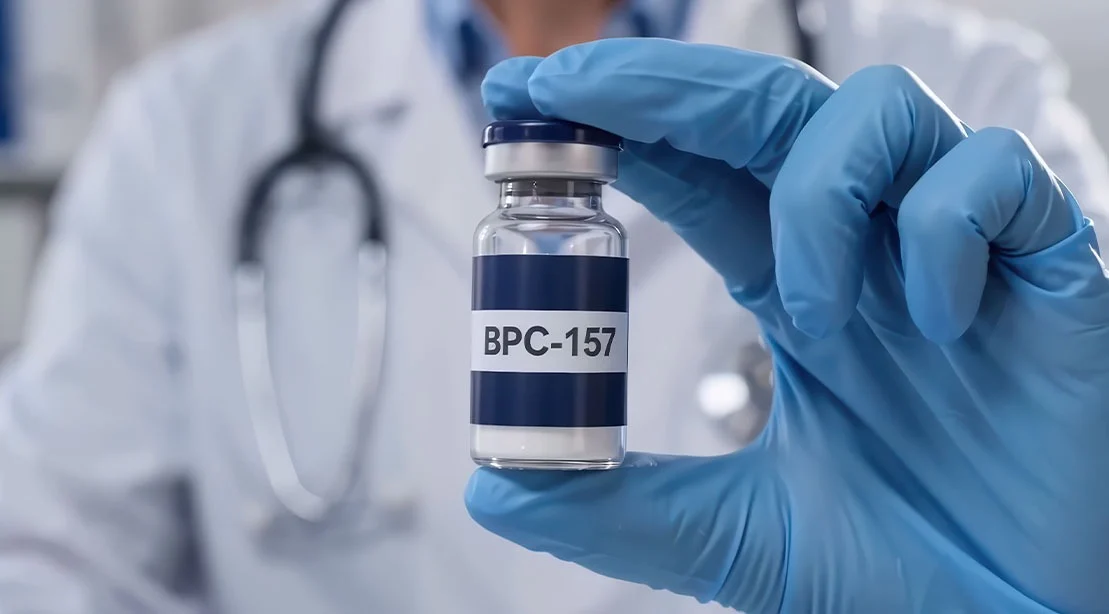
BPC-157—formally known as Body Protective Compound 157—has accomplished something rather remarkable in modern health and fitness culture. Without ever securing formal regulatory approval, it has quietly ascended to become one of the most popular and widely discussed substances in the athletic community. For years, the synthetic peptide has circulated through bodybuilding gyms, mixed martial arts training facilities, CrossFit boxes, and obscure internet forums, accompanied by an almost supernatural billing.
If an athlete suffered a torn tendon, a nagging shoulder injury, or persistent gastrointestinal distress, the underground remedy was almost always the same: try BPC. The lore surrounding the compound even extended to anecdotes about ailing pets, though veterinary application remains far outside its intended scope. Yet, beneath the hyperbole of internet message boards lies a rapidly shifting reality. BPC-157 is no longer confined to the shadows of the fitness underground; it is increasingly appearing in clinical settings, prompting medical researchers and regulators to scramble to understand a phenomenon that patients adopted long before science could validate it.
What Is BPC-157 and How Does It Claim to Heal Tendons?
Within the fitness community, BPC-157 has earned the dramatic moniker of the "Wolverine peptide," a reference to the comic book character’s legendary regenerative abilities. Believers credit the compound with an accelerated capacity to heal soft tissue, repair damaged ligaments, and reduce inflammation. In many circles, it is frequently combined with another experimental substance, TB-500, in what practitioners refer to as the "Wolverine Stack."
Until very recently, quantifying the actual prevalence of BPC-157 use was nearly impossible. Public health officials and mainstream physicians had little visibility into a phenomenon driven by grey-market suppliers and word-of-mouth recommendations. However, new data has provided a clearer, if still startling, picture of its spread.
Researchers at the health-data analytics company nference recently conducted a broad examination of more than 15 million de-identified medical records. Within that vast dataset, they identified 1,039 patients whose attending physicians had formally documented the use of BPC-157 in their medical histories. Most notably, the number of newly documented users surged roughly 33-fold between 2020 and 2026. While the researchers emphasize that this work is preliminary and has not yet undergone formal peer review, it represents some of the clearest empirical evidence to date that BPC-157 has successfully escaped the peptide-geek underground and breached the mainstream medical conversation.
Who Is Actually Using BPC-157? (New Patient Data)
The nference study sheds important light on the demographics driving this trend. Over the analyzed period, new users of BPC-157 skewed increasingly younger and predominantly male. When patients discussed the substance with their doctors, the most frequently reported reasons for its use included sports injuries, chronic musculoskeletal pain, and persistent gastrointestinal complaints.
Perhaps most revealingly, among the patients whose acquisition sources were known to researchers, compounding pharmacies and grey-market peptide sellers predominated. This is where the trajectory of BPC-157 intersects with regulatory reality in complicated ways.
BPC-157 has never received approval from the U.S. Food and Drug Administration for the treatment of any medical condition whatsoever. It is not approved for tendons, torn pectoral muscles, stubborn cases of tennis elbow, or the chronic digestive ailments that countless individuals claim vanished just days after their first injection.
The vast majority of BPC-157’s towering reputation stems from preclinical research, predominantly laboratory experiments conducted on animals. What remains conspicuously absent from the scientific literature are the adequately powered, randomized human clinical trials that regulatory agencies and medical professionals standardly require before declaring that a drug is safe and effective for healing human connective tissue.
The recent medical-record analysis does not resolve this fundamental scientific deficit. Because the study is observational, outcomes were not systematically collected, and there was no untreated control group included for comparison. If a patient reports that their chronic shoulder pain improved while using BPC-157, clinical science cannot definitively determine whether the peptide facilitated the healing, whether physical therapy played the primary role, whether natural biological recovery and the passage of time did the work, or whether the patient simply stopped performing the specific exercises that caused the injury in the first place.
Meanwhile, the regulatory landscape is attempting to keep pace with an explosion in consumer demand. Earlier this summer, an FDA advisory committee voted to recommend allowing BPC-157 for certain pharmacy compounding practices. However, public health experts emphasize that advisory committee votes do not constitute official FDA approval, nor do they serve as definitive proof that a drug actually works as advertised. A final, formal regulatory decision remains pending, leaving the substance in a persistent regulatory gray area.
The Dangerous Risks of Buying Peptides Online
For anyone navigating the unregulated world of internet peptide purchases, a far more immediate and alarming hazard exists: consumers may not even be receiving actual BPC-157 when they place an order online.
In a recent investigative report, journalists at WIRED purchased several supposedly injectable peptides from storefronts in New York and submitted them to independent laboratories for chemical analysis. The results were concerning. Products explicitly labeled as BPC-157, alongside other trending compounds like PT-141, NAD+, and retatrutide, failed to display the advertised active ingredients upon testing. Whatever chemical concoctions were actually sealed inside those vials, laboratory screening could not verify that they matched the claims printed on the labels.
This quality-control crisis introduces a profound paradox into the modern biohacking movement. An ongoing debate can be had regarding whether an experimental, properly synthesized molecule possesses the therapeutic efficacy its proponents claim. However, it is impossible to intelligently debate the medical effectiveness of a substance when the vial in question may contain an entirely different chemical compound, a degraded peptide, or potentially harmful contaminants.
Advocates for the responsible exploration of sports science are quick to note that they are not inherently opposed to peptide research. On the contrary, peptides may eventually provide the fields of sports medicine and regenerative orthopedics with extraordinary, highly effective therapeutic tools. It is entirely possible that BPC-157 will eventually prove deserving of at least a portion of its formidable reputation. Many observers readily admit that anecdotal reports of its success are compelling, and some who have experimented with the compound report tangible benefits.
Unfortunately, the rigorous standards of modern medicine do not operate on personal testimonials alone. The most compelling aspect of the BPC-157 phenomenon is not that the drug has been scientifically proven to heal the human body—because, strictly speaking, it has not. Rather, the truly arresting story is that thousands of individuals have apparently decided they simply cannot wait for clinical science to catch up, choosing instead to experiment on themselves.
As a result, traditional medicine now finds itself in the unusual position of scrambling to understand a trend driven entirely by grassroots adoption. It is a dynamic that feels increasingly familiar in an era where internet culture and personal health intersect outside the boundaries of institutional science.