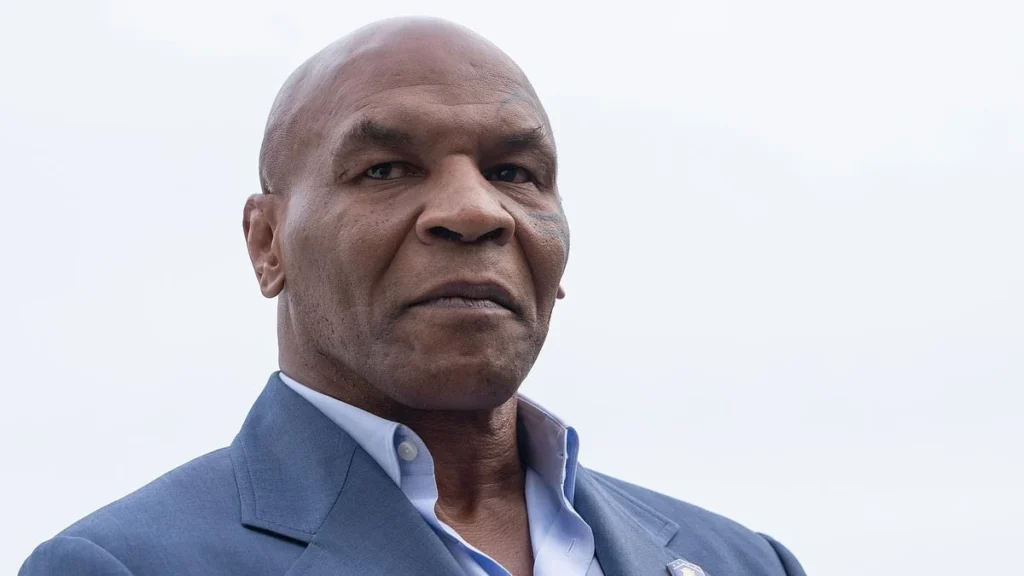
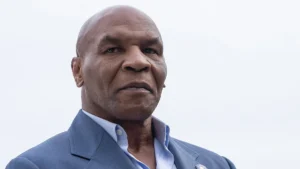
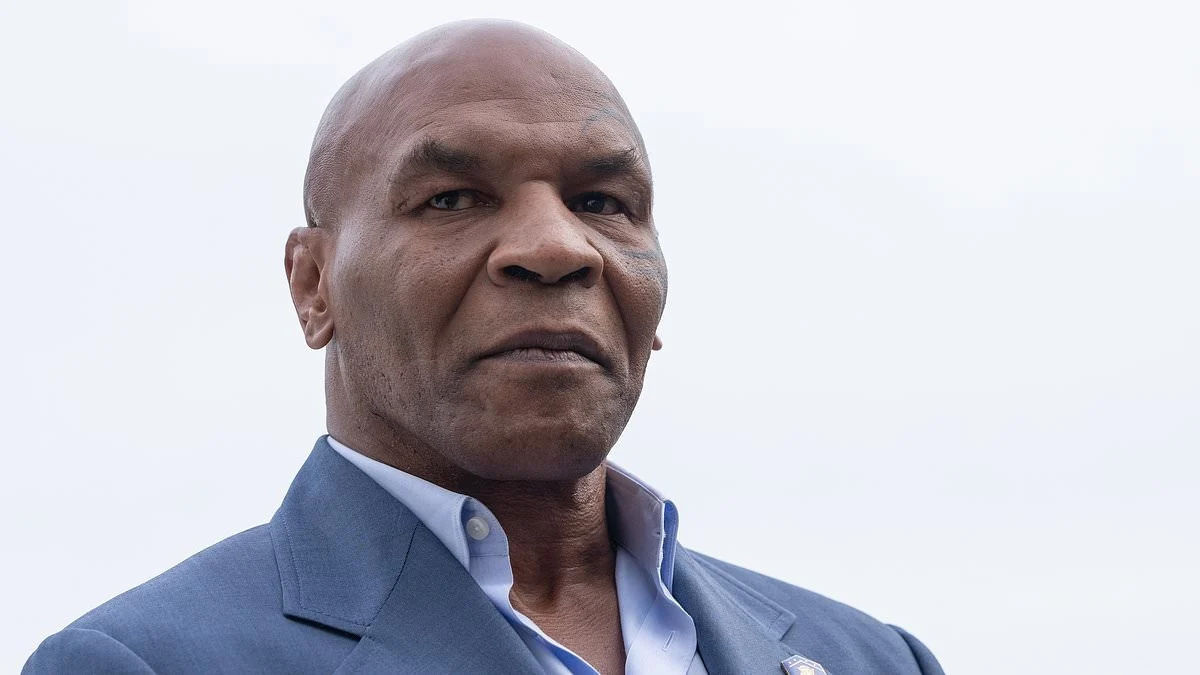
Former undisputed heavyweight champion Mike Tyson has credited a potent psychedelic compound derived from toad secretions with saving his life, revealing that the substance pulled him back from the brink of death following severe, near-fatal drug overdoses.
The 60-year-old boxing icon laid bare his darkest moments with substance abuse in a revealing Netflix docuseries, titled "TYSON." In the project, the former fighter offers a harrowing, unfiltered window into the depths of an addiction crisis that nearly cost him everything, recounting the terrifying physiological toll of his lowest points and describing how an unconventional, mind-altering intervention fundamentally altered the course of his recovery.
Speaking candidly on camera, Tyson revisited a particularly catastrophic overdose that stood out even among years of heavy substance abuse. Having long wrestled with dependency on alcohol and cocaine throughout and following his turbulent professional boxing career, the former champion described a terrifying confrontation with his own mortality.
"When I think about a low point, I think about this — OD’ing," Tyson admitted in the documentary. "I’m bleeding out, my nose is bleeding and I’m hysterical. I’m sweating."
Tyson acknowledged that drug overdoses had unfortunately become a recurring hazard of his lifestyle at the time, but emphasized that this specific crisis escalated beyond anything he had previously endured. "I OD’d, I’ve done it plenty of times, but this one was a little more extreme than others," he said, recalling the sheer physical distress and panic that engulfed him as his body struggled under the weight of the narcotics.
According to the documentary, the turning point in Tyson’s long and fraught battle with chemical dependency did not arrive through conventional rehabilitation alone, but through an encounter with 5-MeO-DMT, an extraordinarily potent natural psychedelic compound secreted by the Bufo alvarius toad. Tyson claims the powerful entheogen provided the psychological reset he desperately required, ultimately helping him renounce both cocaine and alcohol permanently.
The intervention came about during a period of mounting desperation, guided by those in his immediate inner circle who were searching for any viable way to pull him out of his downward spiral. Tyson’s third wife, Lakiha "Kiki" Spicer, detailed the sequence of events that led the troubled fighter to the unconventional treatment, recalling how a mutual acquaintance connected them with an experienced practitioner.
"At the time we had this friend, he knew a shaman who does this thing called 5-MeO-DMT, it comes from the Bufo alvarius toad," Spicer explained in the series. Describing the perspective that persuaded them to take the step, she noted the profound mental rebalancing that proponents associate with the compound: "Whatever kind of addictions or things that you’re going through, it helps level them in your mind."
The substance at the heart of Tyson’s recovery narrative, 5-methoxy-N,N-dimethyltryptamine—widely known as 5-MeO-DMT—occupies a unique and revered place within the psychedelic spectrum. Extracted primarily from the venomous parotoid gland secretions of the Bufo alvarius, a species native to the Sonoran Desert in northern Mexico and the southwestern United States, the compound has earned names such as "The Toad," "Bufo," and "The God Molecule."
According to information from the UC Berkeley Center for the Science of Psychedelics, 5-MeO-DMT is distinct from more familiar psychedelics, like psilocybin or standard DMT, due to its singular potency and the sheer velocity of its effects. The center notes that the substance is typically inhaled through vaporizing or snorting, producing an intensely rapid onset that takes hold within mere seconds after ingestion.
Unlike other visionary compounds whose journeys can stretch over multiple hours, a typical 5-MeO-DMT experience runs an extremely condensed course, generally lasting between twenty to thirty minutes. Despite that brief pharmacological window, the subjective intensity of the experience is widely regarded as profound. Research institutions observe that the compound reliably induces feelings of deep awe, overwhelming oceanic boundlessness, and vivid auditory and visual alterations, often accompanied by complete ego dissolution—the temporary loss of one’s subjective sense of self.
Outside of emerging clinical trials and traditional ceremonial settings, 5-MeO-DMT remains an illicit Schedule I controlled substance under United States federal law, making recreational possession and use illegal. Nonetheless, the molecule has increasingly captured the attention of neuroscientists, psychiatrists, and addiction researchers. Preliminary investigations and early clinical studies suggest that the compound could hold significant therapeutic promise, particularly for individuals battling severe treatment-resistant depression, debilitating anxiety, and chronic chemical dependency.
In the Netflix series, viewers are shown footage of Tyson undergoing the ceremonial process firsthand. The 60-year-old fighter is filmed at a specialized treatment center preparing and smoking the vaporized substance under observation, confronting the experience with a mixture of solemnity and surrender.
The impact of that initial encounter, Tyson explained, proved both overwhelming and transformative, prompting him to integrate the practice deeply into his lifestyle over subsequent years.
"It blew my mind. I’ve done it over 100 times," Tyson claimed, underscoring the magnitude of the shift the compound produced in his psyche.
For the former heavyweight king, whose career was defined by ferocity inside the ring and chaotic, impulsive decision-making outside of it, the psychedelic ritual evolved from an emergency measure into an enduring tool for mental clarity and emotional recalibration. Tyson revealed that he continues to return to the practice whenever he faces significant dilemmas or crossroads in his life.
"Any time I have to make a big decision about anything, I take the toad," Tyson stated, adding that the compound fundamentally severed his ties to his former vices: "I haven’t used cocaine and drink since."
Tyson’s public reflections shed further light on his broader evolution from one of the most volatile figures in modern sporting history to an introspective elder statesman who speaks openly about mental health, spiritual exploration, and personal vulnerability.
Bursting onto the global sports scene in the mid-1980s, Tyson became the youngest heavyweight champion in boxing history at just 20 years old, captivating the world with an aura of ferocious invincibility. Yet behind the championship belts, monumental purses, and explosive knockouts lay a turbulent personal life marked by trauma, legal crises, and severe substance abuse. Over the decades that followed his peak, Tyson frequently spoke of feeling trapped by his own destructive impulses, cycling in and out of despair while struggling to manage the pressures of fame and the aftermath of his fighting prime.
His willingness to document his near-fatal overdose on camera represents one of the starkest admissions of how close those struggles came to claiming his life. The vivid imagery of physical collapse—sweating profusely, bleeding uncontrollably, and gripped by hysteria—stands in sharp contrast to the indomitable fighter the public watched dominate opponents inside the squared circle.
By framing his rescue through the lens of alternative medicine and entheogenic exploration, Tyson adds a high-profile voice to the expanding discourse surrounding the therapeutic potential of psychedelics. While medical experts consistently caution that powerful compounds like 5-MeO-DMT carry psychological risks and must be approached with extreme caution, Tyson’s account underscores the radical measures that individuals battling severe addiction sometimes seek when traditional avenues fail.
Through the docuseries, Tyson presents his reliance on the Sonoran toad venom not as a casual recreational diversion, but as a lifeline that pulled him back from the precipice of an untimely death. Decades removed from the chaotic heights of his heavyweight reign, the fighter attributes his sustained sobriety, mental equilibrium, and continued presence to an unconventional remedy that, by his own account, finally quieted his demons.