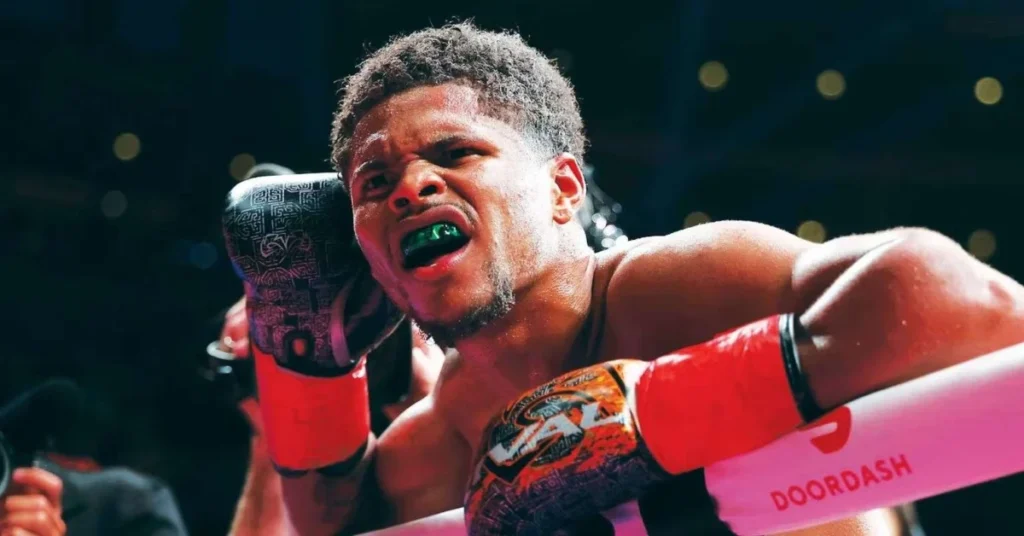
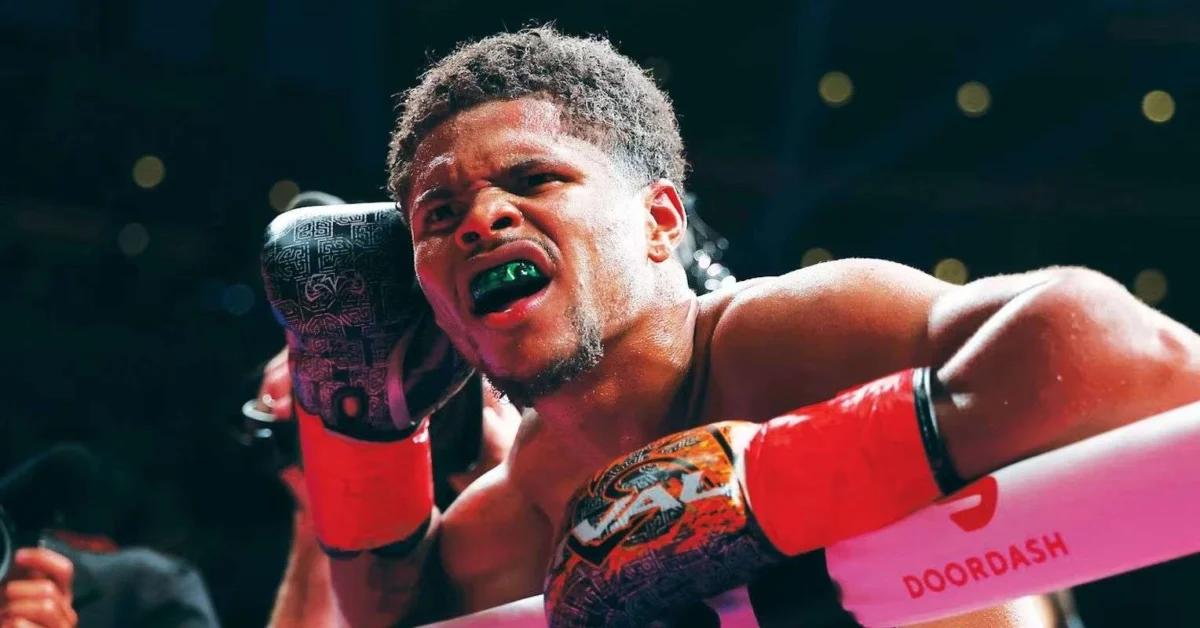
The landscape of modern boxing is often shaped as much by unfulfilled promises and lingering rivalries outside the ring as it is by the action that unfolds within the ropes. At the center of the latest high-profile dispute sits Shakur Stevenson, universally recognized as one of the premier pound-for-pound talents in global boxing, and O’Shaquie Foster, a reigning world champion who is convinced that the Newark southpaw wants nothing to do with him inside the squared circle.
Despite Stevenson’s lofty status and undeniable technical brilliance, Foster has openly questioned the elite fighter’s willingness to step into the ring against him. According to Foster, the highly regarded multi-division champion has actively avoided a head-to-head showdown, harboring a deep-seated fear of what would occur if the two American standouts finally shared a canvas.
The friction between the two competitors stems from an understanding that preceded Foster’s recent title defense. Stevenson had publicly and privately indicated that Foster would earn a high-stakes clash against him should Foster successfully defend his WBC super-featherweight crown against Stevenson’s close friend and training partner, Raymond Ford. That bout materialized in May, serving as a proving ground with significant future implications hanging in the balance.
Foster held up his end of the bargain during that pivotal May encounter. Inside the ring, the defending champion demonstrated his championship caliber, taking charge in the late rounds to outpoint Ford and secure a hard-fought majority decision victory. The triumph not only allowed Foster to sustain his second reign as a 130-pound world titleholder, but it was also widely viewed as the final hurdle clearing the path for an overdue domestic showdown with Stevenson.
Rather than culminating in signed contracts and a blockbuster event, the momentum behind a Stevenson-Foster matchup abruptly dissipated. Following Foster’s victory over Ford, communications went silent. Stevenson, who had entered a new professional phase by signing with Zuffa Boxing, chose not to pursue the Foster assignment, leaving his fellow champion empty-handed despite fulfilling the prerequisite that had been placed before him.
Now preparing for an entirely different test, Foster has made no effort to disguise his lingering frustration with Stevenson’s actions. Speaking in an interview with Fight Hub TV, the super-featherweight champion unloaded on Stevenson, bluntly accusing the 29-year-old of going back on his word and attempting to hide behind social media posturing rather than proving his superiority inside the ropes.
“I think that he is terrified of me and I think that he hopes that somebody else beats me so that he won’t have to ever fight me,” Foster stated during the interview. “He said it on Twitter, after Lamont [Roach] fought he was talking about ‘it is your time coming, I can’t wait to clown you on it.’ He is goofy.”
Foster’s comments reflect a deep-seated disdain for the way top-tier fighters frequently utilize online platforms to build anticipation or provoke rivals without following through when contracts are presented. The reference to Lamont Roach underscores the history of verbal sparring that has circulated within the division, where Stevenson has repeatedly teased potential match-ups on social media without them coming to fruition.
Foster further argued that Stevenson had invested heavy personal and emotional stock in the May bout against Ford, hoping his close ally would effectively eliminate Foster from the championship picture altogether. By doing so, Stevenson would have been spared from either confronting Foster or answering questions about why the matchup never took place.
“He is hoping that somebody else beats me, that is why he was hoping Ray Ford beat me, so that he can chat about it online instead of hopping in there himself with me,” Foster continued. “I am not a bully, but real guys know real guys. You sons, your mans, I beat ‘em up, why you ain’t trying to fight now?”
Foster’s pointed critique strikes at the heart of boxing etiquette and personal respect. By defeating Ford, Foster felt he had effectively dismantled Stevenson’s inner circle inside the ring. In the champion’s eyes, a fighter of Stevenson’s pedigree and self-proclaimed bravado should have immediately stepped forward to defend his team and settle the score directly, rather than disengaging once the challenge became an unavoidable reality.
The silence from Stevenson’s camp following Foster’s win stands in sharp contrast to the Newark fighter’s standing in the sport. Earlier this year in January, Stevenson delivered what was widely regarded as a signature masterclass, dominating Teofimo Lopez in a high-profile showdown. Stevenson looked to be an entire level above Lopez throughout the contest, dictating the terms of engagement and putting on an exceptional display of southpaw counter-punching, ring generalship, and defensive wizardry.
That defining January victory carried enormous historical weight. By defeating Lopez, Stevenson became the third-youngest four-division world champion in the long and storied history of boxing, solidifying his position near the very summit of most pound-for-pound rankings. The performance appeared to set the stage for a calendar year filled with massive opportunities and legacy-defining encounters.
Yet, despite that dazzling achievement at the start of the year, Stevenson has not stepped inside the ring since. The protracted period of inactivity, paired with his high-profile career transition to Zuffa Boxing, has left several tantalizing matchups on the table. While Stevenson has navigated his promotional shift, fellow champions and contenders have been left waiting, prompting fighters like Foster to question whether Stevenson’s business decisions are rooted in career strategy or an intentional avoidance of dangerous opposition.
Rather than waiting indefinitely for Stevenson to revisit their proposed clash, Foster has shifted his attention toward broader championship ambitions. The WBC titleholder has agreed to take on Emanuel Navarrete in a massive three-belt unification showdown scheduled to take place on Saturday, October 24.
The matchup between Foster and Navarrete represents one of the most critical developments in the 130-pound division in recent memory. For Foster, known to boxing fans as “Ice Water,” the bout provides an immediate avenue to silence critics and substantiate his status as the division’s premier force without having to rely on Stevenson’s willingness to negotiate.
More significantly, the October 24 unification brings Foster substantially closer to an extraordinary milestone. A victory would put him on the brink of becoming the first undisputed super-featherweight world champion since Hiroshi Kobayashi achieved the distinction in 1969. The historical weight of that accomplishment is immense, as the 130-pound division has not seen a single unified ruler holding all available major belts in over five decades.
It is the very same historic milestone that three-division world champion Vasiliy Lomachenko has sought to achieve during his own storied campaign in the sport. Lomachenko’s long-standing pursuit of an undisputed crown at the weight class illustrates the difficulty and prestige associated with collecting every major title in the division, underscoring the magnitude of the opportunity that now sits before Foster.
Should Foster prevail against Navarrete, he will command a level of leverage and historical standing that few active fighters can match. Whether that accomplishment will ultimately force Stevenson back to the negotiating table remains an open question. For now, the narrative between the two remains defined by missed connections, unresolved challenges, and Foster’s firm belief that one of boxing’s most gifted pound-for-pound technicians walked away from a fight he was simply unwilling to take.