

BIRMINGHAM — Ben Whittaker emerged from his high-stakes light heavyweight clash against Conor Wallace with his undefeated professional record intact, but the victory arrived amidst intense controversy, serious technical questions, and a final-round nightmare that saw "The Surgeon" pushed to the absolute brink of disaster in Birmingham.
For nine rounds, Whittaker produced a performance that matched the immense hype surrounding his burgeoning professional career. Demonstrating the slick movement, sharp reflexes, and commanding distance control that have propelled him toward the upper echelons of the 175-pound division, the showstopping prospect appeared to be cruising toward a comprehensive, wide decision victory in the stiffest test of his career to date.
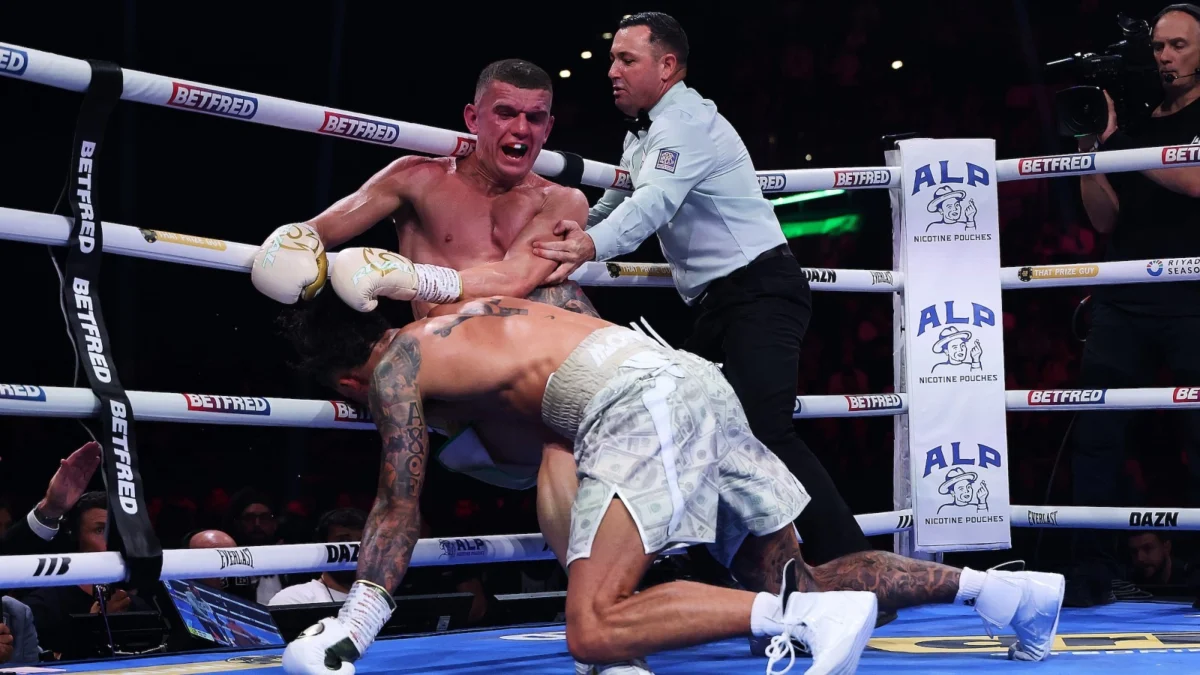
However, a dramatic shift in the tenth round transformed a routine boxing lesson into a desperate battle for survival. Refusing to yield, Wallace staged a ferocious late rally that exposed physical and tactical vulnerabilities in Whittaker, capped by a harrowing final round in which the undefeated fighter appeared to hit the canvas three separate times. Only the controversial officiating of referee Kieran McCann—who repeatedly intervened and declined to administer a single mandatory eight-count—prevented what threatened to become one of the most stunning late-fight comebacks in recent British boxing history.
Whittaker officially earned the decision to elevate his record to 13-0-1, securing his standing in the world title picture. Yet, as the dust settled in Birmingham, the narrative surrounding the rising star had shifted dramatically from world-title readiness to urgent self-examination.
"The Surgeon" Dominates the Early Stages
For the overwhelming majority of the contest, Whittaker gave a masterclass in boxing discipline and sharp-shooting athleticism. Entering the ring under significant expectation, the slick light heavyweight set a tempo that Wallace struggled to decipher or match.
Operating behind an elusive defense and a crisp jab, Whittaker dictated the geography of the ring from the opening bell. He comfortably banked round after round, frustrating Wallace with quick counterpunches and fluid footwork. Long spells of the fight saw Wallace swinging at air, completely unable to close the distance or establish his own rhythm against an opponent who seemed several steps ahead in ring generalship.
Whittaker’s performance during these opening stages reinforced why promoters and pundits have been so eager to fast-track him toward world-level contention. His ability to hit and not get hit was on full display, building a commanding lead on the scorecards that left Wallace needing a dramatic turn of events to alter the outcome. Through nine rounds, the fight was playing out entirely on Whittaker’s terms, with the Birmingham crowd anticipating a triumphant finish to a dominant night’s work.
The Tenth Round Turning Point
Everything changed dramatically in the tenth frame. With the fight slipping away, Wallace abandoned any lingering caution and launched an aggressive, sustained offensive assault, refusing to disappear quietly into the night.
Catching Whittaker with several clean, hard shots, Wallace experienced by far his greatest success of the contest. The sudden onslaught appeared to startle the unbeaten prospect, whose swaggering posture and cool composure evaporated in an instant. For the first time in the match, Whittaker looked genuinely uncomfortable as Wallace forced him onto the back foot and dragged him into an uncharacteristic firefight.
The momentum of the fight swung violently on its axis. As Wallace continued to pour forward, pressing his advantage, Whittaker’s work rate slowed dramatically. The effortless movement that had defined his performance early on was replaced by weary retreat, setting up a perilous stretch run for the home favorite.
Controversial Interventions and Referee Scrutiny
As the pressure mounted, Whittaker repeatedly turned to referee Kieran McCann, appealing for assistance over punches he claimed were striking the back of his head during close-quarters exchanges.
McCann obliged on multiple occasions, stepping in to break the action and issue warnings or halt the exchange. These repeated interventions became a central point of contention, as they occurred precisely when Wallace was building steam and attempting to capitalize on Whittaker’s rapidly deteriorating physical condition.
While ring rules strictly prohibit punches to the back of the head, the timing and frequency of the referee’s involvement effectively disrupted Wallace’s offensive rhythm. Rather than allowing Wallace to press his advantage on an exhausted opponent, the pauses afforded Whittaker valuable moments to catch his breath, regain his composure, and clear his head amidst a relentless storm.

Knockdowns Refused in a Chaotic Final Round
The drama reached a fever pitch in the final round, producing a chaotic sequence of events that left ringside observers, commentators, and fans stunned.
Whittaker entered the final three minutes visibly spent, a shadow of the sharp, confident technician who had dominated the early rounds. Recognizing that his opponent was running on fumes, Wallace charged forward with complete disregard for incoming fire, unleashing heavy combinations that repeatedly caught Whittaker along the ropes and in open water.
During this frantic final frame, Whittaker went down to the canvas on three separate occasions under heavy pressure and physical contact from Wallace. In each instance, World Boxing News (WBN) judged that Wallace had landed sufficient scoring blows to warrant a official knockdown count from the third man in the ring.
However, referee McCann viewed the incidents differently. Rejecting Wallace’s appeals, McCann repeatedly ruled the slips or clinches without administering a mandatory eight-count. Instead of being credited with knockdowns that could have dramatically altered the scoring—or opened the door for a dramatic late stoppage victory—Wallace was forced to watch as Whittaker was permitted to regain his footing and weather the storm.
McCann’s handling of those closing moments effectively shielded Whittaker at the exact juncture when his undefeated record was hanging by a thread. While there is no suggestion of ill intent beyond a direct professional disagreement with how those specific incidents were officiated, WBN’s ringside assessment remains firm: Wallace did enough in the final round to be awarded multiple knockdowns, and the referee’s leniency dramatically impacted the final optics and scoring of the fight.
While Whittaker had undeniably built an enormous lead over the first nine rounds, boxing matches are contested over the full scheduled distance. Wallace earned the right to press for a finish in the closing stages, and the referee’s repeated involvement deprived the challenger of a clean opportunity to complete a historic comeback.
Hearn Wants a Rematch as World Title Plans Hit a Speedbump
Though Whittaker ultimately got his hand raised to push his professional ledger to 13-0-1, the chaotic final minutes altered the narrative surrounding his immediate future. Prior to the fight, Whittaker had been routinely linked with elite light heavyweight champions, including pound-for-pound star Dmitry Bivol. However, the defensive lapses, stamina concerns, and vulnerability exposed in Birmingham suggest that step-ups of that magnitude may require significant reconsideration.
Instead of making a resounding statement that he is ready to challenge the absolute elite of the light heavyweight division, Whittaker leaves Birmingham with critical areas to address in the gym. His stamina under sustained pressure, his durability when hurt, and his technical response when forced into deep water were all severely tested.
Conversely, Conor Wallace emerged from defeat with his professional stock higher than ever. By refusing to accept his assigned role as a stepping stone, Wallace displayed remarkable grit, power, and determination, proving that he belongs on the major stage.
Matchroom Boxing head Eddie Hearn was quick to acknowledge Wallace’s heroics in the post-fight aftermath, instantly floating the idea of a high-stakes second encounter.
“We know Ben is in position for IBF and Conor deserves another chance,” Hearn stated following the contest. “I think this makes for a great rematch.”
Whittaker succeeded in preserving his high ranking within the IBF sanctioning body, but the controversial nature of his victory ensures that the door to this rivalry cannot be easily closed. Wallace’s late-fight heroics have created an overwhelming public appetite for a rematch—one that Whittaker may need to address before pursuing a world title shot.
In the final assessment, Whittaker secured the victory he desperately needed on paper, but the night belonged in equal measure to Wallace’s heart and the officiating questions that defined the final bell. Whittaker keeps his undefeated record, but the memory of those terrifying final rounds in Birmingham will follow him into his next camp.