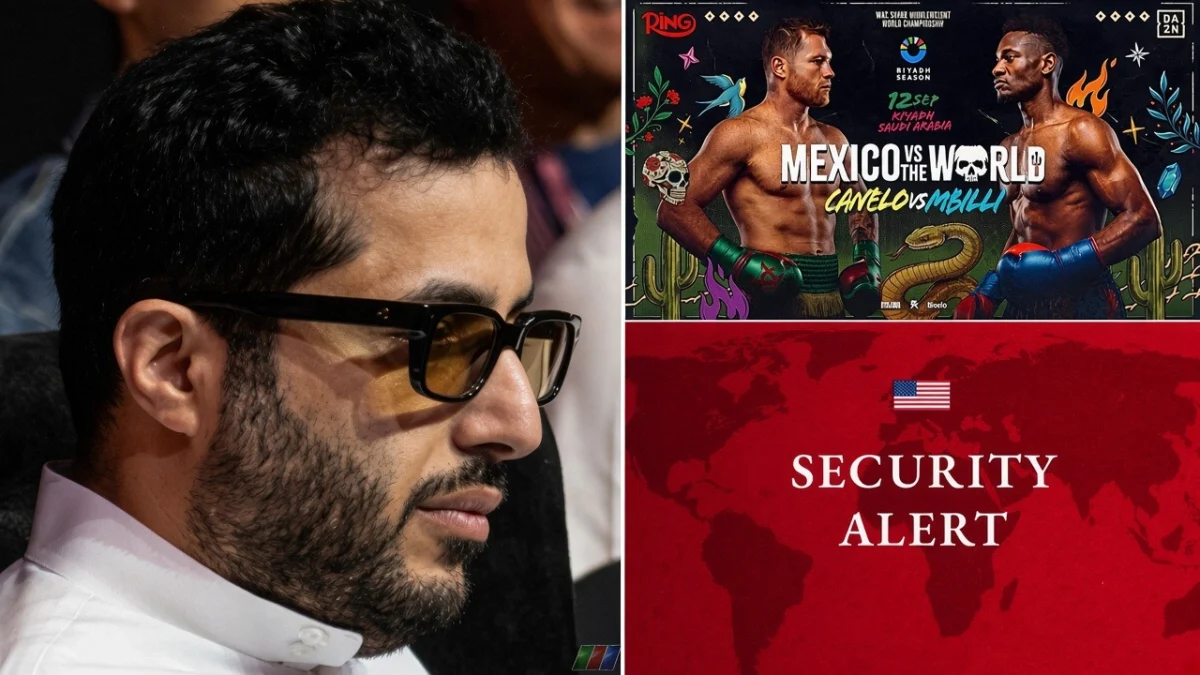
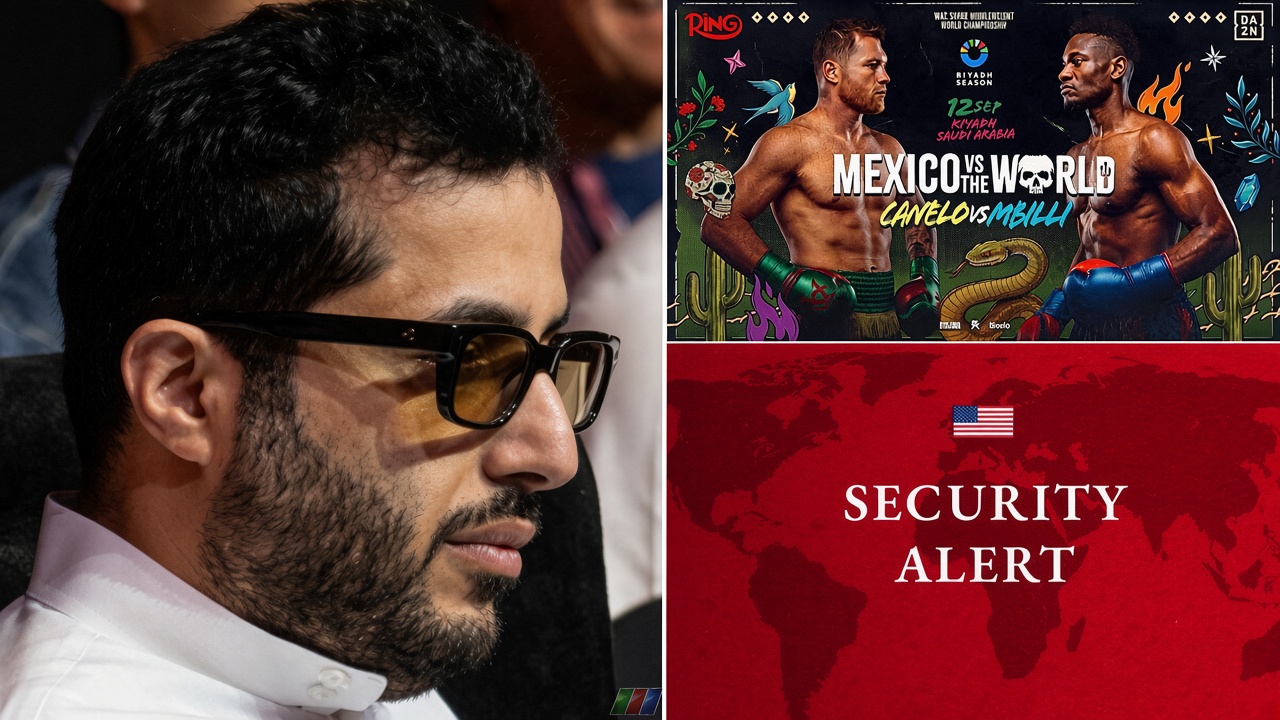
Turki Alalshikh faces an imminent and critical decision regarding the high-profile October 31 clash between boxing superstar Canelo Alvarez and challenger Christian Mbilli. The future of the event has been thrown into serious doubt following reports that 12 people were killed and hundreds more injured in coordinated attacks targeting Riyadh’s international aviation hub.
With only 20 days remaining until the opening bell, the mega-fight is technically still scheduled to take place in the Saudi capital. This comes despite an escalating security crisis on the ground and increasingly severe travel warnings issued by several foreign governments. The geopolitical and security landscape surrounding the Saudi capital has shifted dramatically, forcing promoters, fighters, and boxing executives to re-evaluate the viability of hosting a massive international crowd under current conditions.
Foreign offices across the globe have reacted swiftly to the violence. The United Kingdom government has updated its foreign travel advice, formally advising its citizens against all but essential travel to the Riyadh province. Similarly, the United States Department of State has urged American citizens to strongly reconsider any travel to Saudi Arabia at this time, citing immediate safety risks and the volatile security environment.
The security incidents directly impacted King Khalid International Airport, resulting in significant flight disruptions and widespread operational delays. This logistical nightmare has created intense uncertainty for the hundreds of international fighters, training teams, cutmen, promotion officials, media personnel, and broadcast technicians who are expected to travel to the region to support and cover the event.
Despite the unfolding crisis and the palpable anxiety rippling through the international boxing community, Alalshikh pressed forward with promotional rollouts. He officially announced the full ten-fight undercard for the Riyadh card after the airport attacks had already taken place, offering no immediate indication that the promotion would be delayed, scaled back, or relocated.
Turki Defends Saudi Security
In the immediate aftermath of the attacks, Alalshikh took to social media to address the tragedy and project an unwavering image of national resilience. Posting a statement on X, translated from Arabic, he publicly mourned those who lost their lives while expressing absolute confidence in the kingdom’s defensive capabilities and domestic security infrastructure.
"O Allah, protect my homeland with Your eye that never sleeps … O Allah, guide the aim of our heroes … O Allah, have mercy on our martyrs and heal our wounded … May every despicable soul who wishes harm upon the land of the Two Holy Mosques be thwarted … This country is safe and secure from above the seven heavens!" Alalshikh wrote.
In a subsequent post on the platform, he issued a stern warning, asserting that the blood of those killed would not be wasted and promising that those responsible would ultimately pay a heavy price for their actions.
While Alalshikh’s rhetoric underscores his deep personal and national pride, his steadfast confidence in Saudi Arabia’s immediate security contrasts sharply with the growing anxiety facing international travelers and participants who must cross borders to reach Riyadh. The psychological weight of traveling into a conflict-adjacent zone has already begun to polarize prominent voices within the sport.
Esteemed American boxing journalist Dan Rafael took to social media to share the official United States Embassy security alert on October 8, adding a stark and cautionary commentary: "Good luck to those traveling for Canelo vs. Mbilli."
Fellow boxing podcaster Dan Canobbio adopted an even more direct and urgent tone regarding the Mexican icon, writing plainly on social media: "Don’t do it Saul."
Both reactions vividly capture the underlying industry-wide apprehension about thrusting one of combat sports’ most lucrative and recognizable global superstars into a metropolis whose primary international gateway has recently been targeted by hostile strikes.
With less than three weeks left before fight night, Alalshikh’s decision to roll out the undercard details while casualties from the airport attacks were still being counted has raised serious questions. Fighters on the supporting bills, many of whom rely on these career-defining opportunities, may have been privately assured that Riyadh remains a secure sanctuary, yet the external reality tells a vastly different story.
The imperative to relocate the fight to an alternative, neutral venue must now be seriously evaluated by the event’s organizers. In moments of severe crisis, the physical safety and well-being of the athletes, their teams, and the traveling public should supersede the logistical convenience of keeping the event anchored in Riyadh.
World Boxing News previously reported earlier this month that Las Vegas had been actively considered as a viable alternative host city should Riyadh become unavailable or untenable due to regional instability. The subsequent unveiling of the undercard arrived precisely as the first tragic deaths were being confirmed by local authorities, and the security matrix has only deteriorated further since those initial reports.
Alalshikh’s personal determination to keep the fixture in Riyadh is entirely understandable from a promotional and strategic standpoint. However, the influential Saudi matchmaker must surely recognize that staging a massive international sporting spectacle under active security warnings and active conflict reverberations carries a magnitude of risk that simply is not worth taking.
Canelo Alvarez and Christian Mbilli have already endured previous scheduling disruptions and postponements in their respective careers. Neither athlete, nor their respective camps, should be expected to expose themselves and their families to unnecessary danger merely to preserve the original geographical branding of the event.
Relocating the fight at this late hour would undoubtedly present a massive logistical and financial setback for the stakeholders involved, but it pales in comparison to the far greater price that could be paid if a tragedy occurred on-site. With multiple government travel advisories fully active, and with a mounting death toll of 12 lives lost and hundreds more injured, Alalshikh is running out of time to make a decision that should, by all accounts, be straightforward.
The sport of boxing has proven time and again that its marquee matches can travel across the globe. The fight can easily go ahead somewhere else, safely removed from the current theater of conflict. There is no logistical or sporting reason why it absolutely has to happen in Riyadh. Under the present circumstances, Canelo versus Mbilli in Saudi Arabia must be canceled.