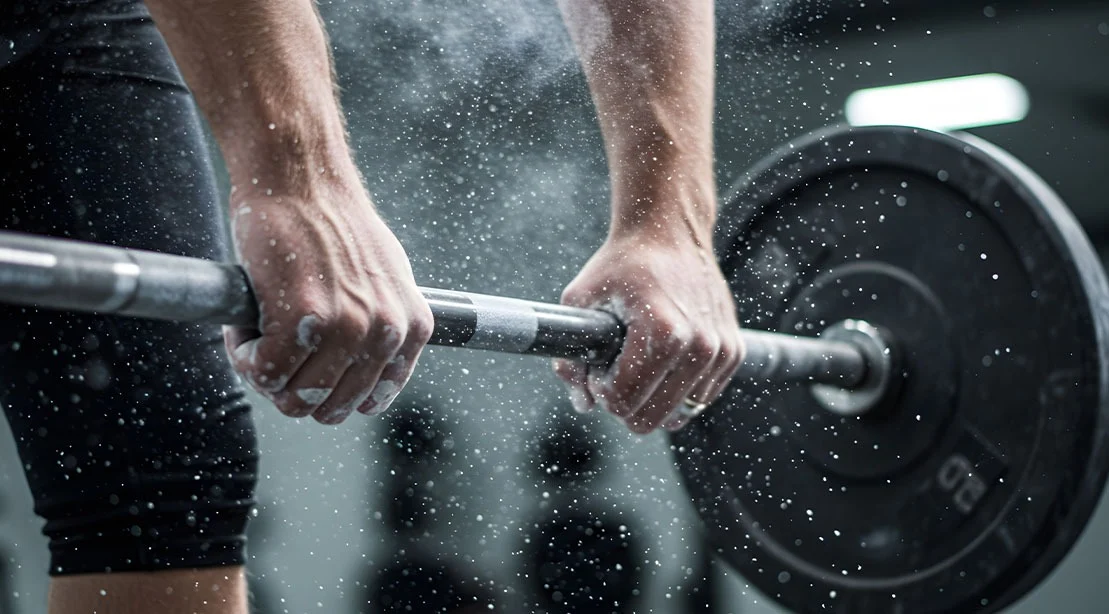
Gripping traditionally sets the stage for what comes next in heavy lifting, yet countless athletes and casual lifters treat hand placement as a complete afterthought. The standard mindset remains heavily rooted in the casual phrase: grip it and rip it, let’s go. However, fitness experts and biomechanics specialists emphasize that how you physically secure your hands around a barbell, dumbbell, or cable attachment matters far more than most people realize.
Grip width, wrist positioning, and the exact placement of the bar within your palm collectively dictate overall strength, structural stability, lifting comfort, range of motion, and how effectively your body transfers force from the ground up. When a grip feels entirely natural and mechanically sound, a lifter feels locked in and secure; when it fails, individual joints may tap out under the load long before the working muscle groups ever break a sweat.
An individual athlete’s unique anatomy, joint mobility, past injury history, and specific training goals all heavily influence what constitutes an ideal grip. Sometimes, a subtle modification to hand placement can instantly unlock hidden strength, while other times it serves to alleviate nagging joint discomfort or unmask a lingering muscular weakness that requires targeted development. Understanding where the bar should sit, recognizing the main grip styles, and analyzing how hand orientation alters muscle recruitment can fundamentally transform a training regimen.
Your Grip Sets up What Comes Next
Your grip does far more than simply prevent heavy weights from crashing to the floor. It fundamentally determines joint alignment, structural integrity, and overall lifting form.
The process begins with proper wrist and forearm alignment. When a bar rests in an optimal position within the hand, the wrist and forearm create a cohesive unit capable of transferring force with maximum efficiency. When that placement goes wrong, the wrist often hyperextends, turning into the weakest link in the kinetic chain. During a heavy back squat, for instance, implementing a specialized thumb-around or false grip alters how the wrists align with the forearm, helping to ensure the load remains securely supported across the upper back rather than placing undue stress on the wrists.
Grip width carries equal weight in the equation. Shifting your hands either wider or narrower along a barbell dynamically alters elbow and shoulder angles, which directly impacts lifting comfort, structural stability, and the available range of motion.
Then there is the persistent challenge of raw grip strength. During demanding movements like deadlifts, barbell rows, pull-ups, and loaded carries, hand endurance frequently fails long before the primary working muscles reach exhaustion. Sometimes this failure indicates that direct grip training is necessary, while other times it simply calls for strategic adjustments so that the hands do not act as a bottleneck for overall physical development. Before worrying about the mechanical execution of a lift, athletes must ensure they are holding the weight in a configuration that optimizes strength, control, and comfort.
What Are the Main Grip Styles in Strength Training?
Multiple distinct grip styles exist within the realm of strength training, each altering the mechanical alignment of the hands, wrists, elbows, and shoulders. The key to mastering them lies in understanding the distinct function of each style and deploying it at the appropriate moment.
The pronated grip features palms facing away from the body or directly toward the floor, depending on the specific exercise. This foundational style appears regularly during conventional deadlifts, barbell rows, pull-ups, and overhead presses.
Conversely, the supinated grip involves positioning the palms so they face toward the body or upward. This approach is most frequently observed during chin-ups, bicep curls, and specific rowing variations.
The neutral grip brings the palms face-to-face in a parallel position. Common applications include hammer curls, neutral-grip pull-ups, dumbbell presses, and cable-row variations.
For maximal loads, the mixed grip utilizes one pronated hand and one supinated hand, a configuration heavily relied upon during heavy deadlift sessions to prevent the bar from rolling out of the hands.
The specialized hook grip involves wrapping the thumb around the bar first, and then clamping the fingers securely over the top of the thumb to create a mechanical lock.
Finally, the false grip completely excludes the thumb by placing it on the same side of the bar as the fingers.
Where the bar sits within the hand can ultimately make the difference between forming a rock-solid connection with the weight or having vulnerable wrists compromise the entire lift. For pressing movements, the goal is typically to keep the forearm as vertical as possible directly beneath the bar. On the bench press and overhead press, this requires positioning the bar closer to the heel of the palm. This adjustment minimizes unnecessary wrist extension and establishes a direct line of force into the implement. Conversely, utilizing a thumb-less false grip is generally discouraged during heavy presses because it elevates injury risk and diminishes muscle activation further up the kinetic chain.
Pulling exercises operate under different mechanical rules. During heavy deadlifts, burying the bar too deep into the palm can easily cause the metal to roll toward the fingers as the load increases. That rolling action tends to bunch and pinch the skin, serving as a primary culprit behind painful hand calluses. Holding the bar within the specific crease zone of the fingers helps mitigate this issue significantly. Ultimately, pressing grips prioritize structural stacking and force transfer, while heavy pulling grips focus on security, friction, and protecting the hands from tearing under heavy loads.
How Grip Width and Placement Alter Muscle Recruitment
An athlete’s grip directly dictates elbow paths, shoulder rotation, barbell security, and which specific muscle groups absorb the brunt of the workload. This influence becomes particularly pronounced during compound movements such as rows, curls, pull-ups, and deadlifts.
Rows provide an abundance of grip flexibility because lifters can utilize barbells, dumbbells, cables, or specialized machines, with each variation permitting different elbow and shoulder pathways.
Curls showcase an even more direct relationship with grip position because the human biceps do far more than simply flex the elbow joint; they also actively supinate the forearm, meaning hand rotation completely changes how the muscle fires.
The same underlying principles apply during bodyweight movements like pull-ups and chin-ups, where changing the hand orientation shifts tension between the latissimus dorsi, the upper back, and the arm flexors.
Deadlifts, meanwhile, center entirely around holding security and how the chosen hand placement influences the mechanics of the pull from the floor. Changing any of these grip parameters alters joint positions, and joint position ultimately dictates which muscles possess the best mechanical leverage to move the load.
How to Assess Your Grip Strategy
The most effective grip typically provides the strongest and most stable position possible without causing acute stress or pain in the wrists, elbows, or shoulders.
Evaluating a grip begins with monitoring for pain. Discomfort acts as vital physical feedback. While minor adjustments cannot instantly resolve every chronic ache, hand placement remains a variable that no lifter should ignore.
Next, lifters must consider whether a specific grip actually increases their strength and stability. Certain hand positions naturally offer superior mechanical leverage, such as utilizing a mixed or hook grip on heavy deadlifts compared to a standard double-overhand hold. While raw strength is not the only metric of success, consistent improvements in force production alongside maintained technique validate a grip choice.
Furthermore, evaluating a grip can expose underlying physical weaknesses. If a double-overhand deadlift grip fails prematurely, it clearly highlights a deficiency in grip endurance. Similarly, if reverse-grip curls humble an athlete compared to standard variations, the forearms and brachioradialis likely require dedicated developmental work.
The ideal grip should ultimately position the rest of the body to execute its job efficiently. Lifters should continually assess whether a given hand placement allows them to maintain proper posture, achieve their desired range of motion, and keep the external load completely stable. If an adjustment improves multiple performance factors simultaneously, the lifter is moving in the correct anatomical direction. Because human anatomy varies widely, universal grip recommendations should always serve as flexible starting points rather than rigid commandments, allowing athletes to experiment, listen to their bodies, and refine their approach over time.