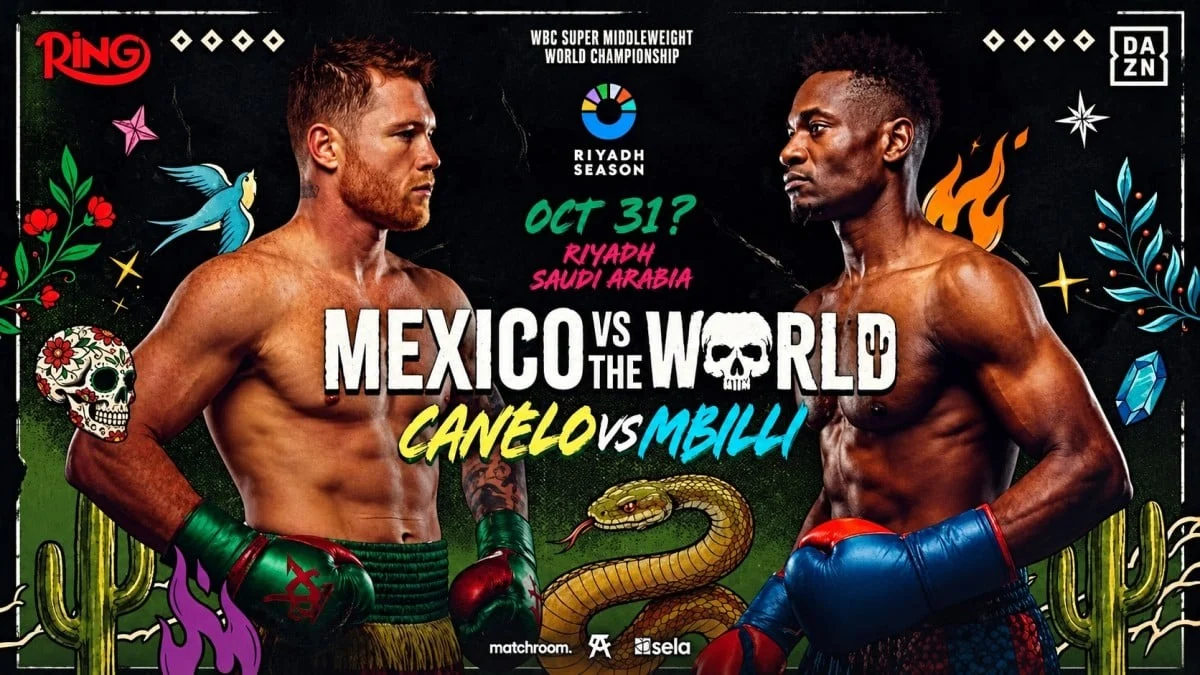
Fresh bombing attacks targeting critical infrastructure in Saudi Arabia have thrown high-stakes plans for Canelo Alvarez’s upcoming return to the ring into serious doubt. With less than four weeks remaining before the Mexican superstar is scheduled to collide with Christian Mbilli in Riyadh on October 31, a dramatic escalation in regional conflict has introduced severe safety questions surrounding the event.
The situation in the Saudi capital has intensified rapidly, forcing organizers, fighters, and international stakeholders to evaluate whether staging a blockbuster sports event in the city remains viable. The headline bout, intended to anchor a lavish Halloween card, represents one of the year’s most lucrative and high-profile boxing spectacles. However, recent military developments near key transportation and energy nodes have raised pressing questions regarding the safety of foreign athletes, broadcast crews, and international spectators traveling to the region.
On Monday, claims surfaced regarding targeted strikes on King Khalid International Airport in Riyadh, alongside reported strikes on additional key locations across Saudi Arabia. The military actions coincided with a sharp intensification of fighting in neighboring Yemen, compounding regional volatility. While the specific claims regarding King Khalid International Airport have not been independently verified, Saudi Arabian authorities have confirmed that drone and missile attacks did strike airport facilities elsewhere in the country during the latest cycle of hostilities.
The reported threats to the capital follow another security incident just days prior, when a strike targeted an Aramco energy facility within Riyadh. Plumes of thick smoke and visible fires were observed near the site following the impact, underlining the vulnerability of major industrial and civil infrastructure in the metropolitan area.
These rapid developments have forced boxing officials into an uncomfortable dilemma, reopening debates over whether Riyadh can safely host an international sports showcase of this magnitude.
Canelo Fight Faces Security Concerns
Initial safety concerns surrounding the feasibility of hosting Canelo vs. Mbilli in the Middle East were already mounting well before this week’s direct threats to Riyadh infrastructure. Reports published by World Boxing News last week indicated that industry insiders and event planners were privately evaluating contingency plans as regional tensions began to flare.
According to sources familiar with the situation, alternative host sites have been actively discussed behind closed doors should the situation in Riyadh deteriorate to a point where local authorities or fight camps deem the location untenable. Among the potential backup options, Las Vegas has emerged as the clear favorite to step in and host the event on short notice.
Las Vegas offers a deeply familiar backdrop for Canelo Alvarez, having hosted the majority of his career-defining pay-per-view encounters. The city possesses the turn-key infrastructure, world-class arena options, and regulatory flexibility required to absorb a massive fight weekend with minimal lead time. However, shifting a multi-million-dollar event across continents on a timeline of less than four weeks presents staggering logistical, operational, and promotional challenges.
The entire event has been characterized by an unusually tight promotional window from its inception. Official confirmation of the October 31 bout was delivered with just over a month remaining until fight night, an extraordinarily abbreviated timeframe for a fight featuring a global marquee attraction like Alvarez. Furthermore, ticket sales for the Riyadh event were launched far later than standard industry practices dictate for an event of this scale.
When tickets were finally made available to the public, industry observers noted a striking pricing structure. Entry-level tickets for the event were listed at just $13.33—a remarkably low figure for a marquee fight card expected to carry an overall budget approaching $100 million.
Estimated Event Bill Breakdown:
• Canelo Alvarez Guaranteed Purse
• Christian Mbilli Fight Purse
• Undercard Fighter Purses
• International Staging & Production Costs
Total Expected Cost: ~ $100 Million
This massive financial outlay accounts for Canelo’s commanding purse, a life-changing payout for Mbilli, a stacked undercard of international talent, and state-of-the-art arena production. The steep contrast between the multi-million-dollar operational overhead and ultra-affordable ticket pricing highlights the unique, heavily subsidized financial model of Saudi-backed sports events.
Despite the heavy financial backing behind the spectacle, the rapidly escalating security threat presents a challenge that money alone cannot resolve. The immediate physical safety of the participants, their support networks, and traveling media remains paramount.
For Canelo Alvarez, who maintains total control over his career decisions and legacy, entering a high-risk operational environment carries little appeal. The Mexican icon will not willingly expose himself, his family, or his training team to unnecessary physical danger. Similarly, Christian Mbilli and his managerial camp will require absolute, ironclad guarantees regarding security protocol before boarding a flight to the Gulf region.
As Chairman of the Saudi General Entertainment Authority, Turki Alalshikh—the primary architect behind Saudi Arabia’s aggressive expansion into international boxing—now faces a crucial crossroad. With the world’s media watching closely, Alalshikh must decide whether to proceed with the planned event in Riyadh under heightened security measures, relocate the entire card to a safer neutral territory such as Las Vegas, or postpone Canelo’s return to the ring entirely.
Riyadh Decision Looms
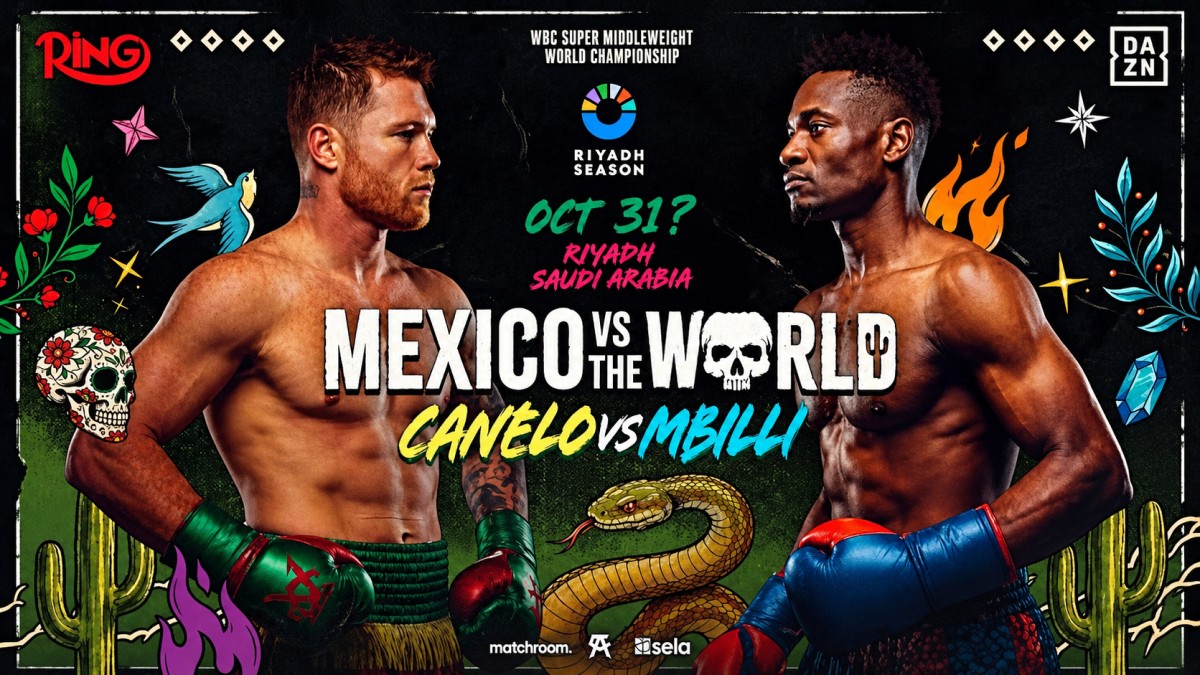
As it stands, the bout between Canelo Alvarez and Christian Mbilli remains officially scheduled to take place on October 31 at a designated arena in Riyadh. To accommodate international prime-time television audiences across North and South America, the main event ring walks are currently slated for 3:00 a.m. local time on November 1.
Neither the General Entertainment Authority nor the fighters’ promotional teams have issued a formal announcement indicating that the event will be postponed or relocated. However, sports management teams and network executives are closely monitoring the rapidly evolving geopolitical landscape, where conditions on the ground are shifting by the hour.
The renewed threat to civil aviation infrastructure and municipal energy facilities strikes at the heart of the logistics required to execute a international pay-per-view card. Air travel routes into Riyadh, severe hotel and transport security protocols, and broadcast satellite uplinks all depend on stable local conditions.
Adding to the complexity of the situation is the fact that Canelo’s return to action has already suffered a prior disruption. The four-division world champion was originally forced to push back his fight schedule earlier this year after severe personal matters disrupted his preparation timeline, preventing him from starting his mandatory training camp on schedule.
Addressing those initial delays during an appearance on The Ariel Helwani Show, Alvarez candidly explained the personal circumstances that forced him to pause his career earlier in the year.
"There were some problems in my family that I needed to take care of, but everything is good now," Canelo revealed. "I’m always very disciplined and very organized with my training camps, and I wasn’t ready to be in training camp. That’s why I postponed the fight. I needed to take care of my family first."
Having successfully resolved those personal matters, Canelo re-entered the gym with full focus, channeling his energies into preparing for Mbilli—an undefeated, high-volume puncher hungry to make a career-defining statement. Alvarez is training to defend his super middleweight crown against the relentless challenger, but broader geopolitical forces outside the ring have once again threatened to derail his competitive calendar.
If military escalation in the region continues unabated over the coming days, the decision may ultimately be taken out of the promoters’ hands. Insurance underwriters, international travel advisories, and sanctioning bodies could force a definitive action.
Turki Alalshikh and his advisory team are running out of time to make a final determination. They face three distinct paths forward: press ahead with the event in Riyadh under tight security constraints, execute an emergency shift to a backup venue in Las Vegas, or pull the plug on the October 31 date and delay Canelo’s return until a later, more stable period.
With October 31 fast approaching, key decision-makers can no longer afford to delay. A definitive resolution regarding the host city, safety protocols, and operational feasibility of Canelo Alvarez vs. Christian Mbilli is expected in the coming days.
About the Author
Phil Jay is the Editor-in-Chief of World Boxing News (WBN), a BWAA-acknowledged boxing news website founded in 2010. A veteran combat sports reporter with 16 years of industry experience, he has interviewed world champions, broken major international exclusives, and reported ringside from historic fight nights globally. His investigative work and news coverage are published worldwide through WBN and syndicated across major digital news platforms.