


When time is short, energy is depleted, and the prospect of spending an hour standing over a stove feels entirely out of reach, frozen meals can easily become the hero of the day. Stocking the freezer with a few quick-fix boxes remains one of the most practical strategies for managing mealtime during hectic schedules, offering a reliable safety net for today’s busy professional.
While the freezer aisle historically conjured images of lackluster TV dinner classics like processed macaroni and cheese and rubbery Salisbury steak, the landscape has shifted dramatically in recent years. Today, shoppers are increasingly greeted by health-focused options revamped with fresher ingredients, proving that convenience no longer requires sacrificing nutrition. Thanks to improvements in manufacturing techniques and ingredient sourcing, many modern frozen meals have crossed the line from tolerable fallback options into genuinely crave-worthy territory, leaving behind the reputation of prison-like gruel.
To help consumers navigate the expanding options and make the best choices possible, a look at the current market reveals a variety of legitimately nutritious, protein-rich frozen meals that are well worth tossing into a grocery cart. However, separating marketing claims from actual nutritional value requires a closer look at what is printed on the back of the box.
How to Choose the Healthiest Frozen Meals
Selecting a quick-fix meal that actually supports long-term health and fitness goals requires careful label reading, as not all frozen meals are created equal. Nutrition experts emphasize several core criteria when evaluating the quality of a deep-freeze meal, starting with whole foods. Overall, consumers should be able to recognize the majority of ingredients listed on the back of the package. Labels that feature an excessive number of artificial flavorings, emulsifiers, and thickeners—components that would be difficult to replicate in a home kitchen—often signal a heavily processed product. A simple rule of thumb is to look for ingredients that are easily pronounced.
Protein is another critical metric. A quality frozen meal intended to support an active lifestyle should contain at least 20 grams of protein. Adequate protein intake supports training efforts aimed at building muscle while helping to keep hunger at bay and reducing the likelihood of overeating later in the day.
Fiber is equally important, though often difficult to secure in recommended daily amounts. Finding a frozen meal that contains at least 5 grams of fiber per serving provides a significant head start. For meals falling short of this target, consumers can easily boost the numbers by tossing in additional vegetables, sprinkling on seeds, or serving the entree alongside a side salad or steamed greens.
Despite growing health trends, many frozen meals continue to run light on vegetables. Seeking out options made with two or more distinct vegetables ensures a broader micronutrient profile. Shoppers can also easily augment their frozen bowls by adding a handful of fresh spinach, arugula, or cooked frozen vegetables like bell peppers, broccoli, or green peas.
Sodium remains a persistent challenge in the frozen food category, as manufacturers frequently rely on salt and other sodium-containing compounds for preservation, flavor enhancement, and texture improvement. Ideally, a frozen meal should contain 800 milligrams or less of sodium, though many commercial options exceed this threshold. When consuming a higher-sodium convenience meal, individuals can balance their intake by keeping sodium levels modest elsewhere in their daily diet.
Added sugars also warrant close inspection. Shoppers should look for meals that avoid high amounts of added sugars, keeping in mind the distinction between naturally occurring sugars found in vegetables and those introduced during manufacturing. Glazed proteins and sweet sauces like barbecue and teriyaki can quietly drive up sugar counts. The ideal target is no more than 5 grams of added sugar per serving on the nutrition panel.
Grains present another area of divergence. Many conventional frozen meals still rely on refined grains such as standard pasta and white rice rather than nutrient-dense whole grains. While refined flour noodles are not an absolute dealbreaker, selecting meals made with whole grains like brown rice or quinoa
offers a significant nutrient and fiber windfall. In fact, a newly released study review found that consuming 60 to 100 grams of whole grains per day provided the most robust protection against heart disease. Finally, keeping saturated fat in check remains a priority for long-term cardiovascular health, with experts recommending a target of less than 6 grams per meal.
The Best Frozen Meals
For those looking to make room in the freezer, several options stand out for offering an optimal combination of strong nutritional profiles and superior taste.
Kanzen Meal Spicy Dan Dan offers proof that nutrient-dense frozen meals can taste exceptional. The word kanzen translates to "complete" in Japanese, and this high-protein meal delivers on that promise. High-protein noodles made from vital wheat gluten are immersed in a rich sesame sauce and combined with edamame, scallions, and carrots, containing zero added sugars and providing 590 calories, 22 grams of fat, 620 milligrams of sodium, 76 grams of carbohydrates, and 26 grams of protein.
Evol Beef & Broccoli provides a balanced bowl featuring brown rice, tender broccoli florets, protein-rich edamame, and substantial chunks of beef coated in an umami sauce. Delivering 480 calories, 18 grams of fat, 1,330 milligrams of sodium, 55 grams of carbohydrates, 6 grams of fiber, 10 grams of sugar, and 25 grams of protein, it serves as a filling option, though its higher sodium content requires moderation elsewhere in the diet.
Healthy Choice Tex Mex Chicken represents a strong contender among microwave-ready bowls, combining chicken breast, black beans, red quinoa, and fire-roasted corn. It yields 430 calories, 9 grams of fat, 540 milligrams of sodium, 52 grams of carbohydrates, 12 grams of fiber, 7 grams of sugar, and an impressive 33 grams of protein.
Banza Homestyle Protein Waffles elevate the traditional toaster breakfast by utilizing chickpeas, egg whites, and pea protein. Delivering a nutty flavor with a crispy exterior and soft center, a serving provides 240 calories, 4 grams of fat, 210 milligrams of sodium, 22 grams of carbohydrates, 5 grams of fiber, 5 grams of sugar, and 10 grams of protein. They can easily be rounded out with Greek yogurt and berries.
Yough Farmer’s Vegetable Pizza targets late-night cravings with a craft crust made from whole wheat and Greek yogurt. Topped with tomato sauce, real mozzarella, and sliced peppers, half a pizza provides 350 calories, 7 grams of fat, 600 milligrams of sodium, 48 grams of carbohydrates, 3 grams of fiber, 5 grams of sugar, and 20 grams of protein, though availability is currently limited to select Target locations.
Amy’s Tofu Scramble proves that vegan frozen meals can deliver adequate protein, combining organic scrambled tofu with a vegetable medley, hash browns, and chunky tomato sauce. A single meal contains 400 calories, 26 grams of fat, 780 milligrams of sodium, 20 grams of carbohydrates, 5 grams of fiber, 4 grams of sugar, and 20 grams of protein.
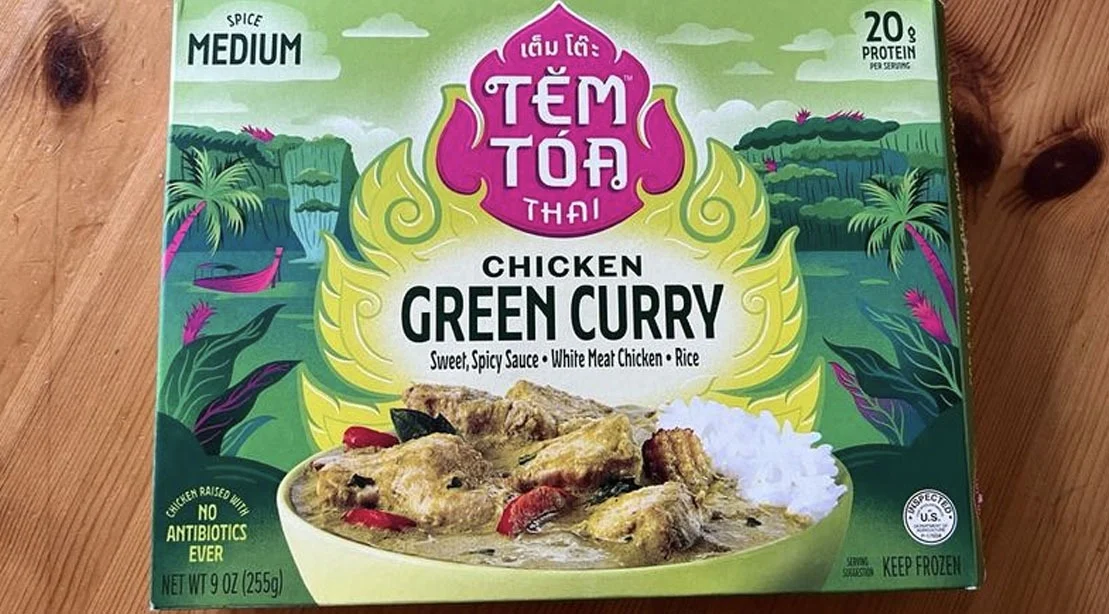
Tem Toa Green Curry Chicken features lean, surprisingly juicy chicken in an authentic green curry sauce made with lemongrass, galangal, cilantro, and jaggery, served over jasmine rice. Each meal supplies 430 calories, 14 grams of fat, 920 milligrams of sodium, 54 grams of carbohydrates, 3 grams of fiber, 9 grams of sugar, and 22 grams of protein. Because fiber is on the lower side, pairing it with a side salad is recommended.
Deep Indian Kitchen Chicken Biryani offers white meat chicken marinated in spiced yogurt over saffron rice, highlighted by a vibrant mint, yogurt, onion, and fenugreek sauce. It delivers 320 calories, 15 grams of fat, 1,100 milligrams of sodium, 32 grams of carbohydrates, 7 grams of fiber, 2 grams of sugar, and 28 grams of protein within five minutes of preparation.
Trader Joe’s Chicken Shawarma Bowl combines basmati rice, spinach, peppers, shawarma-seasoned chicken, pickled red onion, and creamy garlic sauce. Priced affordably, the meal provides 400 calories, 12 grams of fat, 720 milligrams of sodium, 52 grams of carbohydrates, 4 grams of fiber, 3 grams of sugar, and 20 grams of protein.
Purple Carrot Meatball Marinara addresses the protein gap in plant-based frozen foods by pairing high-protein meatless meatballs with orzo pasta and a red pepper marinara sauce. The container delivers 390 calories, 10 grams of fat, 920 milligrams of sodium, 53 grams of carbohydrates, 6 grams of fiber, 9 grams of sugar, and 22 grams of protein.
Saffron Road Lamb Saag provides a break from poultry and beef dishes with tender lamb meatballs in a spinach sauce served alongside basmati rice. Each meal supplies 430 calories, 20 grams of fat, 700 milligrams of sodium, 46 grams of carbohydrates, 6 grams of fiber, 5 grams of sugar, and 20 grams of protein, alongside notable levels of iron, potassium, and vitamin A.
Good Food Made Simple Chicken and Black Bean Burrito offers a hand-held option containing chicken, black beans, rice, cheddar cheese, and organic salsa. It maintains modest fat and sodium levels while delivering 310 calories, 9 grams of fat, 380 milligrams of sodium, 40 grams of carbohydrates, 4 grams of fiber, 2 grams of sugar, and 14 grams of protein.
Kevin’s Roasted Tomato Chicken Pasta Bowl boasts an efficient calorie-to-protein ratio, utilizing tender chicken, fire-roasted tomato sauce, fresh herbs, and cauliflower pasta to keep carbohydrates controlled. Gluten-free and featuring just one gram of added sugar, the bowl supplies 280 calories, 10 grams of fat, 630 milligrams of sodium, 23 grams of carbohydrates, 3 grams of fiber, 5 grams of sugar, and 23 grams of protein.
Chemical Cuisine and Preparation Considerations
As consumers increasingly examine the convenience of frozen meals, attention has also turned toward the materials used in packaging. Many plastic and cardboard trays utilized for frozen meals are lined with plastic and may contain compounds such as phthalates and bisphenol, which can potentially transfer from the package to the food when heated in a microwave. For individuals concerned about chemical exposure, food safety advocates suggest transferring frozen food from its original packaging into a glass or other non-plastic container prior to heating.