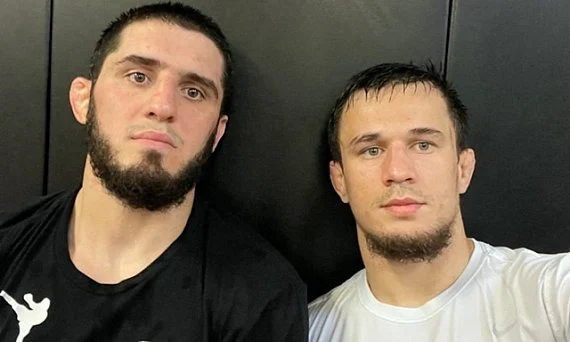
UFC star Islam Makhachev has stepped forward to publicly defend his teammates Umar and Usman Nurmagomedov following their heavily publicized physical altercation with Merab Dvalishvili in Abu Dhabi. The reigning lightweight champion addressed the controversy during a media session with Russian reporters, offering a candid and unfiltered perspective on why he believes his fellow Dagestani fighters were entirely justified in their actions.
The incident, which quickly drew widespread condemnation across the mixed martial arts community, involved the Nurmagomedov brothers and several associates confronting Dvalishvili and a friend at a hotel in the United Arab Emirates. Video footage of the brawl circulated rapidly across social media platforms, sparking intense debate about fighter conduct, gym loyalties, and the boundaries of professional sportsmanship outside the Octagon.
Following the altercation, law enforcement detained both Nurmagomedov brothers alongside other individuals involved in the confrontation. Although they faced legal proceedings, their sentences were ultimately reduced, allowing them to be released. Despite the severity of the legal fallout and the backlash from fans and analysts alike, Makhachev remains steadfast in his support, arguing that the entire situation has been blown completely out of proportion by the media and public observers.
Why Islam Makhachev Believes Umar and Usman Nurmagomedov Were Justified in Attacking Merab Dvalishvili
Speaking to the press, Makhachev contextualized the altercation by pointing to an antecedent incident that allegedly took place in Georgia involving Dvalishvili. According to the UFC champion, the Georgian bantamweight crossed a severe ethical boundary by verbally targeting a member of their team’s family—specifically, a man who had suffered the loss of his mother.
"It got blown way out of proportion," Makhachev stated during the media scrum. "In Dagestan, we have fights every day. In Georgia, Merab acted disgracefully. He insulted a guy’s mother. As far as I know, the guy lost his mom. To me, that’s sacred. I don’t think our guys did anything wrong."
Makhachev’s defense emphasizes a strict cultural code regarding honor, respect, and family boundaries prevalent in the Caucasus region. In his view, professional athletes and public figures cannot expect immunity from physical retaliation if they choose to launch personal, deeply sensitive insults against others. To Makhachev, the nature of the verbal provocation fundamentally shifted the dynamic of the conflict, making a physical response a natural and justifiable consequence of Dvalishvili’s behavior.
Elaborating further on the dynamics of the brawl, Makhachev argued that traditional concepts of fair play or numerical balance become irrelevant when an individual’s personal honor and family are brought into question. Critics of the incident had pointed out that the Nurmagomedov camp outnumbered Dvalishvili and his companion during the hotel encounter, raising questions about fairness. Makhachev firmly dismissed these criticisms, maintaining that accountability transcends standard sporting rules when lines are crossed.
"You have to answer for your words," Makhachev added. "If you cross the line, you should expect it. When your honor is insulted, it doesn’t matter if it’s one-on-one or two-on-one."
The remarks highlight the deeply ingrained loyalties within elite Dagestani MMA circles, where fighters frequently train together under the legacy of the late Abdulmanap Nurmagomedov. For Makhachev, Umar, and Usman, maintaining group solidarity and protecting the dignity of their circle supersedes public relations concerns or the potential fallout from athletic commissions and promotional leadership.
As the fallout from the Abu Dhabi incident continues to resonate across the combat sports landscape, Makhachev’s comments underscore the intense personal rivalries and cultural clashes that occasionally spill over outside the confines of sanctioned competition. While the legal matters surrounding the detained fighters have concluded with their release following reduced sentences, the war of words between these elite camps demonstrates that tensions between fighters often extend far beyond their scheduled bouts inside the cage.