


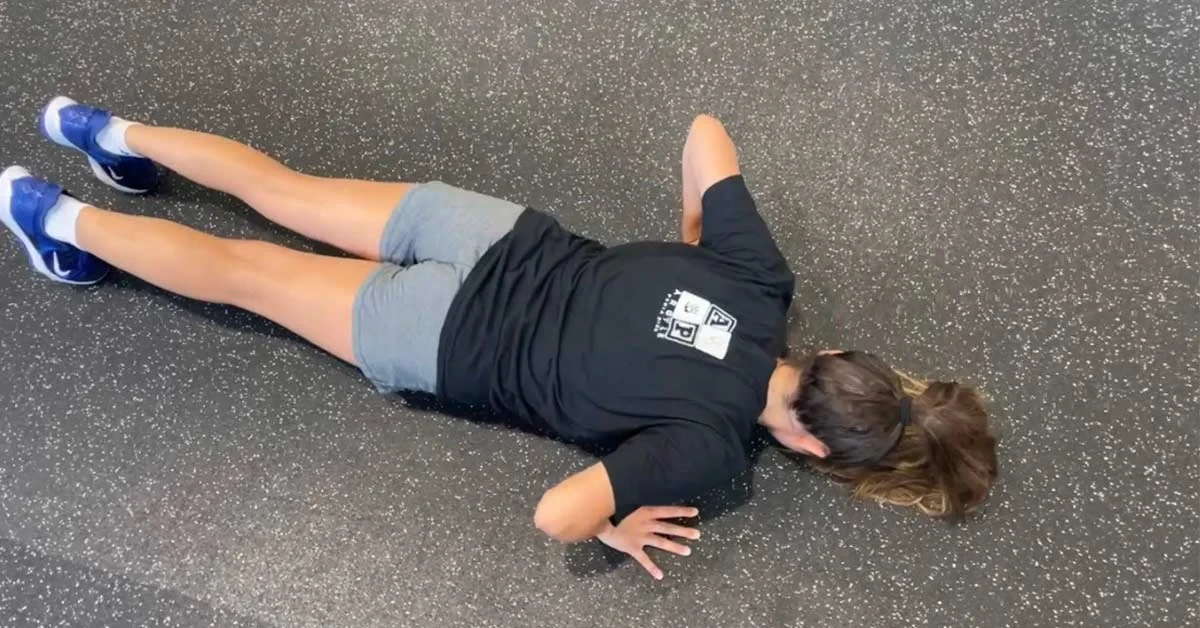
When it comes to the standard push-up, fitness culture has long treated the movement as a blunt instrument. It is widely viewed as a basic litmus test for upper-body strength—a timeless, rugged calisthenic that cleanly divides the capable from the incapable. Yet, according to strength and conditioning coach Rachel Hayes, treating push-ups as a fundamental tool to build strength in female athletes misses the mark entirely. Instead, Hayes argues that for women, a properly executed push-up is more often a reflection of existing strength rather than an effective mechanism for developing it.
In a recent analysis, Hayes emphasizes that coaches must guide female athletes through a thoughtful, progressive mastery of this full-body movement rather than relying on generic, one-size-fits-all programming. While the push-up is often dismissed as a simple bodyweight filler or a foolproof indicator of fitness, it actually demands complex dynamic stability and global coordination from head to toe. Practitioners must rely on a relatively small joint—the elbow—to lower and elevate the entire body against gravity.
Hayes points out that while her insights focus heavily on the development of push-ups for female athletes, the underlying philosophy carries broader implications. Being male does not automatically guarantee push-up proficiency, nor does being female justify dismissive modifications or substandard training. Every athlete deserves meticulous coaching, but applying a single, gender-neutral template glosses over critical developmental differences and ultimately underserves everyone involved.
Understanding Developmental Realities in Youth Athletes
Navigating puberty is a complex, dynamic process characterized by significant hormonal, anthropometric, and neuromuscular shifts that profoundly influence physical performance. For coaches working with adolescents, understanding these overlapping transitions is essential. While girls typically enter puberty and experience growth milestones earlier than boys—generally between the ages of 9 and 11—the exact timing and tempo vary dramatically from individual to individual.

Within this window of development, two distinct physiological factors heavily influence relative upper-body strength and overall movement mechanics in adolescents. The first is peak height velocity, commonly known as the adolescent growth spurt. During this phase, long bones such as the femur and tibia experience rapid vertical elongation. This sudden increase in stature is accompanied by a higher center of mass, making trunk control notably more challenging for the developing athlete.
Because push-ups require a coordinated effort across nearly every joint from the hips upward—with the pelvis and spine acting as the primary structural anchor for the entire torso—growth-related shifts in the center of mass present immediate postural challenges.
The second major factor involves neuromuscular control and strength adaptation following the adolescent growth spurt. According to existing literature, girls do not experience a parallel "neuromuscular spurt" that matches the rapid gains in height, body mass, and center of mass observed during growth. While male adolescents often adapt to their larger frames with a disproportionately massive surge in muscular power—particularly in the upper extremities—female athletes display a more linear trajectory of strength gains without that same marked acceleration phase.
Hayes stresses that these physiological differences should never be interpreted as a reason why female athletes cannot perform push-ups. Rather, they highlight why upper-body strength prescriptions must be nuanced, intentional, and tailored to the actual developmental needs of the athletes rather than forcing them into generic training models.
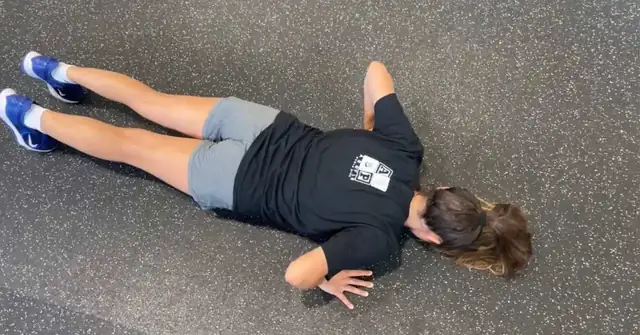
Establishing Positional Awareness and Core Posture
Before any athlete can successfully navigate a complex, multi-joint pattern like the push-up, they must first develop precise positional awareness of their pelvis, head, and scapulae. This foundational element of athletic development is frequently overlooked in early sports training.
Without targeted instruction in axial and appendicular skeletal movement, athletes often default to compensatory extension patterns, hanging passively on their skeletal structures. To combat this, coaches must address key postural mechanics before introducing dynamic loading or high-repetition calisthenics.
The first critical posture is a posterior pelvic tilt to prevent excessive lumbar hyperextension. Many athletes attempting a plank or a push-up naturally let their abdominals sag toward the floor due to an arched lower back. This hyperextension places undue stress on the facet joints of the spine while simultaneously causing the shoulder blades to round forward. Hayes corrects this by teaching anti-extension movements, utilizing exercises like the dead bug, first practiced in a supine position before transitioning to prone variations.
The second element involves cervical retraction. Observers frequently notice pronounced neck extension during upper-body movements, with the head jutting forward or the eyes lifted upward. Teaching proper neck retraction and protrusion, initially in a seated position before moving to prone variations against gravity, builds essential postural endurance.

Finally, scapular protraction and retraction are vital for ensuring that the shoulder blades glide smoothly around the rib cage. Teaching these mechanics early prevents unwanted elevation or anterior tilt during pressing movements, laying the groundwork for safe rowing, pull-ups, and push-ups alike.
Navigating Progresions for Long-Term Success
Mastering the push-up is a methodical journey that requires diligent, multi-phase training. Hayes utilizes an approach that builds a robust isometric foundation before simultaneously addressing eccentric and concentric phases through distinct pathways.
This is where the divergence between male and female training requirements becomes most apparent. Female athletes generally require more time and targeted stimulus to develop the concentric pushing strength necessary to complete a full push-up from the floor, whereas male athletes often require more immediate intervention with positional and core control. Rather than rushing athletes toward an arbitrary benchmark, coaches must adapt to the individual’s current capacity and provide creative stepping stones for success.
Weight rooms offer a multitude of tools that can be repurposed beyond their traditional designs. For instance, utilizing rubber bumper plates for floor presses can serve as an optimal starting point for developing pushing strength, particularly in scholastic environments with limited equipment. By emphasizing the eccentric—or lowering—phase of a movement, coaches can widen the performance gap between maximal eccentric and concentric strength, theoretically boosting concentric capabilities over time.
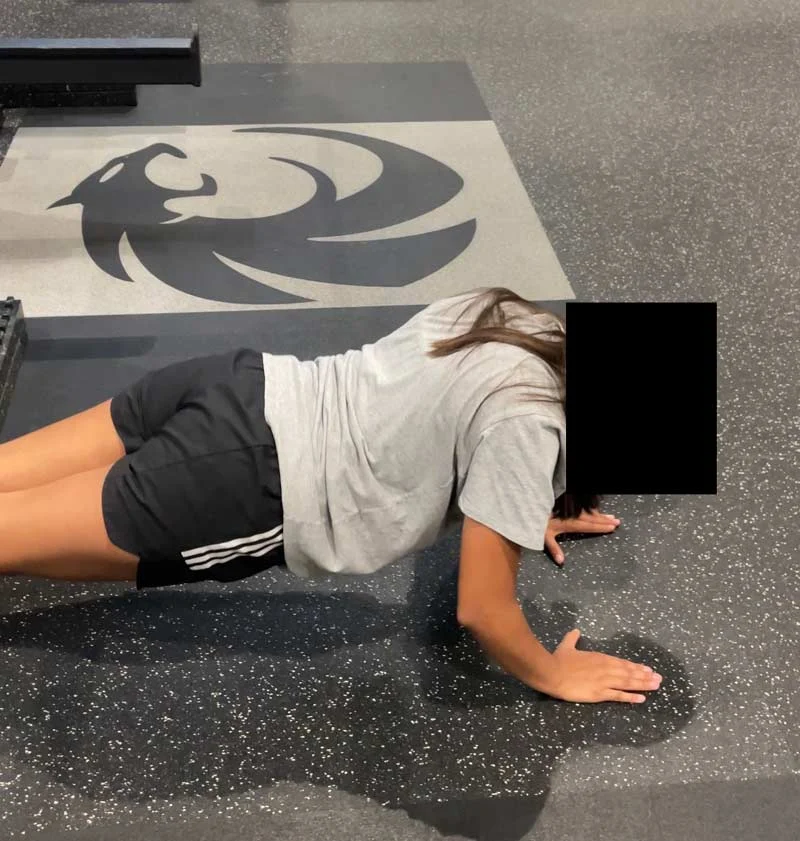
Once fundamental static positions are locked in, athletes transition to eccentric push-up variations while maintaining strict spinal alignment. Although the concentric push-up can initially prove challenging for beginners, combining isometric holds and slow eccentric descents provides a potent stimulus for muscular strength and neuromuscular coordination.
Hayes advocates for a patient, phased approach that moves deliberately from isometric planks to eccentric variations—such as band-assisted lowers or hands-elevated push-ups—before expecting full concentric performance. Once an athlete achieves the ability to execute a technically sound push-up, volume should be managed carefully to ensure rep quality and prevent undue fatigue that compromises form.
Ultimately, developing long-term strength and motor skills requires honoring a step-by-step methodology that prioritizes foundational mechanics over ego-driven volume. By recognizing the distinct physiological realities of their athletes and meeting them precisely where they are, coaches can foster an environment where sustainable athletic progress becomes the standard.