
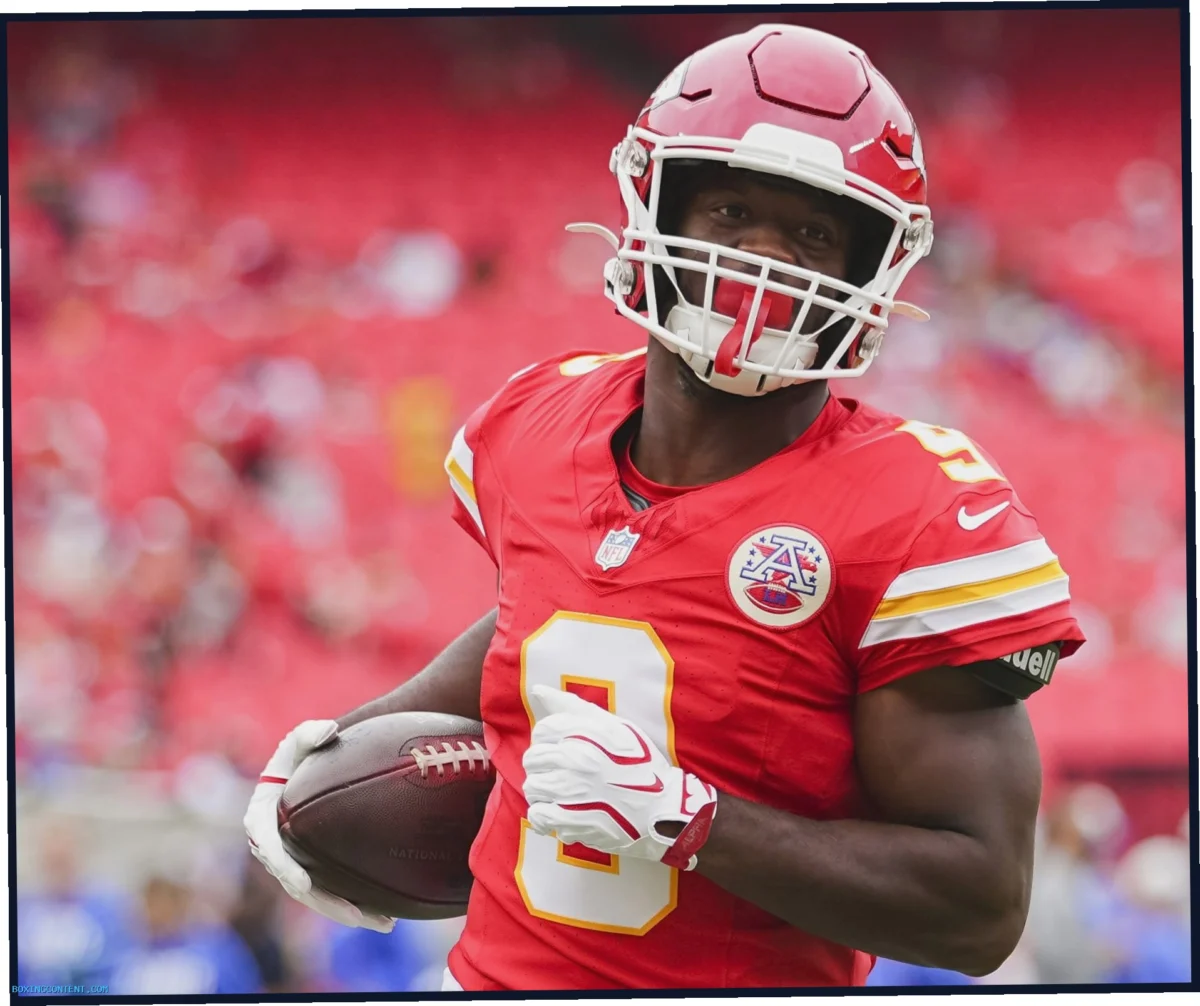
An awful lot went wrong for Michael Pittman Jr. in 2024, including, but not limited to, Anthony Richardson’s ongoing struggles with pass completion. Josh Downs’ emergence also played a major role in the offensive distribution, with the second-year slot specialist getting nearly as many targets as Pittman despite playing two fewer games over the course of the season. Compounding these challenges was the matter of Pittman playing through a persistent back injury from Week 5 onward. The situation in Indianapolis became so severe that there was even internal and external discussion of placing Pittman on injured reserve or shutting him down completely for the remainder of the year. Yet, demonstrating his trademark resilience, he ended up closing out the campaign with a strong 181 receiving yards across Weeks 17 and 18 while catching passes from veteran backup Joe Flacco.
Believed to have successfully avoided offseason surgery, Pittman will once again anchor a wide receiver room featuring three other Day 2 draft picks. Drafted in the second round back in 2020 himself, Pittman is joined by fellow targets Downs, Alec Pierce, and Adonai Mitchell. While the latter two may not significantly disrupt Pittman’s traditional volume projection, Downs certainly commands a notable share of the offense, and rookie tight end Tyler Warren adds a third viable candidate for short and intermediate targets. There were plenty of those short-to-intermediate targets to go around for both Downs and Pittman when Flacco was under center last year, but decidedly not enough opportunities for either player when Richardson got the nod under center.
Because Richardson’s style of play and developmental arc suggest he will likely never profile as a favorable quarterback for a traditional possession receiver—even if he improves drastically as a passer—the absolute best-case scenario for Pittman’s fantasy football and overall offensive value might paradoxically mirror another challenging season for the Colts as a collective unit. If Daniel Jones or a similar distributor is tasked with throwing a high volume of short, safe passes for a subpar team in the manner that Flacco did last year, Pittman’s production could see a stabilizing floor.
As a former 2020 second-round pick out of USC, Pittman has steadily improved upon his totals for targets and receptions with each passing season, establishing himself firmly as one of the league’s better possession receivers despite frequently dealing with subpar and inconsistent quarterback play throughout his professional tenure. The best quarterback situation he has experienced in Indianapolis was the final year of Philip Rivers’ storied career, a campaign in which Pittman was merely a rookie operating as the number three receiver behind veteran stalwart T.Y. Hilton and depth piece Zach Pascal. While he has unquestionably been the clear-cut number one receiver for the Indianapolis franchise ever since, Pittman has since been saddled with Carson Wentz, a brutal and rapidly declining final season from Matt Ryan, and then Gardner Minshew during the previous year.
Anthony Richardson might end up being miles better than all of those previous signal-callers after suffering through an injury-marred rookie year, but even if he realizes that immense physical potential, it offers no absolute guarantee that Pittman will experience an immediate spike in production. What might happen instead is a scenario where Pittman improves his individual efficiency metrics while simultaneously losing raw target volume. An Indianapolis offense featuring Richardson and elite running back Jonathan Taylor will presumably rely heavily on a high volume of rush attempts, naturally capping the aerial output of the offense. At 6-foot-4, 223 pounds, and possessing a solid 4.52-second speed in the 40-yard dash, Pittman is perhaps ideally suited to his familiar, physical possession role under any offensive coordinator, while rookie second-round pick Adonai Mitchell can successfully stretch the field vertically. Meanwhile, 2023 third-round pick Josh Downs remains the ultimate wild card in the room, capable of directly impacting Pittman’s historically dominant share of short, high-percentage targets.
Looking back at the trajectory of his career, Pittman actually took a step backward rather than forward—as many analysts and fans eagerly expected—during the 2022 season. His production dropped from 1,082 receiving yards the year before to only 925 yards, despite seeing 12 more targets over the course of one fewer game played. The raw volume, at least, remained promising, and some of the efficiency decline was completely out of his hands within an offensive scheme thoroughly torpedoed by Matt Ryan’s rapid late-career downfall and Jonathan Taylor’s mounting injury woes. Free-agent addition Gardner Minshew ultimately figured to be an upgrade on the 2022 version of Ryan, and there was historically not much in the way of elite target competition to threaten Pittman’s stranglehold on the depth chart. While never likely to emerge as much of a true deep threat given his 4.52 speed, Pittman did demonstrate notable competence as an intermediate target during his breakout 2021 campaign by posting a respectable 9.8 average depth of target before dropping down near tight-end ranges at 6.9 yards in 2022. The arrival of new head coach Shane Steichen was expected to take notice of these limitations after doing fantastic offensive work in Philadelphia the prior year, though there remained a distinct chance Pittman would end up catching passes from an unpolished rookie in Anthony Richardson—the 14th overall pick in the draft—rather than Minshew, signaling what could essentially amount to a transitional or rebuilding phase for the Colts franchise.
Despite those later hurdles, Pittman thoroughly enjoyed his first career 1,000-yard season back in 2021, durable enough to play in all 17 games while catching more than twice as many passes as any other Colt on the roster. The 2020 second-round pick had already shown flashes of immense promise as a rookie, including a memorable performance featuring 101 total yards in a hard-fought playoff loss to the Buffalo Bills, though he wasn’t positioned at the very top of many fantasy lists for second-year wideout breakouts ahead of that spring. No matter the external expectations, Pittman quickly established himself as Option A in an otherwise lifeless and predictable passing game, hauling in six or more catches in four of Indianapolis’s first five matchups of the season. Through the first eight weeks of that campaign, Pittman averaged 74.3 receiving yards and 0.5 touchdowns on 8.1 targets per game from quarterback Carson Wentz, who ultimately finished the year ranked 20th in yards per attempt at 6.9 and 27th in completion percentage at 62.4 percent.
That heavy reliance eventually caught up to the offense, causing Pittman’s numbers to dip to 4.8 receptions for 54.2 yards and 0.2 touchdowns on 7.1 targets per game over the final nine contests. The silver lining to that statistical regression was that his overall target share remained remarkably steady throughout the entirety of the season, with the dip in raw volume primarily serving as a direct product of Wentz averaging a mere 27.3 pass attempts per game over the final nine weeks. Even as the Colts continually leaned on Jonathan Taylor and a traditionally strong offensive line, they generally avoided hiding their new quarterbacking options the way they frequently had to scheme around Wentz’s limitations. If nothing else, bringing in veteran stability meant fewer catastrophic mistakes, even if some of Ryan’s final statistical decline was fueled by the organizational mess surrounding him in his final years in Atlanta. The Colts placed a significant organizational bet on a offensive bounce-back, and Pittman remained the overwhelming favorite to lead the team in targets after management opted to bypass drafting or signing top-tier wide receiver help in free agency, instead utilizing draft capital on second-round pick Alec Pierce.
Earlier in his career, during a promising rookie season that followed being selected with the 34th overall pick in the 2020 NFL Draft, Pittman notably missed three critical games after undergoing surgery for compartment syndrome. Upon returning to full health, however, he immediately demonstrated exciting flashes on the field, even with a visibly declining Philip Rivers throwing him the football. Pittman finished that initial campaign with a solid 8.2 yards per target, two explosive receptions of 40 yards or more, and a stellar 100-yard receiving performance in Week 10 against the division-rival Tennessee Titans. Those regular-season totals did not even include his standout statistics from the wild-card playoff loss to Buffalo, where he put up a strong 5-catch, 90-yard receiving line alongside an 11-yard rushing attempt to boot.
Standing at 6-foot-4 and weighing 223 pounds, Pittman is physically massive for the wide receiver position, yet he moves exceptionally well for a player of his imposing size, highlighted by a reliable 4.52-second 40-yard dash. Observers frequently compared his physical profile and playing style to a slightly smaller version of star wideout Mike Evans. At the time of his arrival, the Colts’ receiving corps was wide open and searching for an identity, featuring a past-his-prime T.Y. Hilton, the physically gifted but perpetually injury-plagued Parris Campbell, and the steady but unspectacular Zach Pascal. While it remained entirely possible that none of them would instantly emerge as a true alpha number one receiver, Pittman quickly positioned himself as the best mathematical and physical bet among the group, especially with Hilton beginning that season on the injured reserve list following offseason neck surgery.
The front office’s decision to draft Pittman high in the second round underscored their desire to inject youth and size into an aging receiver room that already featured established names like Hilton, Pascal, and Campbell. Evaluators noted that Pittman’s rare combination of a 6-foot-4, 223-pound frame and surprising speed allowed him to profile as a physical mismatch against smaller NFL defensive backs. Exhibiting polished route-running ability for a younger prospect, he consistently leveraged his exceptional size and natural ball skills to consistently win contested jump balls downfield. Although he did not put up massive collegiate numbers until his senior year at USC, where he thoroughly exploded for 1,275 receiving yards and 11 touchdowns across 13 games, his collegiate development paved the way for an immediate transition to the professional level. Earning the trust of the coaching staff from the moment training camps opened, Pittman carved out an enduring foundational role in the Indianapolis offensive scheme that continues to define his career trajectory.