



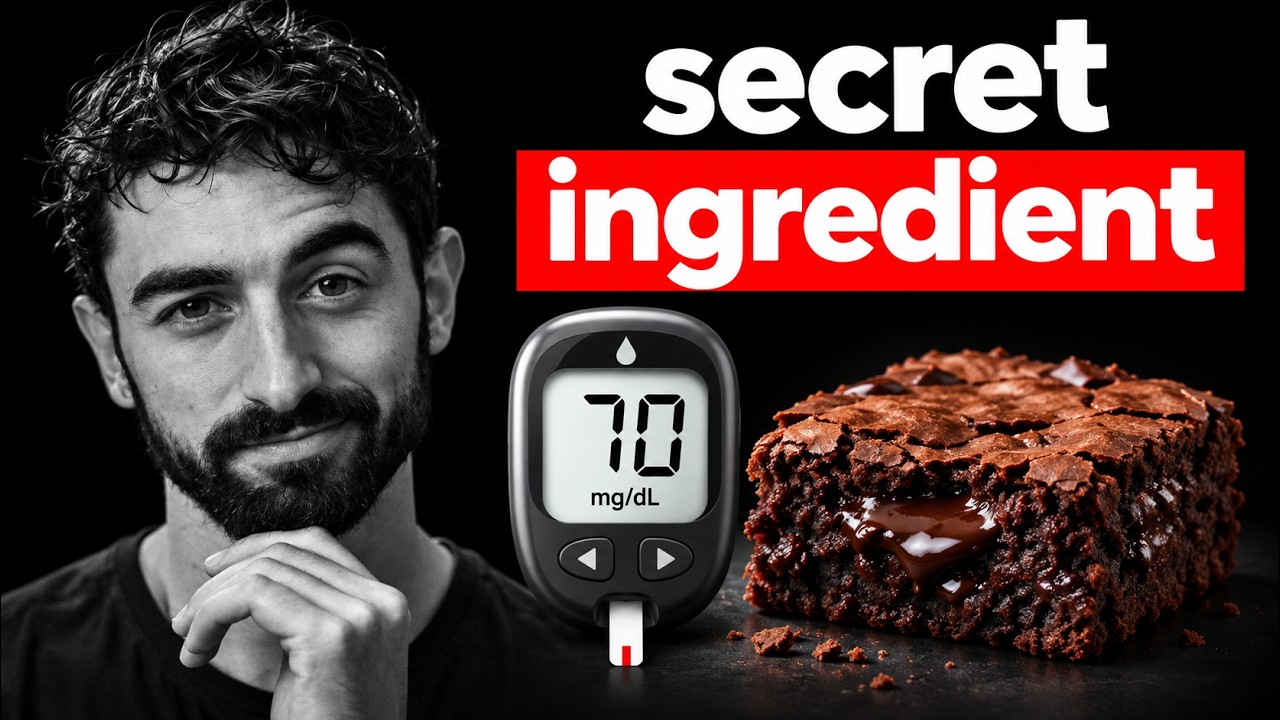
In a revelation that has captured the attention of both the medical and nutritional communities, a Harvard- and Oxford-trained physician-scientist has demonstrated how an unconventional dessert can actively lower blood sugar levels. Dr. Nick Norwitz, known for his rigorous self-experimentation and science communication, recently shared a video detailing an unexpected physiological discovery: a brownie made with a humble root vegetable managed to reduce his blood glucose levels by 12 milligrams per deciliter rather than spiking them.
The finding, which began as a casual kitchen experiment, involves a complex biochemical chain reaction starting in the mouth, traveling through the vascular system, and ultimately engaging muscle cells in a manner strikingly similar to physical exercise. While framed by Dr. Norwitz as an isolated personal observation rather than a definitive clinical trial, the underlying science bridges multiple disciplines, from oral microbiology to cardiovascular signaling and metabolic regulation.
The "That’s Odd" Moment
Dr. Norwitz originally formulated the recipe with a primary objective in mind: to boost systemic blood flow through dietary means. However, true to the spirit of serendipity that often characterizes scientific inquiry, the secondary metabolic effects became apparent only after he tracked his continuous glucose monitor at zero, thirty, and sixty minutes post-consumption. Instead of the typical glycemic elevation associated with baked goods, his blood sugar dropped by 12 mg/dL. When he repeated the experiment, the hypoglycemic effect proved even more pronounced.
Comparing the observation to Alexander Fleming’s accidental discovery of penicillin in 1928—where a contaminated petri dish revealed the antibacterial properties of mold—Dr. Norwitz emphasizes the value of paying attention to anomalies. In science, he notes, some of the most profound breakthroughs begin with a simple acknowledgment that an unexpected result is worth investigating. At the same time, he offers a necessary reality check, reminding observers that a single N-equals-one self-experiment represents an observation rather than conclusive clinical proof.
How Beets Turn Into a Blood Flow Signal
The core mechanism behind the recipe begins with beetroot, an ingredient frequently maligned for its earthy flavor profile but exceptionally rich in dietary nitrate. Once ingested, the journey of nitrate is remarkably sophisticated. Bacteria residing naturally within the human oral cavity absorb the dietary nitrate and chemically reduce it into nitrite. Upon swallowing, stomach acid and systemic pathways convert this nitrite further into nitric oxide.
Nitric oxide functions as a critical signaling molecule throughout the human body, acting as a vasodilator that widens blood vessels, improves overall vascular function, and helps regulate blood pressure. Extensive human clinical trials have long linked dietary nitrates to enhanced athletic performance and cardiovascular health. In the context of the brownie, this nitrate-rich beetroot foundation is complemented by cocoa, which provides its own well-documented array of vascular-supportive compounds.
Why Nitrate May Also Affect Blood Sugar
The connection between dietary nitrate and glucose regulation extends far beyond simple cardiovascular conditioning into the realm of metabolic control. In animal models genetically engineered to lack the specific enzyme responsible for producing nitric oxide within blood vessels, researchers have observed a troubling trajectory: blood sugar levels climb steadily, and the animals eventually develop diabetes.
However, when those same deficient animal models are administered high levels of dietary nitrate, the metabolic deficit can be partially rescued, resulting in measurable improvements in blood sugar handling. Similar restorative effects on blood sugar control and insulin sensitivity have been observed in animal models fed high-fat, high-sugar diets supplemented with nitrates. While Dr. Norwitz stresses that these direct cause-and-effect relationships remain primarily established in animal models—with human evidence being considerably smaller and less consistent—the biological parallel remains striking.
The Exercise-Like Mechanism: AMPK and GLUT4
To understand how a food item could potentially mimic aspects of physical exercise, researchers look to a fundamental cellular fuel gauge known as AMPK, or AMP-activated protein kinase. When an individual exercises, muscle contractions consume adenosine triphosphate, or ATP, generating AMP as a byproduct. This accumulation of AMP acts as a metabolic switch, activating AMPK within the cell.
Once activated, AMPK triggers the translocation of GLUT4 glucose transporters from internal storage vesicles directly to the surface of muscle cells. These transporters function essentially as a cellular vacuum, pulling excess glucose out of the bloodstream and drawing it inside the muscle tissue to be oxidized for energy. According to Dr. Norwitz, multiple scientific studies indicate that dietary nitrate can stimulate this exact same protein kinase pathway. Animal studies demonstrate improved glucose clearance, and human muscle biopsy data point to increased AMPK activity following nitrate consumption, suggesting a biochemical pathway where dietary compounds engage the body’s natural glucose-disposal machinery.
Allulose: The Possible Co-Star
While beetroot and its nitrate content play a central role, the recipe includes another notable component: allulose. Unlike traditional sweeteners or artificial alternatives, allulose is a rare, naturally occurring monosaccharide that provides sweetness with a fraction of the caloric load. Controlled human trials cited by Dr. Norwitz indicate that allulose possesses the unique ability to blunt glycemic spikes following the consumption of other carbohydrates while simultaneously moderating insulin release.
Because of this metabolic influence, he acknowledges that the credit for the observed blood sugar drop cannot be attributed solely to the beetroot and dietary nitrate. Isolating the variables remains an ongoing scientific pursuit, with future self-experiments potentially involving swaps like monk fruit or stevia to parse the exact contribution of each ingredient.
The Virtuous Cycle Hiding Inside the Brownie
The human vascular system features an alternative route for generating nitric oxide through mechanical stimulation. When blood flows steadily, the shear stress of the fluid "tickles" the interior walls of the blood vessels, activating an enzyme known as nitric oxide synthase via a process called mechanotransduction. This delicate physiological interaction relies heavily on the glycocalyx, a specialized, gel-like lining coating the interior of blood vessels that resembles microscopic peach fuzz.
Elevated blood sugar levels can damage the glycocalyx, acting chemically much like rust eating away at a metal pipe. When this protective lining is compromised, the body’s ability to produce nitric oxide independently through physical movement is impaired. By maintaining stable glucose levels, the vascular system helps preserve this secondary pathway, creating what Dr. Norwitz describes as a virtuous cycle where vascular health and blood sugar stability reinforce one another through dual pathways activated simultaneously.
Beyond the Brownie: Hunting Confounders
Scientific inquiry demands the rigorous accounting of potential confounding variables, and Dr. Norwitz is quick to point out several factors that could have influenced his glucose reading. For instance, he consumed the brownie during the midday hours while working at a standing desk. Maintaining an upright posture and engaging postural muscles requires muscular recruitment, which inherently aids in glucose uptake from the bloodstream.
Post-meal physical activity, such as taking a walk outside, is widely backed by scientific literature as an effective method for blunting glycemic excursions. While standing and posture alone are unlikely to account for the entire drop in his blood sugar, he emphasizes that everyday lifestyle choices compound over time. Small, sustainable habits often outweigh extreme, short-lived interventions that prove difficult to maintain consistently.
As with any novel dietary observation involving metabolic health, individuals managing diabetes or taking glucose-lowering medications are strongly advised to consult with qualified healthcare providers before attempting to use food as a tool for blood sugar management.