
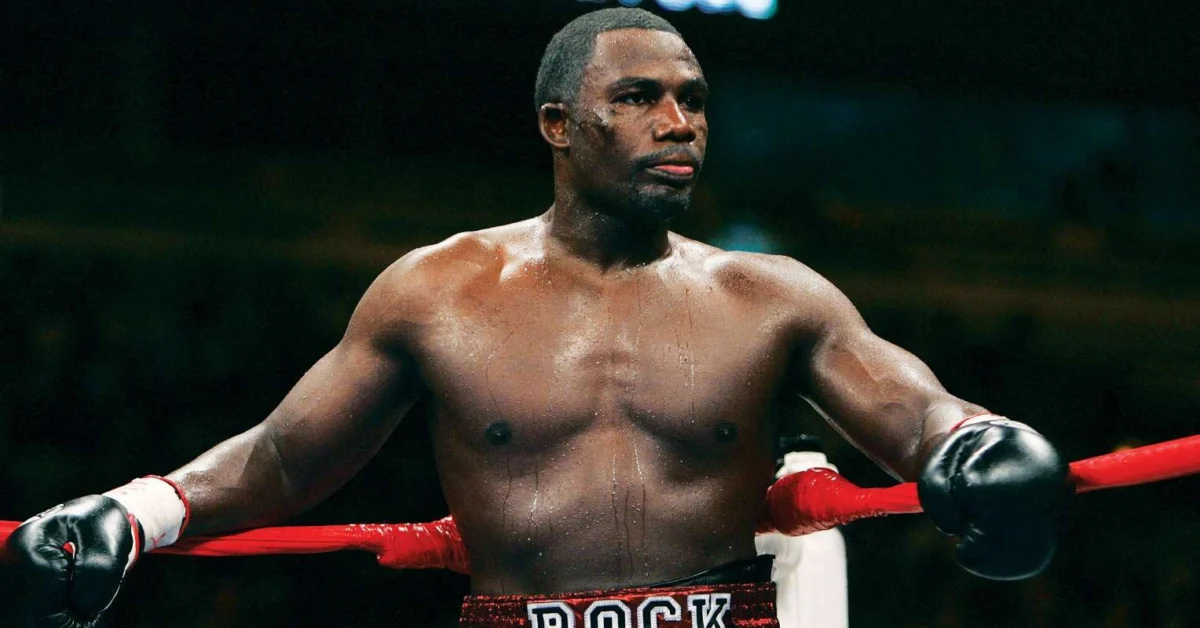
Former two-time world heavyweight champion Hasim Rahman is showing no signs of walking away from professional boxing, despite his advancing age and a recent defeat that highlighted the severe physical toll of his long career. At 54 years old, the veteran heavy hitter is actively preparing to step back into the ring for another contest, refusing to let his latest setback mark the end of his time in the sport. Rather than bringing his decades-long journey inside the squared circle to a close, Rahman is moving forward with plans for another fight, maintaining an active schedule just months after experiencing a losing performance that raised fresh questions about his continued participation in combat sports.
The upcoming assignment will see Rahman line up for a scheduled eight-round heavyweight bout on January 9, where he is set to square off against fellow veteran Damon Reed. The low-key event is being put together by promoter John Cantrell and will take place under the regulatory oversight of the Kansas Athletic Commission. Beyond the opportunity for Rahman to attempt to push his way back into the win column, the contest will carry extra incentive for both combatants. The organizers and sanctioning body have made available the vacant American Boxing Organization (ABO) North American heavyweight title, a championship belt that has been created specifically for the occasion of their early January clash.
Rahman’s decision to schedule a new fight comes on the heels of a disappointing outing in September, which marked his return to professional competition after a prolonged period away from the sport. In that contest, Rahman competed in a six-round heavyweight match against Phillip Triantafillo, an unaccomplished fighter who nevertheless managed to secure a victory over the former world champion. Observers and ringside commentators noted during the September bout that Rahman appeared to be a significantly deteriorated version of the fighter who once dominated headlines in the heavyweight division, showing diminished speed, reflexes, and overall mobility during the six rounds of action.
That September loss was Rahman’s first fight in nearly a decade, as he had previously not competed in a professional ring since 2014. In his last appearance prior to the long hiatus, Rahman traveled to Australia, where he suffered a three-round unanimous decision defeat at the hands of Australian journeyman Anthony Nansen. The loss to Nansen had seemingly signaled the practical end of Rahman’s competitive years at a meaningful level, leading many within the sport to assume he had quietly stepped away from professional boxing. However, his surprise return against Triantafillo in September and his immediate booking for January demonstrate that "The Rock" remains determined to pursue professional bouts regardless of recent outcomes.
In seeking to reverse his fortunes and secure a victory, Rahman will be taking on an opponent in Damon Reed who brings a lengthy, if uneven, professional record to the ring. Reed enters the matchup with an overall career record of 48 wins and 20 losses, including 32 victories coming by way of knockout. Like Rahman, Reed is returning to competition after an extended break of his own, having not fought professionally since 2017. Throughout the majority of his career, Reed typically campaigned in the cruiserweight division, making him a naturally smaller man compared to the traditional heavyweights Rahman faced during the peak of his career.
Despite compiling nearly 50 professional victories, Reed’s career has also been marked by high vulnerability to power hitters. Over the course of his 68 professional fights, Reed has been stopped inside the distance on 13 separate occasions. His list of stoppage defeats includes bouts against prominent names in the sport, most notably high-profile former heavyweight champion Deontay Wilder, as well as a past encounter with Rahman himself. Additionally, Reed’s resume includes a notable 10-round unanimous decision loss to former multi-division world champion James Toney, illustrating a history of stepping into the ring against elite-level opposition during his years as an active campaigner.
The scheduled January 9 bout will not be the first time Rahman and Reed have shared a ring. The two American heavyweights met for the first time in 2010, when both men were considerably younger and more active in the sport. In that initial encounter, Rahman demonstrated his superior power and heavyweight stature by scoring a sixth-round knockout over Reed. Following that defeat to Rahman in 2010, Reed went on to face Toney, taking the legendary fighter the full 10-round distance before losing on the scorecards. Now, 15 years after their first meeting, the two aging fighters are preparing to collide once more in a vastly different context.
The creation of the American Boxing Organization’s vacant North American heavyweight title for this specific event underscores the unique framing of the contest. Sanctioning bodies in regional boxing occasionally institute new titles or vacate existing belts to add promotional value to events featuring well-known veteran names. By offering the ABO North American belt for the January 9 showdown, the event organizers are attempting to elevate the stakes of an eight-round contest between two long-inactive fighters who are both far removed from the top rankings of the heavyweight division.
The decision of a 54-year-old former world champion to continue taking professional fights has sparked widespread concern throughout the boxing landscape. Observers, medical advocates, and long-time fans of the sport have voiced serious reservations about Rahman continuing to compete at this advanced stage of his life. The physical demands of heavyweight boxing are notoriously unforgiving, and the sight of a visibly slowed former champion continuing to trade punches in small-venue events stands in stark, troubling contrast to the glorious heights Rahman reached during the peak of his athletic prime.
That peak was defined by one of the most famous and shocking moments in modern heavyweight boxing history. In April 2001, the Baltimore-born fighter entered the ring as a massive underdog against undisputed world heavyweight champion Lennox Lewis. In an extraordinary upset that stunned the international sports world, Rahman landed a crushing right hand in the fifth round, knocking Lewis out cold to claim the unified world heavyweight titles. The dramatic victory instantly transformed Rahman from a respected contender into a global sports personality and a two-time ruler of the heavyweight division.
However, Rahman’s reign at the top of the division was short-lived. Later that same year, Lewis exercised his contractual right to an immediate rematch, meeting Rahman in Las Vegas for a high-stakes return bout. In the Las Vegas rematch, Lewis gained decisive revenge, stopping Rahman in the fourth round with a devastating combination to reclaim his world championships. Despite the loss in the rematch, Rahman’s fifth-round knockout of Lewis cemented his legacy as a fighter capable of delivering immense power on the grandest stages of the sport.
The stark reality of Rahman’s current trajectory highlights the difficult transition that many former elite champions face when their prime years pass. Moving from headlining major pay-per-view events in Las Vegas to competing in six-round and eight-round bouts under the supervision of state athletic commissions like Kansas reflects a common, yet contentious, late-career pattern in combat sports. While the drive to fight remains strong for former champions, the physical risks compound significantly with age, particularly when facing younger or fresher opponents after years of inactivity.
As the January 9 date approaches, attention will remain focused on the Kansas Athletic Commission and its medical protocols regarding the licensing of veteran combatants. With both Rahman and Reed carrying extensive ring wear, long periods of inactivity, and advanced age into the bout, the regulatory oversight of the card will be under close scrutiny. For Rahman, the upcoming eight-round contest represents another attempt to capture victory and hold a regional title, even as the broader boxing community continues to express deep worry over the risks he is taking by refusing to permanently put away his gloves.