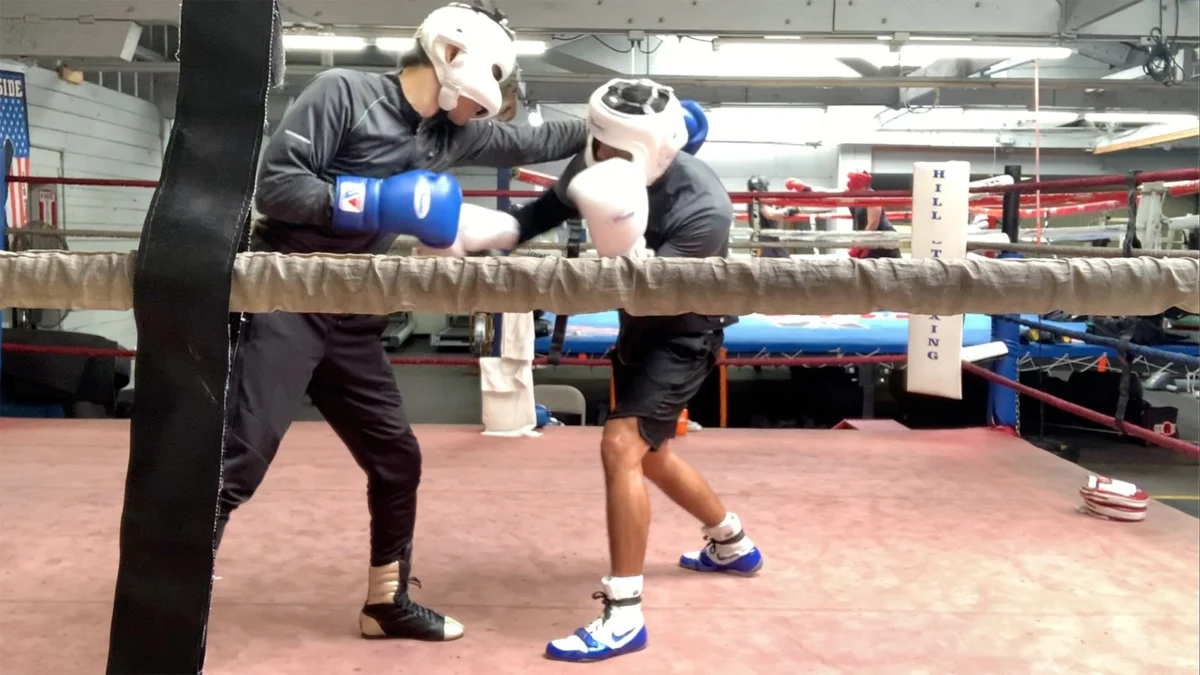
In the landscape of modern boxing, highlight reels are dominated by a specific aesthetic. Social media feeds flash with athletes executing wide, athletic maneuvers—fighters pulling their heads entirely across incoming punches, darting backward with explosive footwork, and resetting at a distance. It is clean, it is visually dramatic, and it has defined the pedagogical approach of boxing gyms for decades. Yet, away from the flashy perimeter fighting that satisfies pay-per-view audiences, a subtle shift is underway. Boxers ranging from elite Soviet and Cuban-style technicians to grassroots club amateurs are increasingly returning to a foundational concept that many modern trainers have largely overlooked: slipping to the inside of punches.
To contemporary eyes, inside slipping can appear messy. To the untrained observer, a fighter slipping inward often looks like little more than a desperate move toward a clinching position or an awkward tangle of bodies. However, boxing historians and veteran coaches point out that inside slipping is not a novel invention or a trendy gym fad; rather, it is a foundational, old-school technique that was standard practice in the sport’s earlier eras. A review of archival footage featuring fighters from boxing’s deeper history reveals that inside-slipping was deployed constantly as a matter of routine course.
The decline of inside slipping in mainstream gyms is generally attributed to a combination of stylistic shifts and the demands of modern athletic conditioning. Over the past several decades, amateur boxing formats and television-driven business models have heavily favored hit-and-run tactics. Amateurs competing in short, three-round bouts naturally gravitate toward explosive athleticism, long frames, and outward movement. Slipping to the outside produces a clear, visible narrative for judges and spectators alike, as a fighter pulls their head away from the line of fire and fires back a clean, distant counter. Furthermore, the global perception of boxing defense was profoundly altered during the era of Mike Tyson, whose spectacular outside-slipping and devastating knockout counter-punches heavily influenced a generation of coaches and fighters worldwide. For decades, traditional gym curricula streamlined defenses into blocking and outside slipping, inadvertently rendering inside techniques a forgotten art.
Despite falling out of favor in standard curricula, inside slipping offers distinct tactical advantages that make it an invaluable tool for fighters operating across different ranges. Unlike outside slipping, which often runs counter to human instinct, inside slipping leverages natural bodily reactions. When an opponent throws a right hand, turning the torso away from the oncoming limb toward the inside feels inherently natural and requires less complex visual processing. Conversely, forcing the body outward toward a punch can feel counter-intuitive and intimidating to developing fighters.
Beyond intuition, inside slipping requires significantly less energy and athletic exertion than its outside counterpart. While elite fighters can manage outside slips with minimal movement, achieving that level of proficiency is exceptionally difficult. Slipping inside, by contrast, immediately smothers an opponent’s punching space, rendering further arm extensions ineffective. This efficiency makes inside slipping a preferred method for enduring long, grueling fights. Historical contexts that favored fifteen-round bouts naturally bred fighters who relied on energy-efficient inside fighting rather than exhausting themselves with constant lateral movement.
Furthermore, inside slipping inherently solves one of the most common challenges faced by fighters: closing the distance against taller, longer-ranged opponents. Traditional attempts to slip outside of a jab often drive a fighter further away, leaving a gaping pocket of space for the opponent to orchestrate follow-up power punches. By contrast, inside slipping mirrors the opponent’s positioning, naturally bringing the defender closer and preventing adversaries from easily sliding away. This dynamic creates a safer punching rhythm, as both fighters operate in a harmonious, mirroring fashion where counter-punches roll with the flow of incoming momentum rather than colliding against it. Consequently, even if a fighter gets caught while executing an inside slip or a shoulder roll, the impact is minimized because the body moves away from the peak force of the strike, contrasting sharply with the knockout risks associated with moving against a punch during an outside slip.
The evolution of modern styles demonstrates that defensive trends are cyclical. While the Mike Tyson era popularized explosive outside movement and the Floyd Mayweather era subsequently entrenched the shoulder roll and the Philly shell into contemporary pedagogy, elite fighters continue to incorporate inside-slipping mechanics. Modern champions, including heavyweight titleholder Tyson Fury, regularly utilize shoulder rolls and inside-slipping tactics to neutralize opponents, proving that these classical concepts continuously reassert their value at the highest levels of the sport.
For fighters looking to integrate inside slipping back into their repertoires, the transition requires a shift in visualization rather than an upgrade in raw speed. Mastery of the technique relies heavily on timing rather than lightning-fast reflexes. By reading an opponent’s rhythm, pacing, and overall cadence rather than tracking individual arms, fighters can time their movements to slide inside cleanly. Whether executed through subtle head movement, tight shoulder rolls, or strategic pivots that leave an aggressive opponent over-extended, inside slipping opens up a diverse array of offensive and defensive angles.
Ultimately, the tradition of inside slipping never truly vanished from the sport. Its apparent scarcity stems from instructional trends and a media landscape that prioritizes flashy, easily digestible highlights over the gritty, close-range finesses of the pocket. Analysts and trainers note that many innovative movements seen in modern rings are simply variations of classical inside-slipping techniques executed by fighters schooled in old-school fundamentals. As practitioners continue to study fighters from past eras—such as Roberto Duran, James Toney, Bernard Hopkins, Pernell Whitaker, and Vasily Lomachenko—the appreciation for inside mechanics endures, ensuring that boxing’s most efficient defensive art remains a vital component of the sweet science.