Only last month, the mutterings echoing through the corridors of British combat sports were about where Scottish boxing goes from here. Three years after the Tartan Tornado, Josh Taylor, was toppled from his throne, doubts were mounting steadily regarding the health, funding, and long-term viability of the sport’s grassroots. The horizon looked bleak, with promoters and pundits questioning whether the proud fighting nation would produce another elite contender anytime soon.
Three weeks on, seemingly from nowhere, the landscape has completely transformed. The nation suddenly boasts not one, but two new world champions, sparking an unexpected renaissance that has reinvigorated the entire Scottish boxing community.
Willy Hutchinson claimed the prestigious WBC light heavyweight belt in a brutal
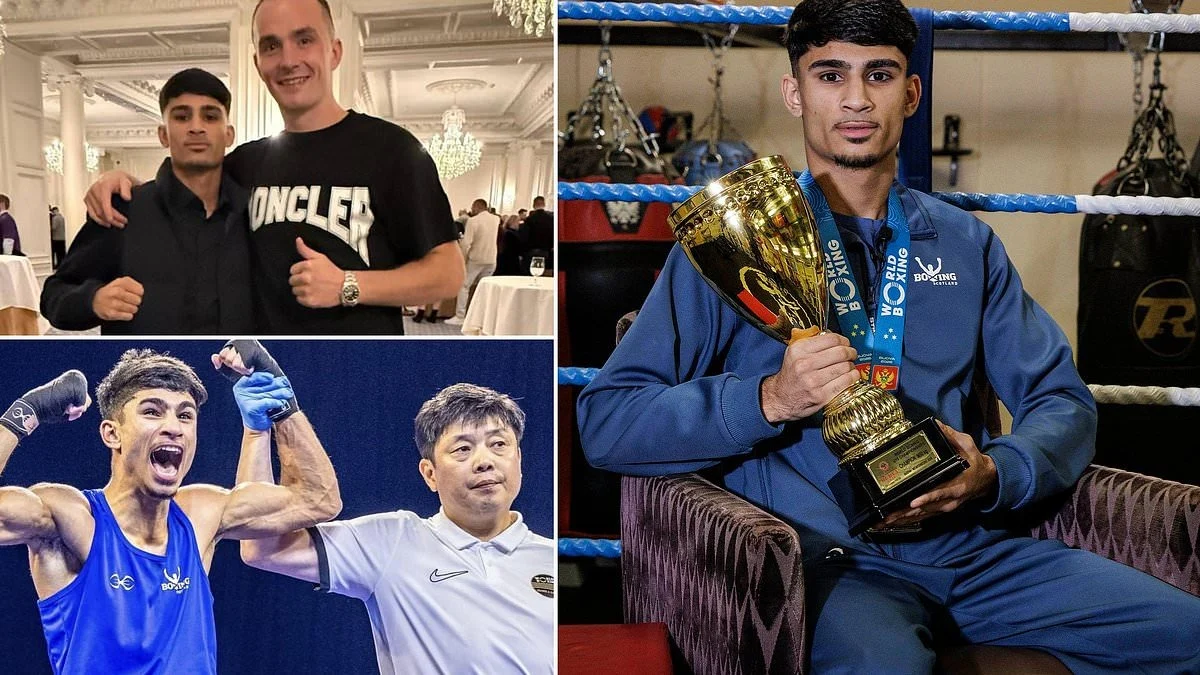
, high-stakes tussle with Joshua Buatsi earlier this month, performing under the full glare of national television cameras and capturing the imagination of sports fans across the United Kingdom. Yet, slipping somewhat beneath the broader media radar, but no less significant for the future of the sport, were the remarkable achievements of Aaron Sarwar, who was officially anointed the under-19 world flyweight champion in Montenegro on October 27.
Despite the vast difference in scale between Hutchinson’s professional breakthrough and Sarwar’s amateur triumph, the visceral human reality of both victories was identical. Both men sobbed openly in the ring, overcome by emotion, and fell directly to their knees as the simple, definitive raising of a referee’s hand detonated identical emotional explosions within them. It was the sudden, overwhelming vindication of years of grinding roadwork in the freezing Scottish rain, gruelling gymwork under the watchful eyes of demanding coaches, and relentless grafting ringwork that most people never see.
In a display of beautiful symmetry within the sport’s history, the only other Scot to have ever won a world amateur title was Hutchinson himself, achieving the feat in Russia back in 2016. Now, Hutchinson’s subsequent ascent to the very top of the professional ranks has unexpectedly lit a clear, inspiring path for Sarwar to follow. And if there are still lingering mutterings in the boxing gyms across Scotland, they are no longer about decline, but rather the rising conviction that this teenage kid from Kilmarnock could genuinely be the real deal.
When compared against the high-octane drama and big-ticket spectacles of professional championship bouts, youth boxing matches can sometimes appear cagey, cautious, and occasionally sterile to the untrained eye. Yet, when Aaron Sarwar steps between the ropes, it is remarkably difficult for anyone to peel their eyes away from his compelling, fluid repertoire of sharp shots, advanced defensive maneuvers, tactical switches, and the occasional flash of confident showboating that leaves opponents chasing shadows.
Those who know him best within the close-knit boxing community maintain that his most formidable and remarkable asset is not physical power, but rather an iron psyche. Even at such a tender, formative age, this mental fortitude has created a machine-like drive to reach whatever peak, challenge, or title is placed directly in front of him.
His journey into combat sports began long before he ever laced up a pair of traditional boxing gloves. Having become a world junior karate champion and secured a double black belt by the remarkably young age of 11, Sarwar found himself searching for a fresh, more demanding challenge when the world was upended by the Covid-19 pandemic. With karate reduced to restricted online seminars during lockdown, the combat-hungry youngster naturally gravitated toward the local boxing scene.
Speaking to Daily Mail Sport, Sarwar insists he has already set off on a determined mission to recreate and relive another Montenegro moment in the near future.
Reflecting on his crowning achievement, Sarwar said that people constantly ask him about that specific feeling, but it remains entirely indescribable. He confessed that he often wishes he could travel back in time just to relive those ten or fifteen fleeting seconds of having his hand raised in victory, because he genuinely does not believe anything else in life will ever quite come close to matching it again.
Despite acknowledging the uniqueness of the moment, he remains resolute, noting that he will spend the rest of his career chasing that exact feeling all over again while striving to make his mother and proud parents proud once more. He watches the video of the bout every single day, admitting that it still gives him goosebumps every time it plays on his screen.
Sarwar revealed that he had spoken briefly with Willy Hutchinson before, but the two champions recently met at a local boxing show and enjoyed an extensive, meaningful chat about what lies ahead for both of their promising careers. He remarked on the surreal nature of the situation, noting how amazing it is that in the space of just two weeks, Scotland has produced two new world champions, calling the entire turn of events simply crazy.
The young prodigy’s entry into the sport was almost entirely accidental. When pandemic lockdowns brought his karate training to a virtual halt, Sarwar stumbled across a basic, unassuming gym tucked away behind a local shop where he would normally buy his lunch during school breaks. Intrigued by the sound of punchbags and heavy leather, he investigated further and promptly joined his local club, embedding himself in a culture of hard work and discipline.
The 18-year-old was back visiting his roots recently at the Northwest ABC club in Onthank, an estate that was made infamous across the United Kingdom by the controversial 2010 BBC Scotland fly-on-the-wall documentary series, The Scheme. When hitting television screens more than a decade ago, the series won a Bafta award, yet it simultaneously stood heavily accused of creating a exploitative "poverty safari" for the chattering classes, turning controversial local figures into dubious celebrities.
Amidst the socio-economic challenges highlighted by the documentary, Northwest ABC was widely feted and funded for operating as a vital, positive beacon against anti-social behavior in the community, even receiving a high-profile personal visit from the then-Justice Secretary Kenny MacAskill. Today, Graeme Marshall and his fiercely committed coaching team have successfully helped cultivate a very different kind of headline-maker from the estate, turning Sarwar into a proud new poster boy for the very community that raised him.
Down at the club, the members and coaches are immensely proud of their young prodigy, though the prevailing mood among the staff is characterized much more by grounded hope than runaway hype. Coaches remorselessly tease Sarwar about his fussy, carefully styled fringe and take care to point out—largely to rein in excessive public expectations—that he is still so young that he has yet to even fight an official bout without a protective headguard.
Yet, Graeme Marshall—whom Sarwar affectionately refers to as being akin to a second father—is in absolute, unwavering doubt about the youngster’s freakish, generational potential.
Recalling Sarwar’s arrival, Marshall noted that when the boy asked to come to the club following the relaxation of lockdown rules, it was Aaron himself who made the initial phone call, which is highly unusual for a 12-year-old child. Marshall knew straight away that there was an exceptional level of natural talent present, observing that the boy was fast, strong, and possessed an unmatched dedication. After just a few short months of training, the coaches entered him into the Scottish championships; despite it being his first competitive fight, Sarwar went out and won the entire tournament.
By his second competitive season, Sarwar had added the prestigious GB championships to his growing trophy cabinet. Marshall traveled extensively with the youngster to test him against international opposition, recalling how Sarwar went to Sweden and decisively stopped the reigning Swedish champion, followed by statement-making victories over formidable Irish fighters on their home turf in Ireland—proof that the coaching team was dealing with someone truly special.
Marshall firmly believes that Sarwar will transition to the professional ranks at some point in the future, noting that it remains every young boy’s ultimate dream. Furthermore, the coach insists there is no logical reason why Sarwar cannot eventually go on to match everything Willy Hutchinson has achieved and ultimately become a full professional world champion in his own right.
Already, the phone calls have started coming in from interested managers testing the waters regarding a potential move to the professional paid ranks—much like Hutchinson did immediately after securing his amateur gold medal. Meanwhile, regional bookmakers are already offering competitive odds of 8/1 that the Kilmarnock native goes right to the absolute top of the sport.
For the time being, however, Sarwar—who made the bold decision to walk away from his college engineering course to concentrate entirely on his athletic pursuits—remains laser-focused on an amateur milestone, aiming to represent and fight for Scotland at the 2030 Commonwealth Games in India.
Discussing his future pathway, Sarwar explained that he has all the time in the world and has successfully opened up a multitude of exciting doors for himself through his recent success. He intends to sit down and thoroughly discuss his next moves with his coaching staff and his parents to determine what is truly best for his long-term development. However, he is acutely aware of what he is now capable of achieving off the back of his world title.
Comparing his athletic journey, Sarwar noted that while he was dedicated and hard-working during his time in karate, he simply did not possess the same consuming passion that he found in boxing. For him, boxing is now all he does. Having left his formal education behind to box on a full-time basis, he feels he has placed all of his eggs in one basket, leaving him with no alternative choice; he has to make it work, viewing his future simply as boxing or nothing at all.
When looking for role models and sources of inspiration, Sarwar points directly to Prince Naseem Hamed, the flamboyant and wildly entertaining featherweight world champion who dominated the sport throughout the 1990s. He admires Hamed for his unique style, his flashiness inside the squared circle, and his devastating knockout power. Sarwar adds that he possesses that same flashy side to his own game, but quickly emphasizes that if opponents want to turn the bout into a serious brawl, he is more than willing to stand toe-to-toe, noting confidently that he can box, he can fight, and he can do it all.
Despite now training extensively and solely with the national Boxing Scotland setup, Sarwar simply cannot keep himself away from his spiritual home at the Northwest ABC club. He explains that he always tries to carry himself well and set a high standard in order to inspire the younger children coming into the gym to train that bit harder, adding that being around his foundational coaches on a regular basis remains immensely grounding.
The support the club has given him over the years has been second to none, and he readily admits he cannot thank them enough, acknowledging that there is simply no way he will ever be able to fully repay the profound sacrifices his coaches have made for him along the way.
Down on the canvas inside the Northwest gym, a small boy’s fists are currently a deadly, rhythmic blur, thwacking the heavy leather coaching pads held out by his trainer with awesome efficiency and speed. To slightly misquote the legendary Muhammad Ali, the young athlete possesses the nimble legs of a sparrow combined with the stinging precision of a bee.
That young boxer is Aidan Sarwar—Aaron’s 12-year-old brother—who is already actively following in his sibling’s footsteps as part of the broader Scottish national boxing setup.
It was a packed Glasgow music hall crowd that first memorably coined the classic theatrical heckle, "Oh no, there’s two of them," when English comedian Bernie Winters was joined unexpectedly by his brother Mike on stage. Rival boxers and opponents across the land may soon find themselves deeply empathizing with that sentiment.