

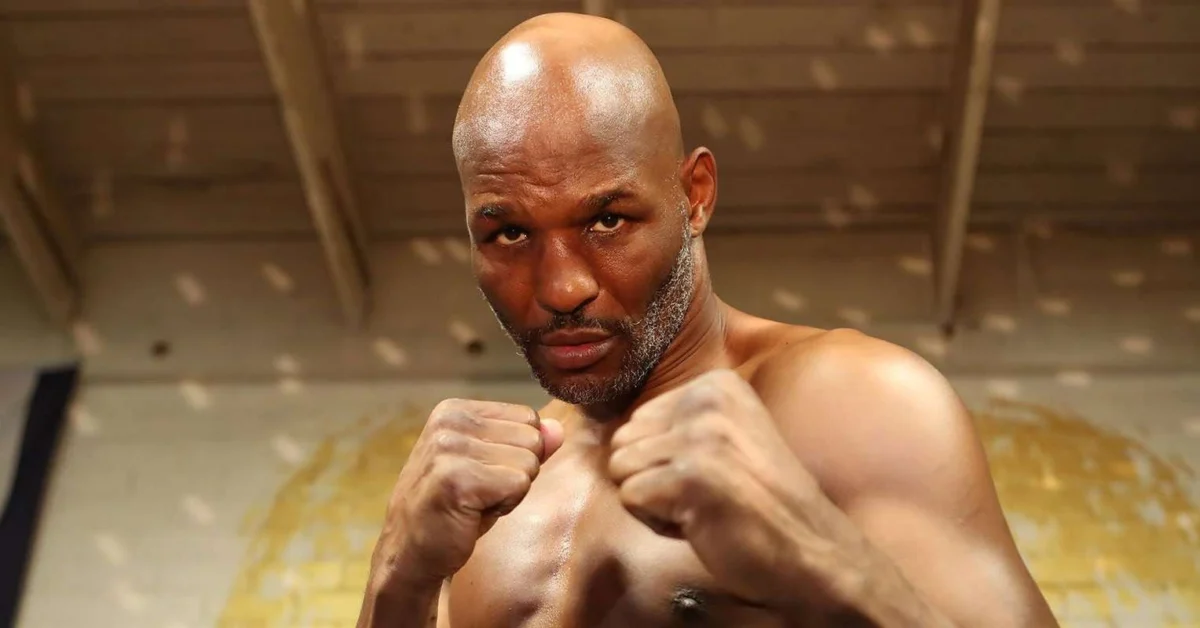
Bernard Hopkins stands as one of the most remarkable and enduring figures in the history of professional boxing, a competitor whose career spanned nearly three decades and redefined what was possible for an athlete in the combat sports world. Known universally by his fearsome moniker, "The Executioner," Hopkins carved out a legendary path that began with an inauspicious start in 1988 and transformed into a masterclass in longevity, tactical brilliance, and championship dominance. Yet, even a fighter of Hopkins’ immense stature, defensive mastery, and ring IQ can look back at the landscape of his era and identify a talent that transcended ordinary greatness. In a candid assessment shared with The Ring Magazine, Hopkins reflected on his storied career and offered a definitive verdict on a prime version of his fiercest rival, Roy Jones Jr., conceding that at his absolute peak, the multi-division champion was simply unbeatable.
To understand the weight of Hopkins’ assessment, one must first look back at the extraordinary arc of his own professional journey. When Hopkins made his debut in October 1988, few could have predicted the historic heights he would eventually reach, especially given that he suffered a defeat in that very first outing. Rather than letting an early setback define his career, Hopkins regrouped, refined his craft, and embarked on a methodical climb to the summit of the sport. His rise truly gained momentum during the mid-1990s, a golden era for the middleweight division, when he captured the IBF world middleweight championship by stopping Segundo Mercado in the seventh round of their fiercely contested bout in 1995. That victory marked the beginning of a historic championship reign. Hopkins went on to defend his IBF crown a record-breaking number of times, systematically turning back all challengers and cementing his reputation as the division’s apex predator.
The defining moment of his middleweight dominance arrived in 2004 when he faced off against superstar Oscar De La Hoya in a high-stakes mega-fight. In a performance that showcased his exceptional timing, body punching, and ring generalship, Hopkins became the first man to ever knock out De La Hoya, stopping the "Golden Boy" with a devastating left hook to the liver in the ninth round. With that historic victory, Hopkins achieved undisputed championship status, unifying the major middleweight belts and solidifying his legacy among the all-time greats of the division. However, rather than resting on his laurels or retiring at the top, Hopkins chose to defy conventional wisdom about aging in boxing by moving up significantly in weight to test himself against younger, naturally bigger opponents in the light heavyweight division.
Moving up to the 175-pound limit proved to be another playground for Hopkins’ relentless competitive spirit and tactical wizardry. In 2011, at an age when most fighters had long since retired, he challenged Jean Pascal for the WBC world light heavyweight title. By outpointing Pascal, Hopkins broke George Foreman’s long-standing record to become the oldest fighter in boxing history to win a major world championship, a milestone that sent shockwaves through the sports world. Although he would briefly stumble when he lost the title to Chad Dawson just one year later, "The Executioner" refused to accept that his time at the top had passed. Demonstrating his trademark resilience, he bounced back once again, outpointing Tavoris Cloud in 2013 to capture a version of the light heavyweight title and further extend his own unprecedented record as a senior world champion.
Throughout this illustrious journey, Hopkins crossed paths with some of the finest talents of his generation, but it was his complicated, career-long rivalry with Roy Jones Jr. that remains etched in the collective memory of boxing purists. The two men first collided in 1993, during the formative years of their respective professional journeys, when Jones secured a unanimous decision victory over Hopkins to claim the vacant IBF middleweight title. Seventeen years later, in 2010, the rivalry was finally revisited when they met in a long-awaited rematch. This time, an accidental clash of heads led to the bout being ruled a no-contest before it could reach a definitive conclusion, though a subsequent technical ruling later resulted in a victory for Hopkins, leaving their official head-to-head ledger balanced with one win apiece.
Despite the competitive tension and the shared history between them, a trilogy showdown to definitively settle the score during their respective primes never materialized. The absence of a third fight has fueled decades of debate among fans, analysts, and historians, all of whom have endlessly wondered how a prime-versus-prime encounter would have truly unfolded. Speaking candidly to The Ring Magazine, Hopkins provided a rare and deeply respectful glimpse into that hypothetical matchup, offering an honest assessment of how he would have fared against a peak version of Jones. Rather than leaning on typical fighter bravado, Hopkins openly admitted that getting the better of a prime Roy Jones Jr. was an insurmountable task.
Breaking down the unique stylistic challenges that Jones presented at his absolute best, Hopkins highlighted the breathtaking physical gifts and defensive elusiveness that made his rival virtually untouchable during the 1990s. Jones was not merely a fast puncher; he was an anomaly who combined otherworldly speed, cat-like reflexes, and an unorthodox style that left elite opponents grasping at air. Hopkins noted that Jones possessed the rare tactical awareness required to neutralize an opponent’s best offensive weapons while simultaneously ensuring he did not expose himself to heavy counter-punches. Even when Hopkins managed to land cleanly, Jones possessed the rare defensive awareness to ensure that a second follow-up shot never arrived, effectively dismantling combinations before they could do sustained damage.
Describing the totality of Jones’ skill set during those peak years, Hopkins emphasized that his former rival represented a complete package of elite boxing ability, impenetrable defense, and explosive offense. In Hopkins’ view, the early-career incarnation of Roy Jones Jr., operating at the absolute zenith of his physical powers, was simply operating on a plane that no other fighter could reach. Concluding his assessment with a stark and definitive declaration, Hopkins stated that no one in the history of the sport, operating at that specific level and in that specific window of time, could have found a way to defeat Roy Jones Jr., cementing the mythos of a fighter whose prime remains one of the most devastatingly brilliant phenomena the sport of boxing has ever witnessed.