From bitter personal rivalries and contentious refereeing stoppages to split-second knockouts and epic displays of heart, British boxing has delivered some of the most captivating spectacles in sporting history. When two home-grown fighters step into the ring on domestic soil, the stakes extend far beyond title belts; pride, national standing, and boxing legacy are placed squarely on the line.
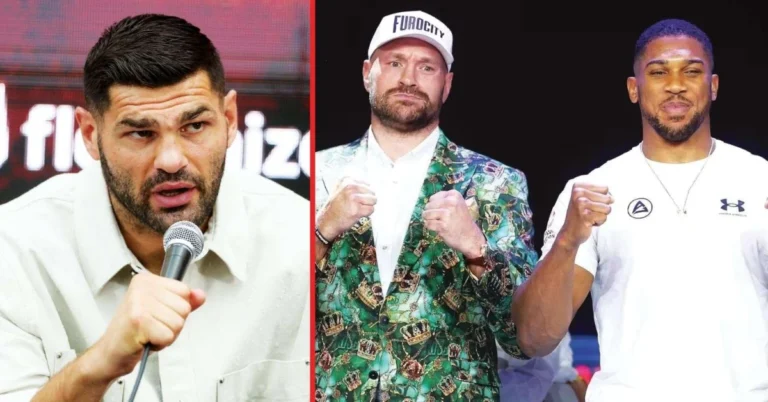
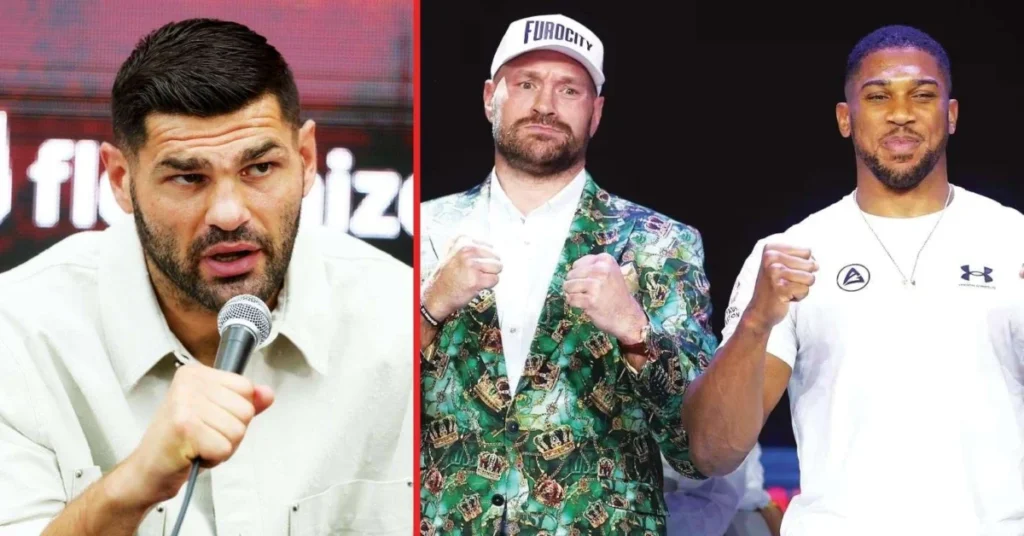
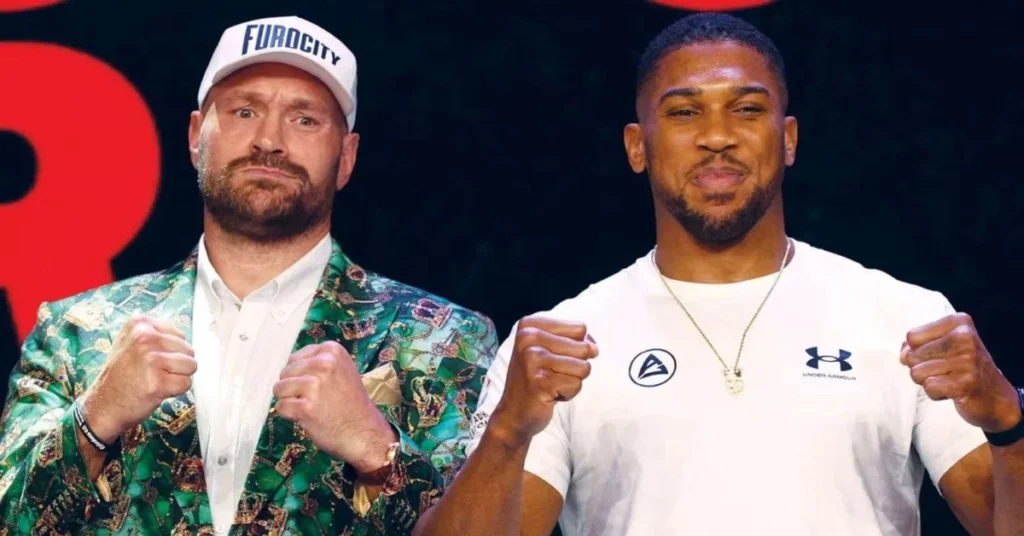
With the long-awaited heavyweight showdown between Tyson Fury and Anthony Joshua now just over a month away, anticipation surrounding elite domestic clashes has reached a fever pitch. To mark the occasion, presenter Stacey Copeland will be joined by 5 Live boxing pundit Steve Bunce and veteran commentator Mike Costello for a special broadcast on BBC Radio 5 Live at 19:30 GMT on Wednesday, 11 November. The panel will examine and debate five of the most extraordinary all-British bouts ever staged, inviting the public to decide which historic night deserves the ultimate top spot.
Supporters across the country have the opportunity to make their voices heard through a public vote, which remains open until 12:00 GMT on 11 November. The definitive poll results will subsequently be announced during Wednesday evening’s flagship show.
The five selected fights stretch across five decades, showcasing the evolving nature of the sport while highlighting the timeless drama that occurs when top British contenders collide. Below is a detailed look at the shortlisted bouts competing to be crowned the greatest domestic fight in British boxing history.
Henry Cooper v Joe Bugner – March 1971
The heavyweight encounter between Henry Cooper and Joe Bugner at Wembley’s Empire Pool stood as a pivotal moment in British boxing, representing a literal passing of the torch from an established national icon to a rising young contender.

At 36 years of age, Cooper—affectionately dubbed "Our ‘Enry" by a adoring British public—entered the ring as a clear fan favorite. A veteran renowned for his ferocious left hook, famously nicknamed ‘Enry’s ‘Ammer, Cooper put his British, European, and Commonwealth heavyweight championships on the line. Standing in the opposing corner was the 21-year-old Bugner, a towering athlete 15 years Cooper’s junior. Hungarian-born Bugner had immigrated to Britain with his family as a child, building a promising career that brought him directly into collision with the country’s most cherished fighter.
What transpired over 15 grueling rounds was a tense, tactical battle of endurance. Cooper relied on his experienced ring craft and trademark aggression, while Bugner utilized his youth, size, and defensive sharp-shooting to keep the veteran champion at bay. When the final bell sounded, referee Harry Gibbs delivered a verdict that sent shockwaves through the venue: Bugner was awarded the victory by a razor-thin margin of just a quarter of a point.
The decision was instantly met with a chorus of deafening boos from the Wembley crowd, who felt the beloved champion had been mistreated on the scorecards. The outrage was echoed at ringside by iconic BBC commentator Harry Carpenter, who openly voiced his disbelief during the broadcast, asking: "How can you take the man’s three titles away like that?"
Following the disputed loss, Cooper announced his immediate retirement from professional boxing. Decades later, the outcome of Cooper versus Bugner remains one of the most fiercely debated decisions in the annals of British sport, exemplifying how a single quarter-point margin can alter the course of heavyweight history.
Nigel Benn v Chris Eubank – November 1990
Few athletic rivalries have ever captivated the public imagination quite like the clash between Nigel Benn and Chris Eubank. The two middleweights possessed polar-opposite personalities, creating a natural storyline that transcended the sport itself. Benn was a reckless, power-punching force of nature whose explosive aggression made him a fan favorite. Eubank, by contrast, was an eccentric, highly articulate, and intensely arrogant figure who entered the arena with swagger and theatrical poise. Underlying their contrasting public personas was a genuine, deeply rooted mutual animosity.

When the pair finally met at Birmingham’s National Exhibition Centre (NEC) in November 1990, the electric atmosphere inside the arena matched the hostile build-up. From the opening bell, both men engaged in a ferocious war of attrition, exchanging devastating punches that tested the limits of their physical endurance.
As the fight progressed into the ninth round, Benn was holding the upper hand on two of the judges’ scorecards. However, Eubank demonstrated extraordinary resilience, absorbing Benn’s heavy blows before launching a dramatic attack of his own. Pinning the champion, Eubank unleashed a relentless barrage that forced the referee to step in and stop the contest in the ninth round, crowning Eubank the new WBO middleweight champion.
The sensational victory cemented both men as mainstream superstars and laid the groundwork for an enduring legacy. Their spectacular 1993 rematch at Old Trafford ended in a dramatic draw before a massive stadium crowd. Decades later, the family feud transitioned to a new generation, with their respective sons, Conor Benn and Chris Eubank Jr, continuing the historic household rivalry across two high-profile bouts in 2025.
Lennox Lewis v Frank Bruno – October 1993
When WBC heavyweight champion Lennox Lewis met challenger Frank Bruno at Cardiff Arms Park in October 1993, it marked the first time two British-born heavyweights competed for a version of the world title. Beyond the historic stakes, the contest was fueled by contrasting public perception and personal friction.
Bruno was widely regarded as a national treasure. Renowned for his jovial personality and powerful right hand, he had captured the affection of the British public despite falling short in previous world title attempts. Lewis, meanwhile, faced a cooler reception from domestic fans. Born in London but raised in Canada, Lewis had represented Canada at the 1988 Olympic Games in Seoul, winning a gold medal. In the tense build-up to the Cardiff showdown, the rivalry turned deeply personal when Bruno openly questioned Lewis’s British identity, adding an extra layer of heat to the promotion.

An outdoor crowd endured autumn conditions in Cardiff to witness a surprisingly competitive battle. Bruno started the stronger of the two, boxing effectively behind a solid jab and landing cleanly to disrupt the champion’s rhythm. Entering the seventh round, Bruno was ahead on one judge’s scorecard, with the remaining two judges scoring the fight completely level.
However, Lewis showcased the world-class finishing ability that would eventually establish him as an all-time great. In the seventh, Lewis caught Bruno with a sweeping left hook that visibly stunned the challenger. Capitalizing instantly, Lewis followed up with a decisive flurry of unanswered power shots, forcing the stoppage to defend his WBC crown.
While the loss was a bitter pill for Bruno to swallow, his valiant effort maintained his standing among fans, setting the stage for him to finally achieve his world championship dream two years later. For Lewis, the victory validated his reign and served as a major stepping stone toward absolute heavyweight supremacy.
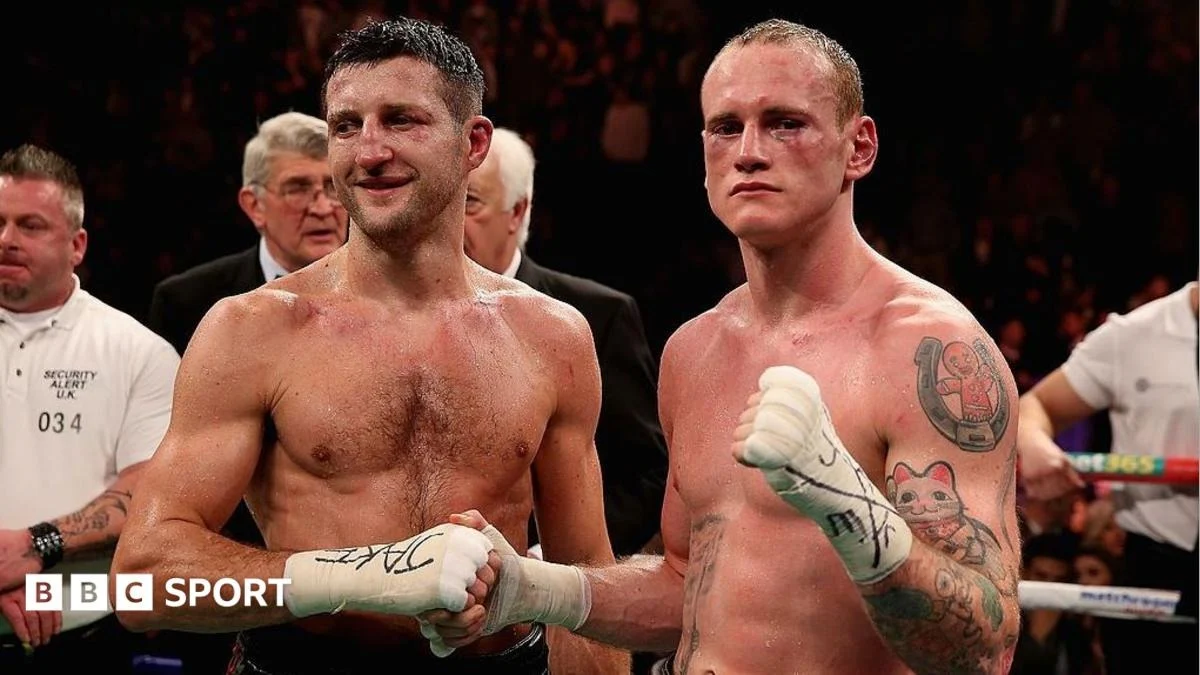
Carl Froch v George Groves – November 2013
Personal animosity reached an absolute peak in November 2013 when reigning IBF and WBA super-middleweight champion Carl Froch defended his titles against young London contender George Groves at the Phones4u Arena in Manchester.
The pre-fight build-up was dominated by psychological warfare, with the confident, outspoken Groves relentless in his attempts to rattle the veteran champion from Nottingham. Froch, a battle-tested warrior with wins over world-class opposition, dismissed the challenger’s credentials, setting the stage for an explosive encounter.

Groves stunned both the champion and the arena in the very first round, landing a crisp right hand that sent Froch crashing to the canvas. It was a dramatic opening that set the tone for the early half of the fight, as Groves utilized superior speed and sharp counter-punching to build a commanding lead on all three judges’ scorecards.
Despite taking heavy damage, Froch demonstrated his trademark durability and slowly fought his way back into contention as Groves began to tire. In the ninth round, Froch landed a series of heavy shots that backed Groves into the ropes. As Groves staggered, referee Howard Foster stepped in to wave off the contest, awarding Froch a technical knockout victory.
The stoppage sparked immediate outrage inside the arena and across the boxing world. Sections of the crowd booed the outcome, while Groves passionately protested that the referee had intervened prematurely, robbing him of the opportunity to defend himself and claim the titles.
The controversial nature of the ending only magnified the rivalry, creating overwhelming public demand for an immediate resolution. Six months later, the feud culminated in an iconic rematch at Wembley Stadium in front of 80,000 spectators. Years after their ring battles concluded, the two former adversaries buried the hatchet, even embarking on a joint nationwide speaking tour to reflect on the rivalry that defined their careers.
Fabio Wardley v Daniel Dubois – May 2026
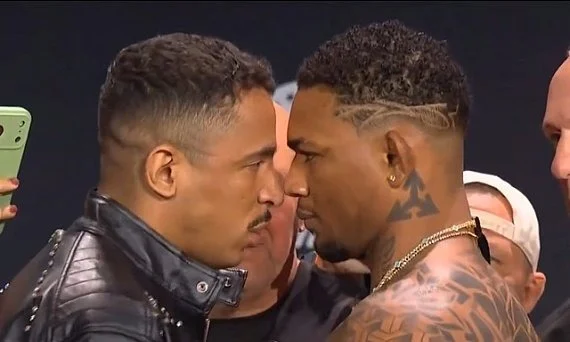
The most recent addition to the shortlist occurred at Manchester’s state-of-the-art Co-op Live arena in May 2026, delivering an instant heavyweight classic defined by dramatic shifts in momentum and jaw-dropping heart.

The contest pitted two fighters with vastly different pathways to the summit of the sport. Fabio Wardley, an Ipswich native, had completed an improbable rise from white-collar boxing to the pinnacle of the heavyweight division. Opposite him stood London’s Daniel Dubois, a fighter born into a prominent combat sports family—which includes his world champion sister Caroline—and built through traditional amateur and professional ranks.
The WBO heavyweight title bout exploded into action within seconds of the opening bell. Wardley caught Dubois cold, scoring a sensational knockdown just 10 seconds into the first round. Wardley continued his sensory assault in the third round, flooring Dubois for a second time and leaving the challenger on the brink of defeat.
Having faced scrutiny over his mental toughness in previous career setbacks, Dubois displayed incredible fortitude. Refusing to succumb to the early onslaught, Dubois clawed his way back into the fight, utilizing his heavy power punches to slow Wardley’s momentum. As the rounds progressed, Dubois turned the tide completely, repeatedly hurting a bloody and exhausted Wardley.
In the 11th round, Dubois delivered a final, relentless assault that forced the referee to halt the bout, completing one of the most remarkable comeback victories in modern heavyweight history. Promoter Frank Warren hailed the contest as the single greatest heavyweight fight he had ever staged under his promotional banner. The brutal nature of the clash warranted an immediate rematch five months later, where Dubois secured a far more decisive, one-sided second-round victory to settle the series.
With five classic encounters spanning different eras of British boxing, sports fans now face the difficult task of determining which fight stands above the rest. Whether favoring the controversial heavyweight drama of Cooper versus Bugner, the raw middleweight hatred of Benn versus Eubank, the stadium-filling stakes of Lewis versus Bruno, the explosive controversy of Froch versus Groves, or the modern heavyweight warfare of Wardley versus Dubois, each bout represents a landmark moment in domestic sporting culture.

The interactive vote remains open to the public until 12:00 GMT on Wednesday, 11 November, with the definitive ranking to be unveiled by Stacey Copeland, Steve Bunce, and Mike Costello during BBC Radio 5 Live’s special broadcast at 19:30 GMT that same evening.