
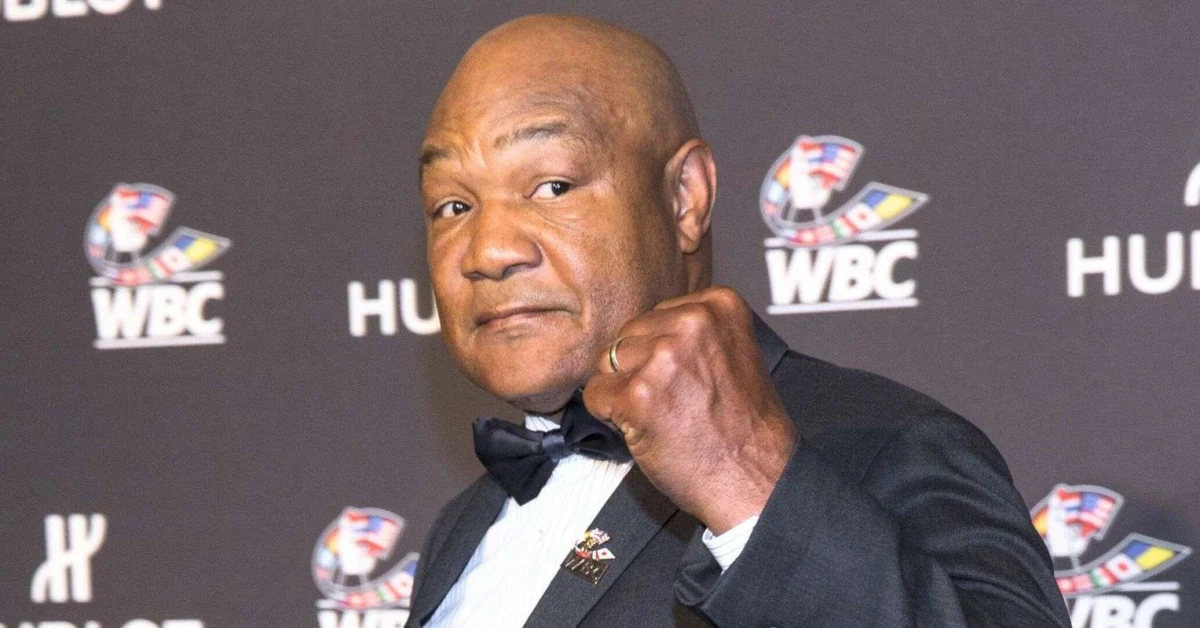
George Foreman occupies a singular, towering space in the annals of heavyweight boxing history as the only man to capture the sport’s ultimate crown on two occasions nearly two decades apart. During his terrifying first reign in the 1970s, Foreman was viewed as an intimidating force of nature, a destructive puncher who mowed down opponents with frightening efficiency. Decades later, during his improbable second act, he reinvented himself as the ultimate underdog—a middle-aged patriarch competing in a grueling sport that traditionally belonged to the young. Yet, in November 1994, inside the ring in Las Vegas, he achieved the absolute unthinkable, authoring a chapter that transcended sports and captured the imagination of the global public.
At the remarkable age of 45, Foreman stepped into the squared circle to challenge the undefeated WBA and IBF heavyweight champion, Michael Moorer. The stylistic and demographic contrast between the two combatants could not have been more stark. Moorer, making his presence felt as the world’s first-ever southpaw heavyweight champion, was just 26 years old. He possessed blinding speed, relentless aggression, and a sharp tactical mind, having recently earned the belts by defeating the legendary Evander Holyfield. In stark contrast, Foreman stepped through the ropes looking heavier, significantly slower, and carrying the accumulated mileage of a long-abandoned career.
Mainstream critics and boxing analysts widely dismissed Foreman’s chances before the opening bell even rang. Many viewed the championship bout as a glaring mismatch, a dangerous endeavor for an aging veteran stepping in with a prime, undefeated champion who seemed tailor-made to dance circles around a slower, stationary target. For the vast majority of the championship fight, those pre-fight prognostications appeared entirely accurate. Moorer completely controlled the early and middle rounds, utilizing his superior footwork, exceptional hand speed, and crisp combinations to rack up points while circling away from Foreman’s formidable power.
Foreman plodded forward round after round, absorbing sharp punches to the head and body while maintaining an eerie, unbreakable composure. While his corner men frantically urged him to let his hands go and increase his work rate, Foreman simply bided his time, enduring the punishment and refusing to panic. He absorbed the champion’s offense, looking every bit of his 45 years as he marched behind a methodical, seemingly futile advance.
Then, in the tenth round, the tectonic plates of the boxing world shifted permanently. Foreman finally backed Moorer toward the canvas ropes, cutting off the champion’s lateral movement just enough to create a fleeting opening. With devastating suddenness, the veteran challenger unleashed a textbook, lightning-fast one-two combination. The right hand caught Moorer clean, followed immediately by a short, brutal left. Moorer dropped instantly to the canvas, his legs buckling beneath him as he was unable to beat the referee’s count to recover.
In a single, electrifying instant, the landscape of heavyweight boxing was rewritten. With that solitary, perfectly placed punch, George Foreman shattered the record books to become the oldest heavyweight champion in the history of the sport, instantly silencing every lingering doubter and skeptic across the globe.
The extraordinary victory was far more than a simple display of raw punching power and tactical patience; it solidified itself instantly as one of the most legendary and improbable comeback stories in the history of athletic competition. Seventeen years prior to that magical night in Las Vegas, George had suffered a devastating loss to Muhammad Ali in the iconic "Rumble in the Jungle" in Zaire. Following that defeat and a subsequent retirement from the sport, Foreman spent many years walking away from boxing entirely, dedicating his life to serving as an ordained Christian minister and working with at-risk youth.
When he ultimately decided to lace up the gloves again years later, he was mocked as a novelty act, a nostalgic sideshow trying to recapture past glory. Yet, on that unforgettable night in Las Vegas, he completed a remarkable personal and professional circle, cementing his legacy not just as a terrifying destroyer of men, but as an enduring symbol of perseverance. Reflecting on the defining moment of his historic victory and the calculated nature of his triumph, Foreman offered a simple, revealing insight into his mindset throughout the bout:
“Nobody had any idea I was setting it up all night. I dreamed that I knocked out Michael Moorer before the fight.”