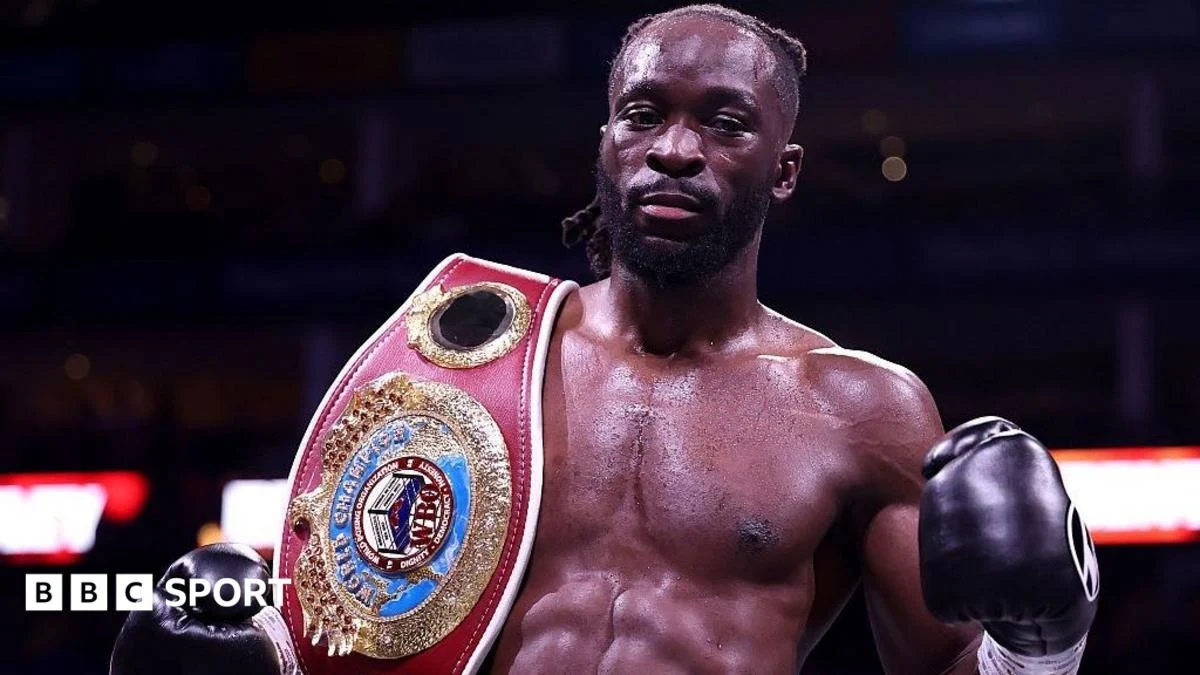
At the end of 2024, London middleweight Denzel Bentley appeared to have carved out a clear and enviable trajectory toward the pinnacle of professional boxing. Having capped off a stellar calendar year by securing the British middleweight championship for a third time and adding the prestigious European crown to his waist, the 31-year-old had every reason to anticipate that a formal challenge for a world championship would be the inevitable next step in his career. Meetings with his promotional team at Queensberry offered explicit hope, presenting a roadmap that seemed to guarantee his moment under the brightest lights in the sport. Yet, as successive fight cards were formally announced without his name attached, those spoken assurances dissolved into broken promises, leaving the accomplished contender stranded in professional limbo.
What followed was a punishing 16-month stretch of total inactivity. For a professional athlete whose livelihood depends entirely on fighting purses, extended periods spent outside the ring do not merely stall career momentum; they actively threaten financial survival. As week after week passed without a fight contract, Bentley found his bank account dwindling to concerning levels. Forced to face the harsh economics of an idle career, the South Londoner began actively exploring alternative avenues to earn income simply to keep his head above water.
The reality of how close Bentley came to stepping away from full-time boxing to pursue manual labor highlights the precarious nature of life at the sport’s upper echelons. Without a guaranteed fight fee to rely on, a casual conversation with his cousin almost redirected the European champion’s career path entirely toward the gig economy.
"After a year out, I thought I needed to do something," Bentley recalled in an interview with BBC Sport. "I’m not bad with my money and was able to hold myself up to that point, but it was starting to bite. My cousin said download the Amazon app and you can get a zero-hour contract. It was an app where you could check in and see if there was delivery work in your area."
Faced with mounting financial pressures, the elite middleweight followed the advice, setting up an account and waiting for available shifts. "I downloaded it and signed in, but there were no jobs in my area," Bentley explained. "I remember always refreshing and checking, but there were no jobs in my area—that’s the only reason I didn’t do it."
The missing delivery shifts inadvertently kept Bentley focused on his primary trade, though his exile from the canvas stretched to a grueling 16 months. When the long-awaited opportunity finally presented itself in April 2026, Bentley demonstrated that his time spent away from active competition had not eroded his ring skills or determination. Taking on Endry Saavedra, Bentley weathered the tough assignment to capture the WBO interim middleweight title, immediately re-establishing himself as a major player in the 160-pound division.
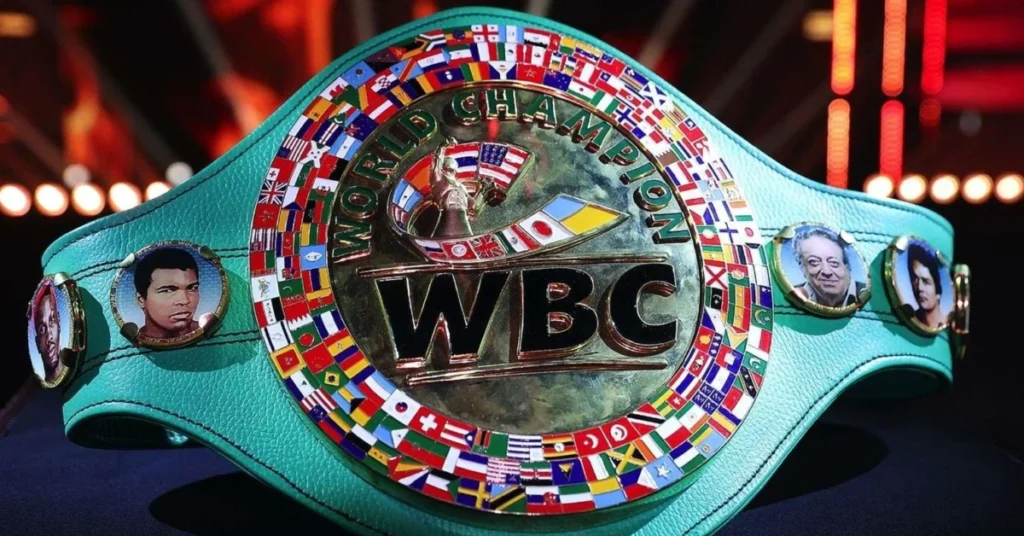
Just three months after that pivotal victory, Bentley achieved the ultimate dream he had harbored since taking up the sport. Following elite champion Janibek Alimkhanuly’s decision to vacate his throne and move up to the super-middleweight division, the WBO formally elevated Bentley from interim status to full world middleweight champion. In an instant, the fighter who had spent endless days refreshing an app for zero-hour delivery work had reached the absolute summit of professional boxing.
However, the reality of world championship boxing proved to be as volatile as the journey taken to get there. Bentley’s reign as the WBO world middleweight champion lasted just 102 days. During that short period, he did not make a single defense of his title. Rather than pressing forward to face his designated mandatory challenger, Bentley made the deliberate career decision to agree to a high-profile matchup against American opponent Shane Mosley Jr. The decision resulted in the end of his world championship status, stripping him of the belt before he could build a prolonged title defense legacy.
Reflecting on the whirlwind period that saw him achieve and then forfeit his world title status in just over three months, Bentley openly acknowledged the frustration surrounding the circumstances. Nevertheless, his focus has quickly shifted to his next chapter, anchored by a new promotional structure that he firmly believes will propel him straight back into elite contention.
Bentley has officially joined Zuffa Boxing, a high-profile move that immediately raised eyebrows across the sport and prompted speculation regarding his motivations. Ahead of his showdown against Shane Mosley Jr at London’s Copper Box Arena on Saturday, Bentley directly addressed the critics who labeled his promotional shift as purely mercenary.
"I’ve moved over to Zuffa and everyone thinks it’s a money move," Bentley said. "Firstly, I do want to get compensated rightly for the job I have—it’s a demanding job and we take a lot of punches. But I want to become world champion again. All of the above can be true; I don’t have to sacrifice one for the other. I’ve asked Zuffa to get me back in position to win another one. They said no problem."
The pragmatism Bentley displays regarding money and career ambition is deeply rooted in his background and the highly unusual path he took to become an elite combat sports athlete. Unlike many top-tier contenders who enter structured amateur boxing clubs in early childhood, Bentley’s introduction to the sport was entirely improvised, taking place on the concrete of his local estate.
His initial exposure to fighting came via an informal fight club organized by his brother. The setup was minimal, requiring little more than a protective headguard, a pair of oversized gloves, and a willing friend. Armed with those basic supplies, Bentley took his very first hits and landed his first blows, possessing a raw enthusiasm for fighting but virtually no understanding of boxing technique, terminology, or structure.
It was only when Bentley entered college that he realized the vast gulf between informal street brawling and the structured art of sweet science. A chance meeting with a fellow student who actively trained at an established boxing gym exposed Bentley’s total lack of fundamental preparation.
"When I went to college, I met a friend who boxed and because of what I’d been doing in the streets with my brother, I said, ‘Yeah, I can box too,’" Bentley said. "But I found out it was really different. I remember calling the punches the wrong names. I thought it was left jab, right jab, but it’s obviously a jab and a right hand or a cross. I was hitting the bags but had the wrong form and then I was getting battered in sparring. I thought ‘OK, this wasn’t what I was doing,’ but I wanted to learn how to do it."
Driven by a desire to master the craft after his humbling initial gym experiences, Bentley committed himself fully to training. However, simply getting to and from the gym presented its own serious logistical and financial hurdles. Living in Battersea while training at a gym located in Bermondsey, Bentley faced a long journey across London at a time when his personal finances were severely stretched.
Having sold his car to raise funds and possessing an absolute aversion to spending his remaining cash on public bus fares, Bentley turned to creative solutions to maintain his daily training routine.
"I was short on money, had sold my car and didn’t really want to spend money on buses. I would rent out the Santander bikes," Bentley explained. "I would put in £2 and pace down the road to make sure I didn’t take more than 30 minutes and then park up and come home. It wouldn’t charge me extra as long as I never went over half an hour."
Before discovering the timed bike hack, Bentley’s dedication was demonstrated by even more extreme measures. "Before that, I would walk to the gym," he revealed. "I lived in Battersea and the gym was in Bermondsey. I’d just put my music in and people would ask, ‘Oh, you like walking to the gym?’ but I just didn’t have any other choice. When I discovered the bikes, it was a game-changer."
That relentless work ethic, honed during long walks between Battersea and Bermondsey and strictly timed £2 bicycle sprints, eventually translated into a highly successful professional career. Across 26 professional bouts, Bentley has compiled an impressive record of 22 victories, three losses, and one draw, establishing himself as one of the most resilient and entertaining middleweight figures in modern British boxing.
Now standing on the precipice of another potential world title run, Bentley views his upcoming battle against Shane Mosley Jr at the Copper Box Arena not as a step backward, but as the mandatory first step toward reclaiming his place at the absolute top of the division. Having experienced the extremes of the sport—from street fight clubs on local estates and financial desperation to briefly sitting atop the world as the WBO champion—Bentley remains steadfast in his ultimate goal. Backed by Zuffa Boxing and driven by the memory of how close he came to working zero-hour delivery shifts, the Londoner is determined to ensure his next reign as world champion lasts much longer than 102 days.