

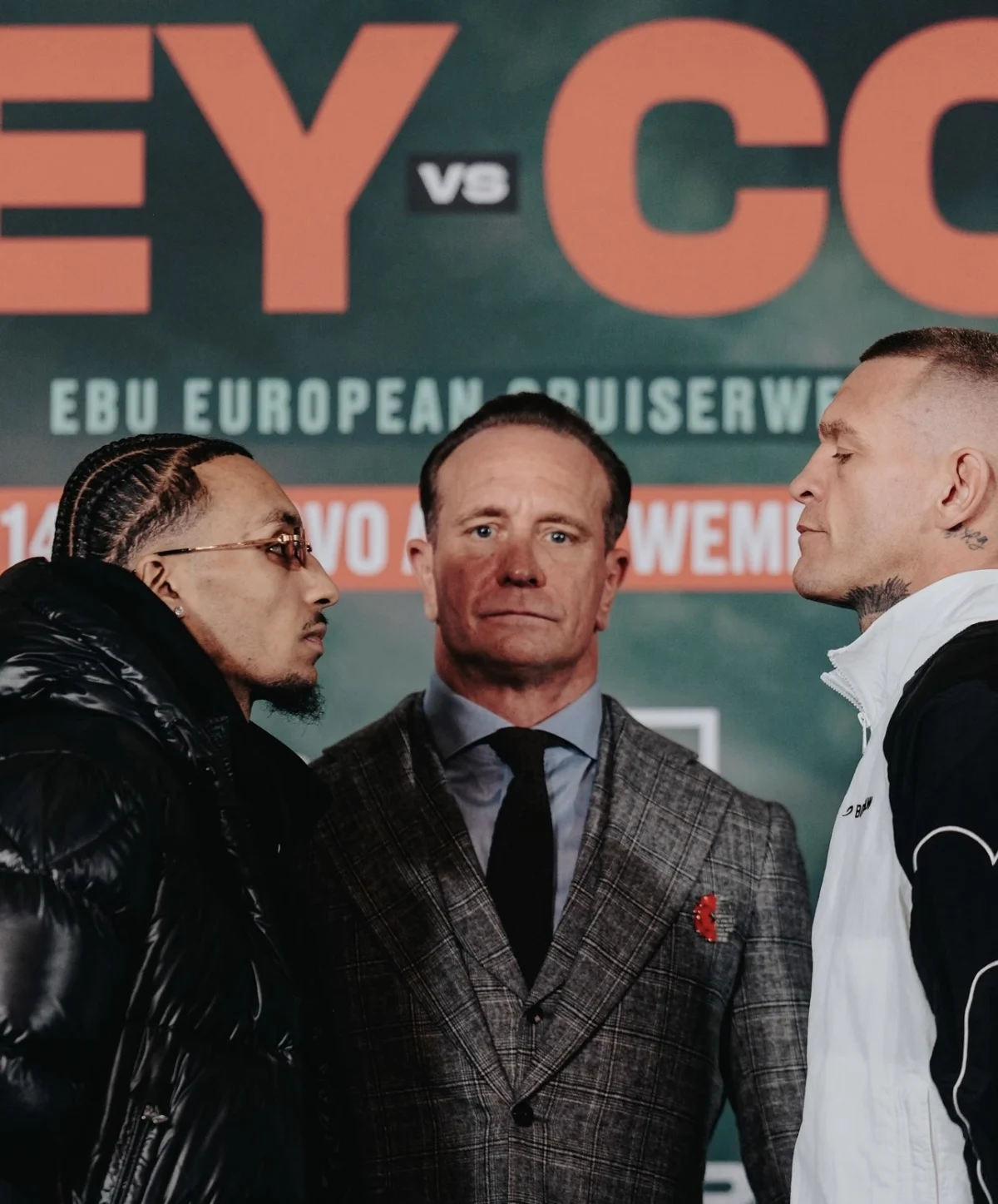
Wembley is set to become the epicenter of European boxing this Saturday, November 14, as two highly regarded lightweights prepare to go head-to-head in a high-stakes contest. Manchester native Zelfa “Brown Flash” Barrett will share the ring with Welsh contender Gavin Gwynne, with the vacant WBA Intercontinental Lightweight Championship hanging in the balance. The pairing represents a classic confrontation of contrasting boxing styles, pitting an explosive, highly mobile counter-puncher against a relentless, high-volume pressure fighter. Both competitors enter the bout as familiar and established figures on the European boxing scene, bringing seasoned experience and distinct tactical identities into a matchup that carries significant momentum for the victor.
The iconic setting of Wembley in London provides an elevated stage for this regional championship encounter. As a focal point for major sporting events in the United Kingdom, the venue adds an undeniable level of prestige to a bout that already carries substantial weight within the lightweight division. Winning a belt of this caliber often serves as a key stepping stone for contenders looking to consolidate their standing on the European circuit while positioning themselves for broader international recognition. For both Barrett and Gwynne, Saturday night represents not merely an opportunity to claim silver-plated championship hardware, but a critical juncture to validate their strategic approach against a dangerous, top-tier opponent.
The matchup features an intriguing dynamic defined by how spatial control and tempo will be negotiated over the course of the contest. On one side stands Barrett, a fighter whose success has long been anchored in sharp athletic movement, rapid reflex action, and upper-body fluidity. On the other side stands Gwynne, whose reputation has been forged through uncompromising physical attrition, a grueling work rate, and an unwavering commitment to forward pressure. Because both fighters operate at opposite ends of the tactical spectrum, the outcome of the fight will largely depend on which man can successfully impose his preferred range and dictate the rhythm of the exchanges from the opening bell.
Barrett, fighting out of Manchester, approaches the contest with a skill set tailored for dynamic, mid-range combat. Known in boxing circles as the “Brown Flash,” his fighting identity relies heavily on speed, athletic explosiveness, and calculated timing. Rather than engaging in continuous, stand-still slugfests, Barrett prefers to operate in the open canvas, utilizing smooth lateral movement to create angles and confuse incoming pressure. His defensive strategy is built around spatial awareness, ensuring he remains just out of range of incoming strikes while remaining positioned to launch sudden, blistering counter-attacks.
Central to Barrett’s offensive scheme is his long, authoritative jab. In a matchup against a hard-charging pressure fighter, the jab functions as far more than just a scoring shot; it acts as a primary defensive tool, a distance regulator, and a mechanism to interrupt an opponent’s forward momentum. By establishing a firm jab early, Barrett can measure distance, blind the oncoming guard of Gwynne, and set the baseline rhythm of the bout. A sharp jab allows Barrett to keep the action at a comfortable mid-range distance, preventing Gwynne from invading his inside space without absorbing clean punishment on the way in.
In addition to his long jab, Barrett’s offensive artillery is defined by his ability to land sudden, heavy hooks from non-traditional and unexpected angles. While standard pressure fighters often prepare for straight head-on trajectories, Barrett excels at whipping short and medium-range hooks around a tight guard. These shots are frequently delivered with explosive timing, catching aggressive opponents off-guard as they attempt to bridge the gap. In London, Barrett’s key to victory will involve pairing these sudden hooks with his athletic mobility, ensuring that every time Gwynne attempts to press forward, he faces a hazardous field of counter-punches.
To execute this game plan effectively, spatial discipline will be paramount for the Manchester fighter. Barrett must focus on maintaining mid-range control while actively avoiding the ring perimeter. Getting pinned against the ropes or trapped in the corners against a heavy-volume puncher like Gwynne can be disastrous, as it eliminates lateral escape routes and allows a pressure fighter to unload uninterrupted body and head combinations. Consequently, Barrett’s movement must be efficient and purposeful, circling away from Gwynne’s strong side, resetting his footwork in open space, and refusing to allow himself to be cornered.
Furthermore, Barrett’s tactical blueprint demands that he remain vigilant for micro-openings in Gwynne’s defense. Aggressive fighters who march forward with high volume inevitably leave momentary gaps when throwing power shots or transferring their weight. Barrett’s sharp vision and fluid timing enable him to capitalize on these fleeting opportunities. By slipping incoming shots and returning fire with fast, potent combinations, Barrett aims to deter Gwynne’s aggression, make him hesitant to close the distance, and gradually assert control over the rhythm of the match.
Standing in stark contrast to Barrett’s explosive and elusive approach is the formidable physical threat posed by Gavin Gwynne. Hailing from Wales, Gwynne represents the quintessential high-output pressure fighter. His approach to boxing is rooted in physical endurance, continuous forward motion, and an overwhelming volume of strikes designed to sap an opponent’s energy over time. Gwynne does not rely on single explosive moments or intricate defensive movement; instead, he relies on a suffocating work rate that continuously tests an opponent’s cardiovascular conditioning and mental resolve.
For Gwynne, the strategic objective in Wembley is clear: he must turn the fight into a grueling battle of attrition. Neutralizing an opponent gifted with natural speed and quick reflexes requires a relentless physical presence that denies space and rest. Gwynne understands that allowing Barrett to bounce comfortably on the outside will play directly into the Englishman’s strengths. Therefore, the Welshman will aim to smother Barrett’s kinetic leverage by constantly stepping into his space, forcing him to carry physical weight in clinches, and forcing exchanges at close quarters where athletic speed becomes secondary to strength and durability.
A critical component of Gwynne’s game plan will be his ring-cutting ability. Simply chasing an elusive fighter around the canvas in straight lines often results in frustration and unnecessary energy expenditure. Gwynne must systematically cut off the ring from the very first round, using calculated footwork to narrow the open canvas and force Barrett toward the ropes. By taking away lateral escape routes, Gwynne can trap Barrett along the perimeter of the ring, where short-range exchanges naturally occur, allowing the Welshman to deploy his heavy volume punching inside.
Once inside close range, Gwynne’s primary tactical investment will almost certainly be aimed at Barrett’s body. Targeting the midsection is a classic and proven strategy against explosive, mobile fighters. Heavy body shots, including left hooks to the liver and hard right hands to the ribs, serve to drain an athlete’s stamina, reduce core stability, and impair leg movement as the fight moves into the mid and late rounds. By consistently digging to the body during inside exchanges, Gwynne aims to systematically dismantle Barrett’s agility, making him a stationary target as the match progresses.
This stylistic tension creates an incredible dynamic that will begin unfolding from the very first bell. The opening rounds are expected to be a high-stakes game of territorial positioning. Barrett will look to set a calm, measured pace, relying on crisp movement and sharp jabs to establish respect and keep Gwynne at arm’s length. Gwynne, conversely, will seek to immediately set a high, uncomfortable tempo, rushing through the guard, taking away Barrett’s rhythm, and forcing a fast, physically demanding contest right out of the gate.
The battle of distances will inevitably determine which fighter holds the upper hand. In mid-range interactions, Barrett possesses a clear technical and speed advantage, where his rapid combinations and sudden hooks can inflict significant damage while keeping him safe from return fire. However, inside close-range range, the advantage shifts dramatically toward Gwynne. In tight quarters, Gwynne’s high volume, physical strength, and unrelenting body attack can overpower a perimeter fighter, making every clinch and inside exchange physically exhausting for the Manchester fighter.
Defensive execution under pressure will be equally crucial for both competitors. Barrett must display defensive composure when under fire, ensuring that he does not shell up passively against the ropes where Gwynne can stack up points through sheer volume. He must use pivot steps, shoulder rolls, and swift counter-strikes to break away from pressure. On the other side, Gwynne must ensure his forward entry is protected. Moving forward in straight lines against a counter-puncher as explosive as Barrett exposes a fighter to heavy counters, meaning Gwynne must keep his guard high and use subtle head movement while closing the distance.
Energy management across the scheduled distance will ultimately play a decisive role in London. Barrett’s style requires immense focus, quick footwork, and precise timing, all of which consume energy rapidly if forced to fight at an unnatural, chaotic pace. Gwynne’s high-volume style demands exceptional stamina and cardiovascular output to maintain relentless pressure without fading in the later stages. The fighter who manages his energy reserves more effectively while executing his game plan under stress will likely emerge victorious.
As familiar figures on the European boxing circuit, both Barrett and Gwynne carry deep operational knowledge of high-level competitive environments. Their familiarity with the demands of European championship boxing means that neither man is likely to be overwhelmed by the occasion at Wembley. Instead, fans can expect a highly professional, well-prepared tactical battle where two elite athletes lay their respective skill sets on the line in pursuit of regional supremacy.
The WBA Intercontinental Lightweight Championship represents a pivotal prize for both fighters as they aim to climb higher in the international rankings. A victory on Saturday night at Wembley will solidify the winner’s standing as a premier lightweight contender, opening doors for even bigger opportunities on the global stage. A loss, meanwhile, forces a challenging rebuild on a highly competitive circuit where momentum is everything.
With all the elements in place for a memorable clash, boxing fans turn their attention to London this Saturday, November 14. Whether Barrett’s explosive speed, long jab, and dynamic hooks triumph, or Gwynne’s relentless pressure, heavy work rate, and relentless body attack prevail, Wembley is primed to deliver a captivating spectacle that underscores the thrilling unpredictability of European championship boxing.