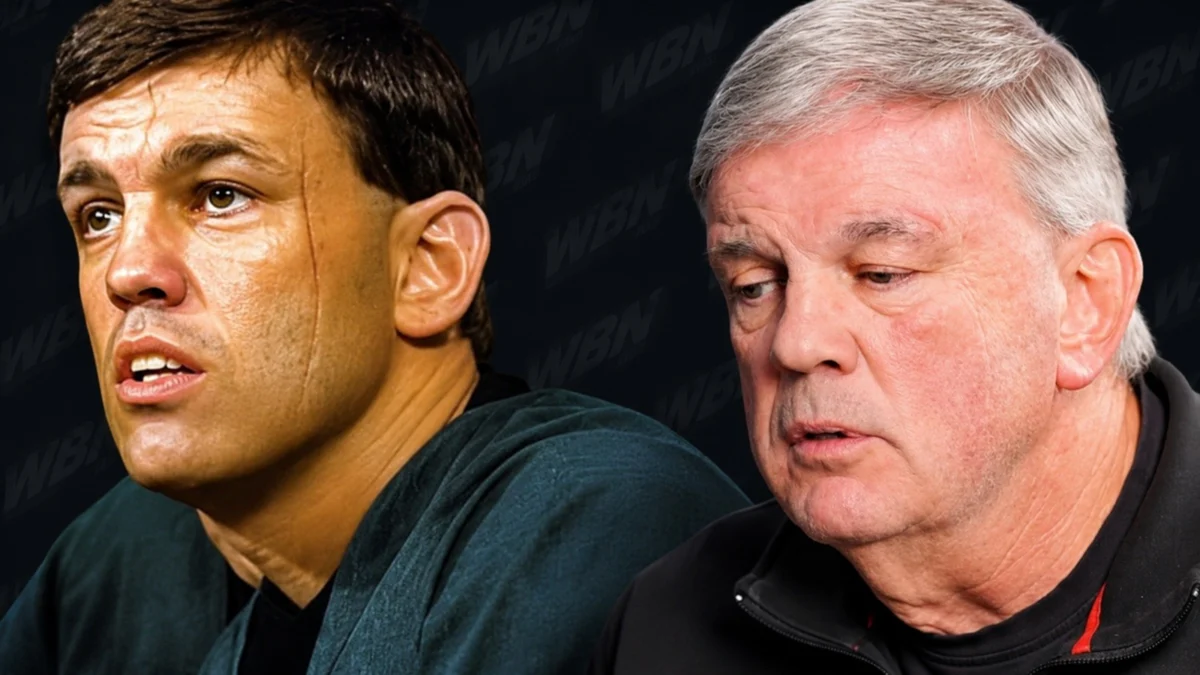
Renowned boxing trainer and analyst Teddy Atlas has opened up about a harrowing chapter from his past, recalling a brutal street fight in Staten Island, New York, that resulted in a horrific knife attack, required 400 stitches, and came within a fraction of an inch of costing him his life.
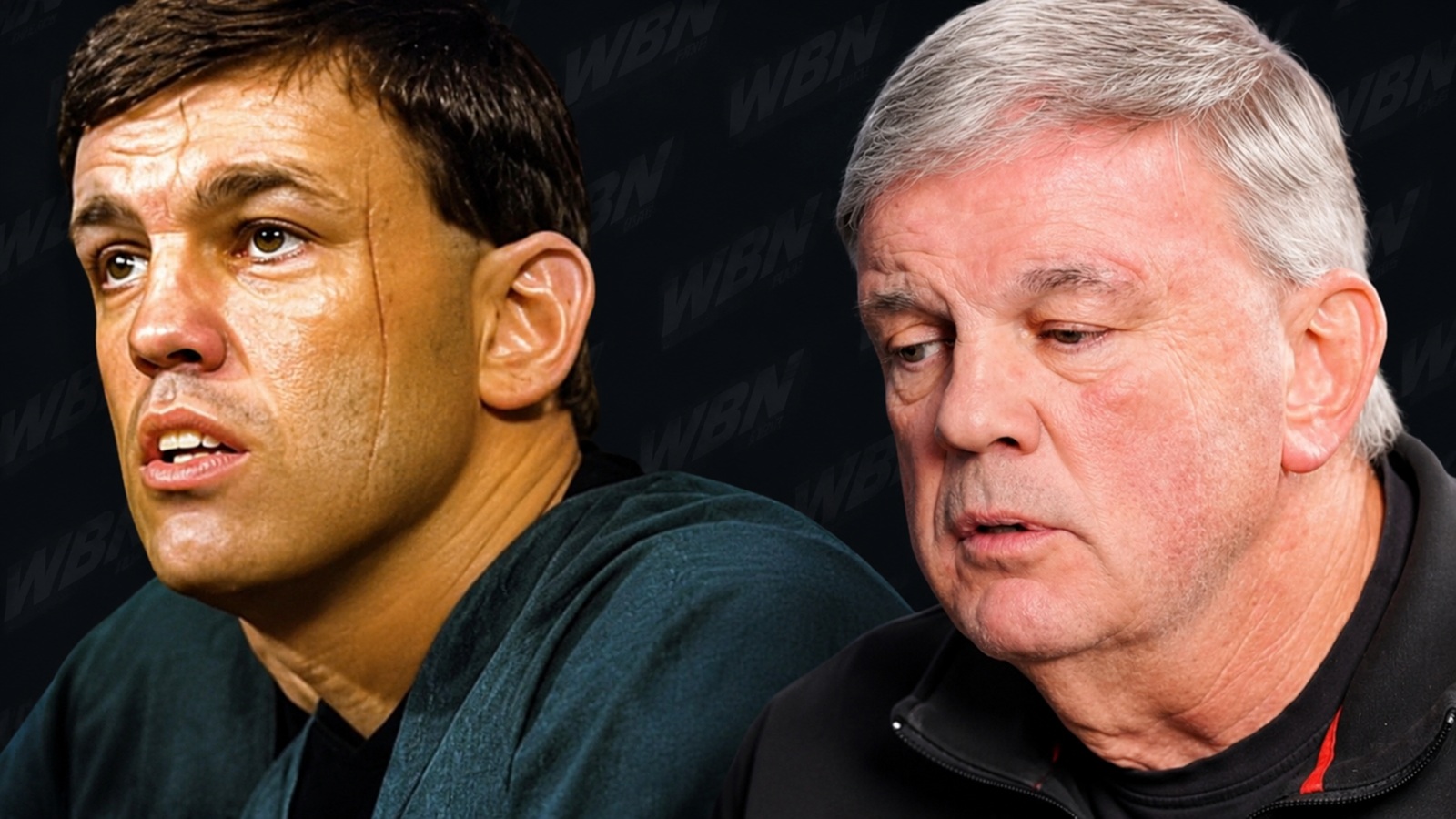
Atlas, widely recognized in the combat sports world not only for his tactical acumen and broadcasting career but also for the prominent scar running across his face, shared the vivid details during a recent appearance on the Ring Champs podcast. The interview, which was subsequently shared by ATS Fight, sheds new light on an incident that has long been a defining visual and personal marker for the veteran boxing figure.
The Confrontation on the Streets of Staten Island
The violent encounter, which occurred decades ago, began as a seemingly mundane traffic dispute on the streets of Staten Island. Atlas recounted that a friend was driving their vehicle when he inadvertently ran a red light, cutting off another car in the process.
Reflecting on the unpredictable nature of street altercations, Atlas noted that while one might look back and say his friend had cut off the wrong people, the precise identity of the occupants ultimately mattered very little compared to how quickly the situation deteriorated.
What followed was a tense sequence of events as the two vehicles repeatedly cut each other off in a display of escalating road rage. Eventually, both cars came to a halt, and the confrontation moved from behind the steering wheel to the pavement. Five men emerged from the opposing vehicle, transforming a minor traffic infraction into a dangerous physical confrontation.
Amid the chaos, Atlas found himself actively engaged in a physical struggle with one of the men. However, while locked in combat, his peripheral vision caught a movement that would change the trajectory of his life in an instant. He noticed another man from the opposing group reaching into his pocket, withdrawing his hand, and executing a distinct motion.
"As I was fighting with someone else, I looked and saw the guy go into his pocket, come out, do this. And I knew what it was," Atlas recalled.
A Split-Second Decision and a Devastating Injury
With years of combat sports experience and street awareness, Atlas recognized the deadly threat immediately. He described a surreal psychological phenomenon where time appeared to slow down dramatically, giving him a brief window to evaluate his survival options.
Faced with a knife-wielding adversary, Atlas had to choose between two instinctive reactions: retreat and attempt to get away, or close the distance to neutralize the attacker’s leverage. He chose the latter.
"The weirdest thing is everything slows down. It really does, people," Atlas explained. "And I realized I had to make a decision. Was the decision get away or get close? I decided to get close. And I went real fast, but he was faster and he came down."
Despite Atlas’s quick reaction, the attacker managed to bring the blade down across his face, inflicting a catastrophic wound before he could intervene further. The slash left a massive, deep laceration that required extraordinary medical intervention.
According to Atlas, the surgeon’s work required an astonishing 200 stitches on the outside of his face and another 200 stitches on the inside, totaling 400 stitches. More terrifyingly, medical professionals later informed him that the blade had missed his jugular vein by the narrowest of margins.
"It was 200 stitches outside, 200 stitches inside, so 400 stitches," Atlas said. "And they, you know, I could have died because it just missed the jug."
Doctors Feared Atlas Would Lose the Fight for His Life
The severity of the trauma was immediately apparent to the emergency responders who arrived at the scene. Transported in an ambulance alongside police officers, Atlas remained conscious enough to overhear hushed, grim assessments of his condition.
"I was in the ambulance with the cops and I remember them saying, ‘I think we might lose him,’" Atlas recalled.
Despite hearing the medical personnel express grave doubts about his survival, Atlas held onto a profound, comforting conviction. His father, Dr. Theodore Atlas, was a respected physician, and a young Atlas operated under the absolute belief that his father possessed the power to fix anything, including a near-fatal throat and facial wound.
"When I heard it, I remember saying to myself, they don’t understand, my father’s going to take care of this," Atlas said.
Upon arrival at the hospital, as medical staff rushed him through the corridors on a stretcher, jostling him amidst the urgent activity of the emergency trauma room, Atlas repeatedly demanded the presence of his father.
"When we got there and they took me up on the stretcher and they were rushing me and bouncing me around, I remember telling them, ‘Get Dr. Atlas. He’ll take care of this. Get Dr. Atlas,’" he remembered.
A doctor eventually intervened to explain gently that his father was not present, while reassuring the terrified patient that another highly capable medical team was prepared to treat the wound and stabilize him. Atlas ultimately survived the ordeal, though the physical evidence of the attack would remain permanently etched onto his face.
A Lasting Legacy in Boxing and Beyond
While the physical scars from that Staten Island evening remained with Atlas for the rest of his life, his journey through the boxing world continued to scale remarkable heights. Long before his broadcasting career made him a household name to modern boxing fans, Atlas famously worked alongside legendary trainer Cus D’Amato at the historic Catskill gym, helping shape a teenage Mike Tyson during the earliest chapters of the future heavyweight champion’s career.
Although Atlas’s professional relationship with Tyson eventually fractured following a severe disagreement regarding Tyson’s conduct outside the ring, the two men eventually healed old wounds. After three decades of estrangement, Tyson and Atlas publicly reconciled in 2013, with the former champion offering an apology to his former mentor.
Beyond his time with a young Tyson, Atlas carved out an illustrious legacy as a world championship trainer in his own right. Most notably, he guided Michael Moorer to a stunning heavyweight title victory over the formidable Evander Holyfield in 1994. In the decades that followed, Atlas transitioned into one of the sport’s most respected, articulate, and uncompromising analysts and commentators, earning praise for his sharp technical breakdowns and deep insights into the psychology of fighters.
Reflecting years later on the Staten Island street fight, Atlas acknowledged that the trauma of the event extended far beyond the physical pain he endured in the ambulance and the operating room. The incident sent shockwaves through his personal life, casting a long shadow over the people closest to him.
"It did so much damage to myself, but I realized it was really damaging. It was my family," Atlas reflected.
Today, Teddy Atlas stands as an enduring figure in the sport of boxing—a master tactician, a respected media voice, and a survivor whose distinctive facial scar serves as a permanent, indelible reminder of the split-second decision that nearly cost him everything on a New York City street.