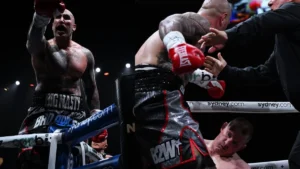
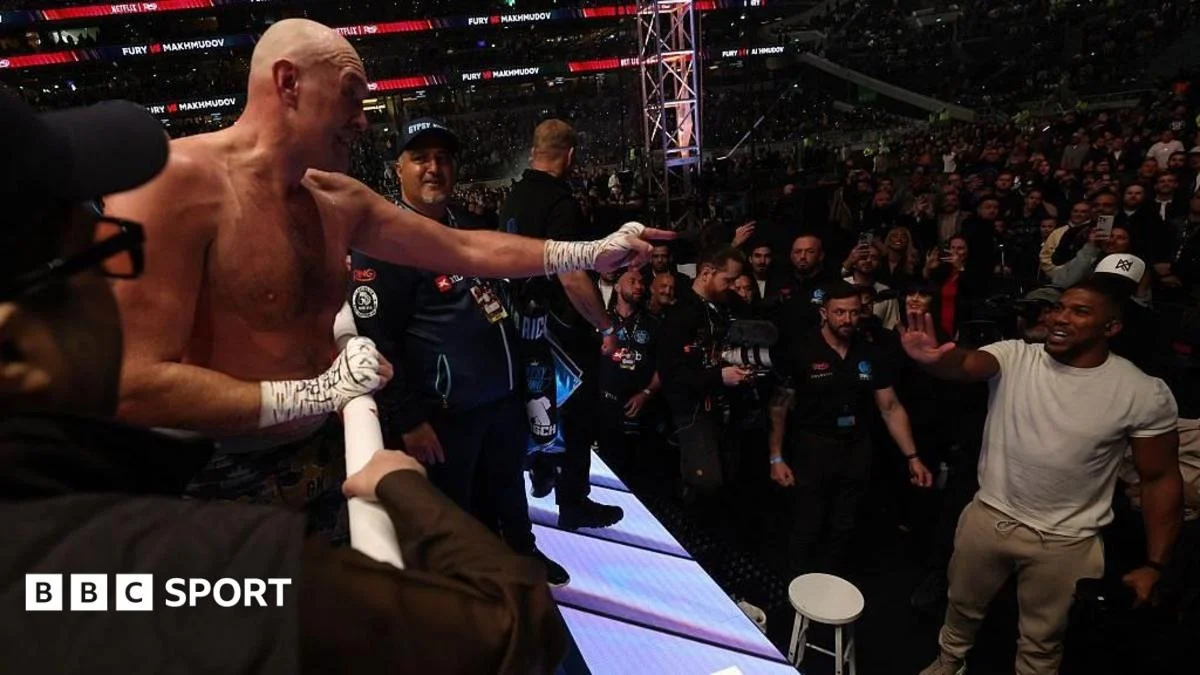
The landmark announcement, delivered on Thursday by Saudi boxing powerbroker Turki Alalshikh, confirms an 80,000-capacity blockbuster event that will be broadcast globally by Netflix. BBC Sport understands that the WBA ‘Super’ heavyweight title is expected to be on the line for the contest, though formal confirmation from the governing body is still awaited.
While the belt provides both former world champions with an opportunity to reclaim a version of the heavyweight crown, the long-brewing feud between Fury and Joshua has always transcended championship hardware. The fight arrives much later than boxing purists and casual fans had hoped, taking place while both combatants find themselves in the twilight of their professional careers. Fury, now 38, and Joshua, 36, have spent years operating at the pinnacle of the sport, yet their paths never aligned inside the squared circle despite constant public clamor.
Beyond delivering a firm date and a venue, Thursday’s formal unveiling shed significant light on the complex web of competing interests, massive egos, and intense power struggles that had to be navigated to finally get one of combat sports’ most elusive fixtures over the finish line.
In the wake of the announcement, Frank Warren, the veteran Queensberry boss representing Fury, reflected on the protracted negotiations during an interview with BBC Sport, repeatedly returning to a single fundamental word that he insists made the historic agreement possible: compromise. Warren emphasized that reaching an agreement required significant concessions from all sides, particularly from his fighter, to prevent the deal from falling apart once again.
According to Warren, Fury was fully committed to ensuring the fight materialized regardless of location. The promoter noted that Fury refrained from digging his heels in over promotional terms or geographical preferences, making it clear to his team that he was willing to travel wherever necessary—whether that meant fighting in New York or remaining in the United Kingdom—simply to guarantee that the contract was signed and the bout secured.
While both boxers had previously agreed to face each other in principle, the selection of the venue emerged as a major sticking point during the final stages of negotiation. Warren revealed that streaming giant Netflix had expressed a strong preference for staging the showdown in New York to maximize its international commercial reach. Conversely, Joshua was adamant that the all-British clash must take place on home soil before a UK crowd. Predictably, the rival promotional camps have offered starkly different interpretations regarding who deserves credit for steering the mega-fight to Cardiff.
Eddie Hearn, Joshua’s long-time promoter at Matchroom, characterized the effort to keep the event in the United Kingdom as an intense, unyielding effort driven entirely by his fighter’s stubborn commitment to domestic supporters. Speaking on the Matchroom YouTube channel, Hearn described the negotiation struggle as a two-man crusade undertaken by himself and Joshua.
Hearn asserted that Joshua actively turned down financially superior offers to host the bout overseas, refusing to compromise on his vision of fighting in front of a home audience. The Matchroom chief explained that Joshua had specifically mandated legal protections in his contract to lock in a UK venue and steadfastly refused to back down when external pressure mounted. Hearn admitted that his team faced immense strain to yield to alternative venue requests, crediting the overwhelming backing of the British public as the decisive force that motivated Joshua to stand firm, refuse to fold, and demand that the fight remain in Britain.
Warren, however, offered a sharply contrasting perspective on how the venue impasse was ultimately resolved. The Queensberry promoter argued that Fury possessed his own contractual rights and could easily have insisted on enforcing his preferred terms. Instead, Warren maintained, Fury chose not to exercise that leverage, actively accepting the UK location specifically to ensure the entire enterprise did not suffer another catastrophic collapse.
Yet the battle over the fight’s location is only one aspect of the underlying tensions surrounding the event. Perhaps the most compelling narrative surrounding the fight’s realization has been the behind-the-scenes struggle for promotional control and influence.
The announcement itself was made by Alalshikh, who had previously asserted absolute authority over the timing and handling of any official declaration regarding the matchup. Alalshikh pointed out that for 15 years, no promotional entities had succeeded in manufacturing a binding agreement between the two heavyweights. Recalling a statement he made earlier in the year, Alalshikh noted that back in April, he had publicly declared that any formal confirmation of the fight would come directly from him. Delivering on that promise, he confirmed that Fury versus Joshua was officially bound for the UK, fulfilling his commitment to British boxing fans and declaring that the time for talking had finally concluded.
Fury echoed those sentiments publicly, taking to Instagram to credit the Saudi powerbroker for untangling the administrative knots that had paralyzed negotiations for a decade. In his post, Fury praised Alalshikh as a true dealmaker and a boxing legend, expressing deep gratitude and stating his belief that the sport would never see another figure quite like him.
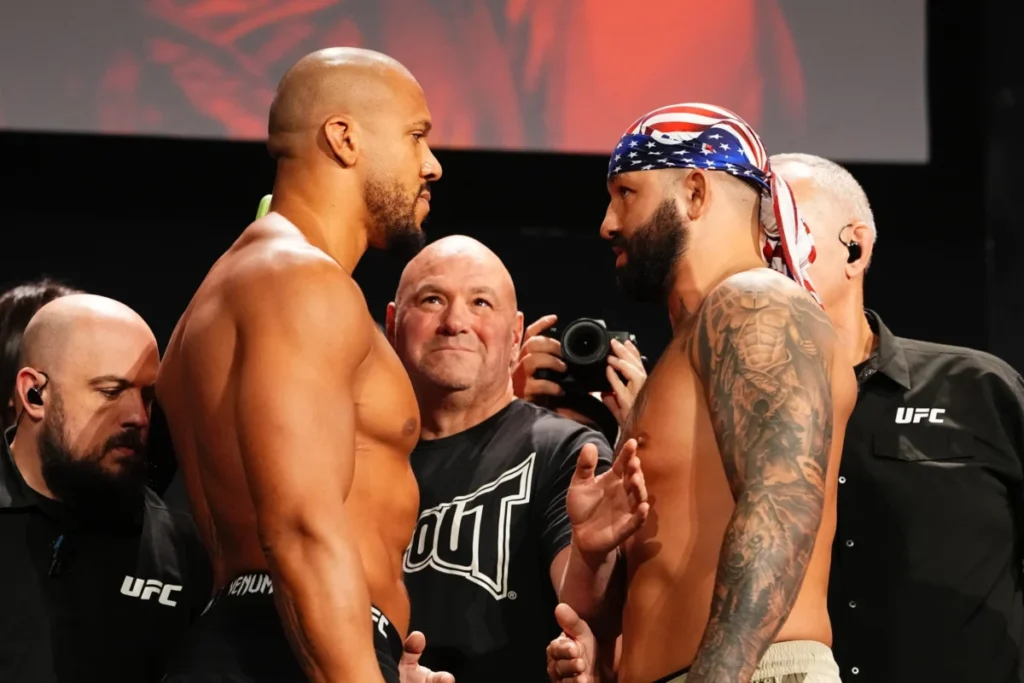
Adding another layer of intrigue to the promotional landscape is the unexpected prominence of Dana White. The UFC chief, who has partnered with Alalshikh through Zuffa Boxing, featured prominently in the official announcement materials. Netflix explicitly framed the upcoming spectacle as a collaborative effort involving White alongside Alalshikh’s boxing entity, The Ring.
Noticeably absent from those primary promotional billing materials were Hearn and Warren, the two traditional promotional titans who have guided the careers of Joshua and Fury, respectively. The heavy involvement of White represents a notable turn of events, given earlier assertions from within the boxing establishment. Hearn had previously declared that the MMA figurehead would have no role in promoting a potential showdown between Fury and Joshua. Furthermore, Warren confirmed that the existing contracts signed by both fighters explicitly stipulated that White would not be involved in the promotional operation.
Despite those prior contractual understandings, Warren acknowledged that White ultimately played a constructive role behind the scenes, specifically by helping to facilitate and secure the landmark broadcasting agreement with Netflix. Even so, Warren downplayed the significance of promotional positioning, expressing confidence that fight fans are far more interested in the action inside the ring than the political jockeying taking place in executive boardrooms. Warren noted that he remained uncertain whether White would ultimately occupy a front-and-center role as the event approaches, reinforcing his view that public attention will inevitably focus on the combatants themselves rather than the promoters involved.
The intricate dynamics between the various promotional factions are expected to be put to the test very soon. A major news conference scheduled for Wednesday in London promises to offer further clarity regarding the structure of the event. The media gathering will provide the first real indication of how prominently White will feature in the public rollout, as well as how he, Hearn, Warren, and Alalshikh will share the stage and navigate their working relationship following months of intense public and private friction.