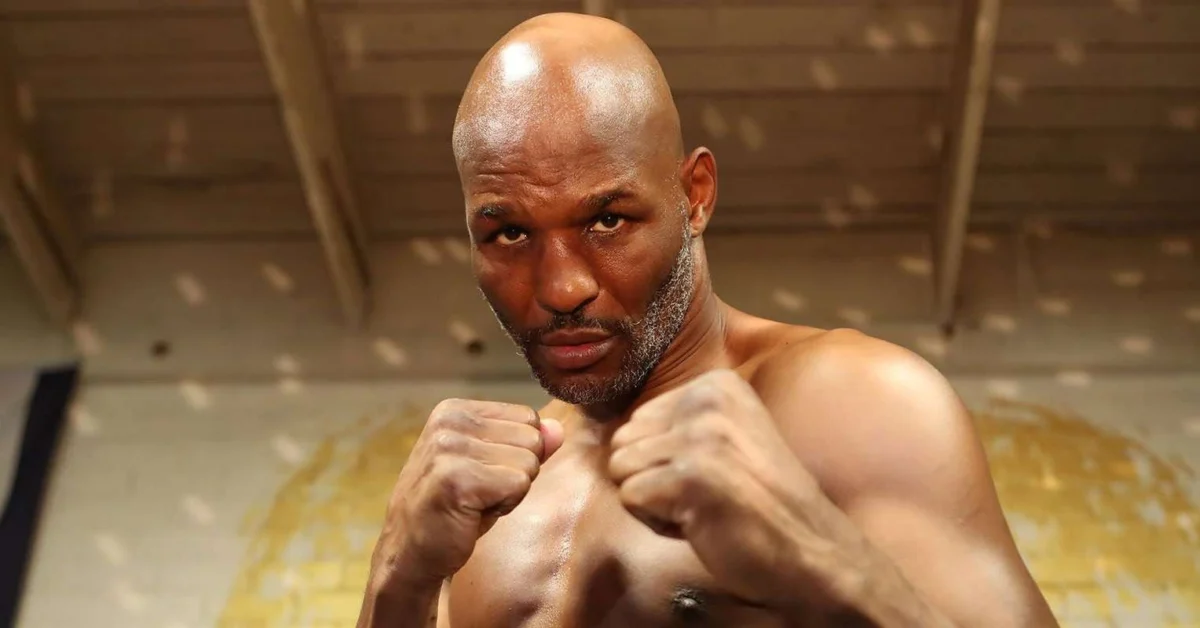
Bernard Hopkins stands as an undisputed titan of modern boxing, a competitor whose career defied the conventional limitations of aging in combat sports. Famously known by his chilling moniker "The Executioner," Hopkins carved out a legendary professional journey that spanned nearly three decades, beginning in 1988 and extending deep into the 21st century. Though the American great experienced a setback in his professional debut, he quickly regrouped to author one of the most remarkable and enduring legacies the sport has ever witnessed.
His rise to global prominence crystallized during the mid-1990s, a golden era for the middleweight division. Hopkins captured the imagination of the boxing world in 1995 when he delivered a devastating seventh-round technical knockout against Segundo Mercado to claim the IBF world middleweight championship. That victory served as the catalyst for an extraordinary reign. He systematically cleared out the division, defending his crown with clinical efficiency and establishing a standard of dominance that few could match.
The pinnacle of his middleweight supremacy arrived in 2004, when Hopkins added the historic undisputed championship to his resume by delivering a historic knockout victory over Oscar De La Hoya. It was a career-defining moment that cemented his status among the elite pound-for-pound fighters of his generation. Yet, true to his relentless ambition, Hopkins refused to rest on his laurels once he had conquered the 160-pound limit.
Demonstrating a level of tactical evolution and physical conditioning rarely seen in boxing history, Hopkins eventually made a successful transition up to the light heavyweight division. In 2011, he captured the WBC world title by defeating Jean Pascal in a commanding performance. Although he briefly stumbled against Chad Dawson just one year later, losing his crown, Hopkins proved his resilience once again. He bounced back to capture a version of the light heavyweight title by outpointing Tavoris Cloud, securing the IBF strap and further extending his historic record as the oldest world champion in boxing history.
Despite his own extensive list of accomplishments and victories over some of the best fighters of his era, Hopkins recently offered a remarkably candid and humble assessment of his own career during an interview with The Ring Magazine. Reflecting on his storied past and evaluating hypothetical matchups against his greatest contemporaries, Hopkins addressed how he would have fared against a prime version of his fierce rival, Roy Jones Jr. In a stunning admission, the Hall of Famer conceded that he simply would not have been able to get the better of Jones during the peak of his rival’s powers.
Delving into the tactical complexities of what made Jones such a formidable adversary, Hopkins explained how the sheer brilliance of his former opponent dismantled conventional fighting strategies. Jones possessed a unique combination of physical gifts and ring intelligence that rendered him virtually untouchable during the height of his career.
"He was smart enough to neutralise my best weapons and smart enough to not get hit by my big shots," Hopkins told The Ring Magazine, detailing the frustrating puzzle that Jones presented inside the squared circle. "Even though I got my shots in he wouldn’t get hit by more than one. Like if I got one in… and that’s the thing about fighting unique guys… if a guy lands that one shot, normally there’s another coming behind that."
Hopkins elaborated on the comprehensive nature of Jones’s athletic dominance, noting that his former foe possessed an almost peerless amalgamation of traits that set him apart from anyone else in the sport. The physical attributes, paired with an instinctive defensive awareness, created an aura of invincibility that left opponents guessing from the opening bell.
"He was an all-around thing – best boxer, best defence, offence… Early career Roy Jones Jr. – speed, reflexes, unorthodox, that type of thing," Hopkins said. "No one, no one would have beat Roy Jones at that level, where he was at right there and then."
The rivalry between Hopkins and Jones is woven deeply into the fabric of 1990s and 2000s boxing history. The two American champions crossed paths twice professionally, sharing the ring for the first time in May 1993, when a younger Jones secured a unanimous decision victory over Hopkins to claim the vacant IBF middleweight title. Seventeen years later, the pair locked horns in a long-awaited rematch in April 2010. This time, Hopkins extracted a measure of revenge, securing a dominant unanimous decision victory in a bout that, while arriving well past their absolute primes, finally settled the immediate score between the two veterans.
Throughout their respective journeys, boxing purists and enthusiasts frequently debated the potential outcome of a trilogy fight, particularly if it had materialized during the absolute zenith of their athletic powers in the mid-1990s. While a third chapter between the pair never materialized to satisfy the public curiosity, Hopkins’s recent reflections offer a definitive window into how one of the sport’s greatest minds viewed the supreme talent of Roy Jones Jr. In the eyes of a man who shared the ring with the best fighters his era had to offer, the prime version of Roy Jones Jr. remains unmatched, representing a standard of boxing excellence that truly stood alone.