
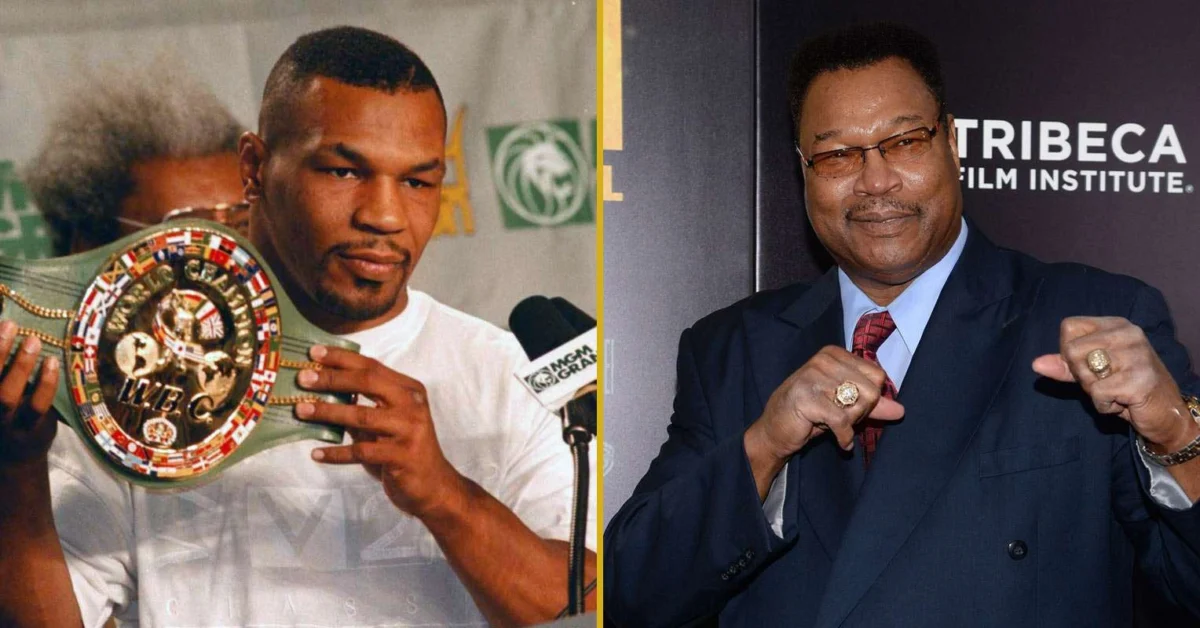
Former heavyweight boxing champion Larry Holmes has shared a candid assessment of Mike Tyson’s place in boxing history, asserting that a legendary rival from an earlier era would have decisively defeated "Iron Mike" using his own aggressive fighting style.
Holmes, widely celebrated as one of the greatest heavyweights to ever lace up a pair of gloves, built a legendary professional legacy during a dominant career. Fondly remembered by fans and boxing historians as "The Easton Assassin," Holmes compiled an extraordinary resume that established him as the undisputed king of the heavyweight division for seven consecutive years between 1978 and 1985. Throughout that remarkable championship reign, Holmes consistently turned back challenges from the premier heavyweights of his generation, cementing his status in the pantheon of boxing greats.
During his illustrious time at the top of the division, Holmes successfully defended his crown against a formidable roster of elite contenders. Among his notable victories were hard-fought triumphs over devastating punchers like Earnie Shavers and skilled technicians like Tim Witherspoon. Holmes also famously shared the ring with Muhammad Ali, the man universally regarded by many as the greatest boxer of all time—a designation that Holmes has occasionally noted with a touch of professional frustration, given his own towering achievements in the sport.
Despite his incredible longevity and dominance, "The Easton Assassin" did experience occasional defeats as his career extended into later decades. One of the most high-profile losses of Holmes’ career came at the hands of a young, ferocious Mike Tyson. In their eagerly anticipated 1988 showdown, a surging Tyson overwhelmed Holmes, securing a dramatic fourth-round knockout victory that signaled the changing of the guard in the heavyweight division.
Years after stepping away from the squared circle, Holmes reflected on those distinct eras of heavyweight boxing during an interview with Sky Sports Boxing. The conversation turned toward the timeless debate of cross-era matchups, prompting the interviewer to ask Holmes whether a prime "Iron Mike" Tyson would have been competitive against the elite heavyweights of the preceding golden era. That legendary roster of fighters included iconic sluggers such as "Smokin’ Joe" Frazier, a man whose relentless style defined an entire generation of the sport.
Offering a direct and unfiltered assessment, Holmes did not hesitate to evaluate how Tyson would stack up against Frazier. "I ain’t knocking Mike Tyson, no [he wouldn’t survive in that era]. Joe Frazier would beat him up at his own style. Joe liked guys like that," Holmes told Sky Sports Boxing, offering a clear perspective on the stylistic matchup between the two powerhouse punchers.
Frazier remains etched in boxing lore as one of the most effective and relentless pressure fighters in the history of the sport. Possessing extraordinary stamina, an indefatigable work rate, and a devastating left hook, Frazier specialized in suffocating opponents by constantly pressing forward, cutting off the ring, and wearing them down with non-stop aggression.
Frazier’s legendary toughness and unique style culminated in one of the most famous athletic achievements of the twentieth century. In 1971, he squared off against Muhammad Ali in the historic "Fight of the Century." In a brutal and unforgettable fifteen-round war at Madison Square Garden, Frazier earned a unanimous decision victory, thereby becoming the very first fighter in boxing history to defeat an undefeated Muhammad Ali. Although Ali would ultimately extract a measure of professional revenge by winning their subsequent two encounters in grueling rematches, Frazier’s performance cemented his legendary status forever.
The later chapters of Frazier’s career featured trials common to many great warriors of the ring. Following a devastating defeat to the powerful George Foreman in 1976, Frazier made the pragmatic decision to step away from the sport, embarking on a five-year retirement. He eventually returned to professional boxing in 1981 for a comeback bout against Floyd Cummings. Following an underwhelming performance that ended in a draw, "Smokin’ Joe" wisely chose to draw the curtain on his storied career for good, transitioning into a respected elder statesman of the sport.
Frazier’s life after boxing was marked by quiet dignity, though he faced significant personal challenges later in life. After enduring a long and courageous battle with cancer, the former heavyweight champion passed away in November 2011 at the age of 67, leaving behind a legacy as one of the fiercest competitors the sport has ever witnessed.