

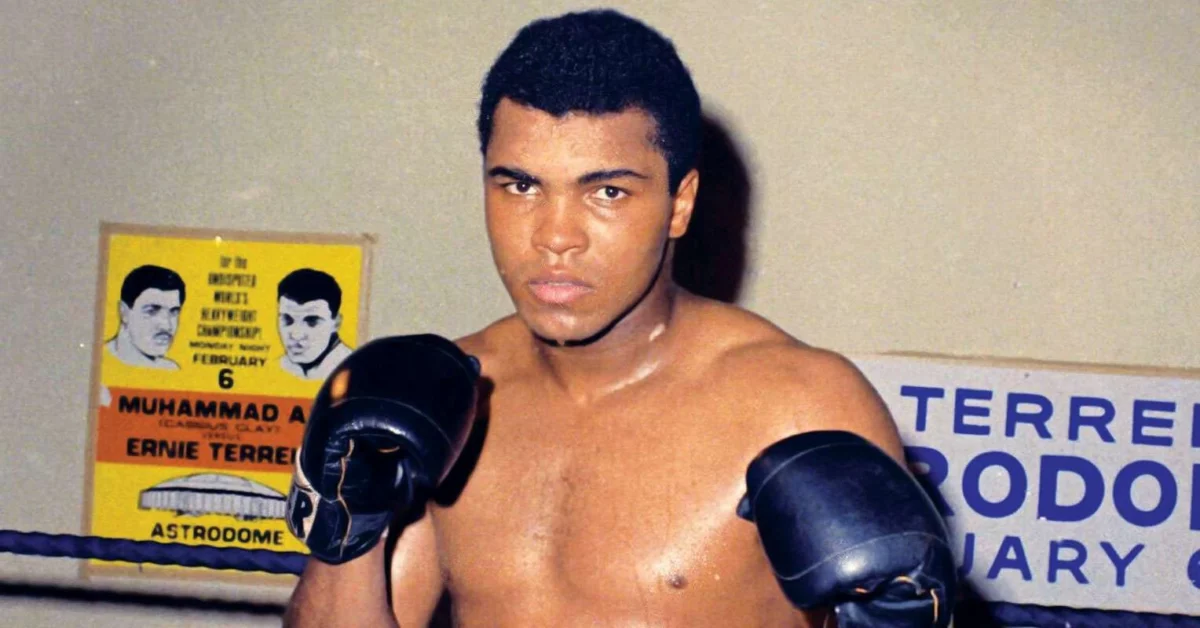
The eternal debate over who stands as the supreme titan of heavyweight boxing history has captivated fans, historians, and fighters across generations. While Muhammad Ali is almost universally reverenced as the preeminent heavyweight of all time—and perhaps the most transcendent figure in the history of combat sports—former three-time super-middleweight world champion Carl Froch believes that another iconic heavyweight ruler possessed the exact tools necessary to bring "The Greatest" down. According to Froch, a prime Mike Tyson would not just defeat Ali in a dream fantasy matchup, but would end the contest by knocking him out cold.
Speaking on his official YouTube channel, Froch delivered a bold prediction that runs counter to the traditional consensus held by many boxing traditionalists. In evaluating how a hypothetical clash between the two legendary champions would unfold, the former super-middleweight titleholder argued that the sheer, explosive power of "Iron" Mike Tyson would ultimately prove too destructive for Ali to withstand over the course of a fight, despite Ali’s unmatched footwork, jab, and defensive wizardry.
The mythical matchup pits two vastly different eras and contrasting fighting philosophies against one another. Ali, whose historic career saw him become the only three-time lineal heavyweight champion in boxing history, built his legendary status by defeating formidable opponents during the division’s undisputed golden age. His defining victories over ferocious champions like Sonny Liston, George Foreman, and Leon Spinks solidified his place atop the sport’s hierarchy. Ali was celebrated for his revolutionary speed, his uncanny ability to move outside an opponent’s range, his iron jaw, and his remarkable skill in riding punches to minimize damage.
In contrast, prime Mike Tyson represented an unprecedented force of nature in the heavyweight division. During his rise to global dominance, Tyson was widely regarded as the most terrifying and destructive finisher boxing had ever produced. Blending astounding hand speed, devastating head movement, and catastrophic punching power in both hands, Tyson overwhelmed opponents before they could establish their rhythm, creating an aura of supreme invincibility during the initial chapter of his career.
When breaking down how these two monumental skill sets would clash inside the ring, Froch pondered the tactical dynamics before offering his definitive prediction. He acknowledged that Ali possessed the movement and boxing intelligence required to neutralize powerful punchers, yet he firmly maintained that Tyson’s overwhelming early power could alter the trajectory of the fight in an instant.
Froch posed the central question that defines the matchup: whether Tyson could effectively close the distance and connect cleanly against an opponent of Ali’s dynamic defensive movement. Froch noted that if Tyson managed to land his signature power shots on Ali’s chin, the outcome would be decisive, suggesting that Tyson possessed the punching weight to flatten even the most durable champions. At the same time, Froch openly recognized Ali’s tactical superiority, pointing out that Ali excelled at moving, riding incoming shots to take away their maximum force, and using his reach advantage to keep aggressive fighters at bay.
Despite acknowledging Ali’s elusive style and legendary durability, Froch centered his analysis on Tyson’s unique, terrifying peak. He referred to Tyson as an absolute monster inside the ropes, whose ferocious style put fear into every opponent he faced. However, Froch was careful not to overlook the flaws and eventual vulnerabilities that emerged in Tyson’s career when he stepped up against top-tier competition.
Froch pointed out that Tyson’s myth of invincibility eventually cracked when he faced adverse circumstances and elite opposition later in his career. Specifically, Froch highlighted Tyson’s shock defeat to James "Buster" Douglas in Tokyo, followed by high-profile losses to Evander Holyfield and Lennox Lewis. Froch observed that when Tyson stepped up and engaged in grueling battles with fighters who survived his initial onslaught and possessed the mental fortitude to fight back, Tyson ultimately came unstuck.
These high-profile setbacks demonstrated that Tyson was not entirely indestructible. Froch contrasted Tyson’s mortal moments with the enduring aura of invincibility that has long surrounded Muhammad Ali. While Froch readily admitted that Ali also suffered defeats late in his own career as age and wear took their toll, he noted that Ali maintained a unique, almost mystical standing in the public consciousness that few athletes in history have ever achieved.
When weighing all these factors—Ali’s size, skill, and durability against Tyson’s explosive force and aggressive pressure—Froch concluded that the contest would likely resolve itself in one of two ways: either Tyson would find the decisive punch to end the fight early, or Ali would successfully navigate the storm and earn a victory on points. Ultimately, Froch found himself unable to bet against the destructive potential of prime Tyson, predicting that Tyson would find a way to land the final, devastating blow.
Froch summarized his prediction by stating that it remains difficult to pick against Mike Tyson when facing someone of Ali’s physical dimensions, concluding with the definitive forecast that Tyson would render Ali unconscious.
Interestingly, Froch’s evaluation stands in stark contrast to the perspective of Mike Tyson himself. Despite receiving the backing of accomplished fighters like Froch in mythical matchup debates, Tyson has consistently downplayed his chances against Ali whenever the topic has been raised throughout his life. Tyson, who grew up idolizing Ali and has frequently spoken of his deep reverence for "The Greatest," has repeatedly maintained that he would be no match for Ali in a real contest.
In historical interviews and public discussions regarding boxing’s ultimate icons, Tyson has routinely placed Ali in a supreme league of his own. The former undisputed heavyweight monarch has expressed the belief that Ali’s unparalleled mental toughness, footwork, speed, and chin would have allowed him to withstand Tyson’s early fury before taking control of the contest. Tyson’s humble stance highlights the immense respect he holds for Ali’s historical legacy and unrivaled accomplishments inside the ring.
The contrast between Froch’s technical assessment and Tyson’s personal humility underscores why the Ali-Tyson debate continues to resonate so deeply with combat sports fans around the globe. On one hand, Ali’s legacy as the division’s ultimate champion is backed by historical credentials that stand unmatched: his three separate reigns as lineal champion, his famous victories over Liston, Foreman, and Spinks, and his global reputation as the standout heavyweight of all time.
On the other hand, the image of a prime Mike Tyson—a relentless, terrifying force sweeping through the division with unbridled power—creates a compelling counterargument for those who believe that raw explosive force can disrupt even the most brilliant boxing strategy.
While a ring meeting between Muhammad Ali and Mike Tyson can only ever exist in the realm of imagination, predictions from high-profile champion fighters like Carl Froch ensure that the debate remains vibrant. Whether one sides with Froch’s belief in Tyson’s knockout power or shares Tyson’s own deference to Ali’s supreme greatness, the theoretical battle between "The Greatest" and "Iron Mike" continues to serve as the ultimate benchmark for modern boxing mythos.