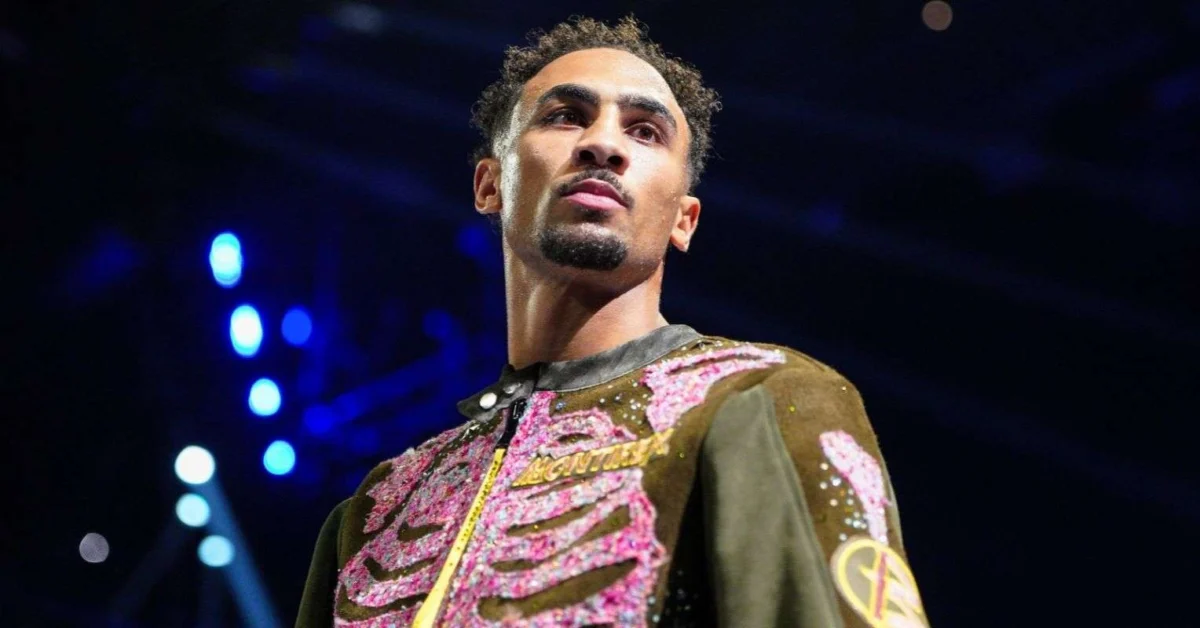
Ben Whittaker could be on the verge of fighting for world honours after winning his final eliminator against Conor Wallace last month in a contest that tested the rising star’s championship credentials.
The pair collided for a chance to become the IBF’s mandatory challenger, with the winner being positioned for a shot at unified king Dmitry Bivol. The stakes were exceptionally high for both fighters, who entered the ring fully aware that a victory would catapult them directly into the upper echelons of the light-heavyweight division. Whittaker, known for his flashy style and amateur pedigree, sought to prove that his transition to the professional ranks would soon yield a major world title opportunity.
And despite dominating the majority of their contest, Whittaker was made to survive a late scare when, on at least two occasions, Wallace could have been credited with a knockdown. Up until the championship rounds, Whittaker had largely controlled the tempo of the fight, using his superior hand speed, ring generalship, and defensive reflexes to frustrate Wallace. However, the closing moments of the bout injected dramatic tension into the arena as Wallace mounted a spirited surge, catching the Wolverhampton fighter flush and exposing moments of defensive lapse that briefly turned the bout into a survival test.
In the end, the scorecards made such things redundant, as Whittaker’s early and middle-round work had banked enough points to secure the official decision. But even so, many felt Whittaker showed signs of vulnerability that would be more greatly exposed by Bivol, who will defend his belts against Callum Smith on December 12. Analysts and purists pointed out that elite-level champions like Bivol capitalize ruthlessly on the type of stationary moments and defensive openings that Whittaker allowed in the final stages against Wallace.
After that upcoming December 12 title defense concludes, there is a good chance that Whittaker gets called as the IBF’s mandatory challenger, cementing his status as the official next-in-line for the winner of that elite championship scene. Alternatively, the 29-year-old could pursue a world title shot against newly-crowned WBC champion Willy Hutchinson, opening up multiple lucrative and high-profile strategic pathways for his team to consider as they map out his next career moves.
“The Hutch Train” claimed his previously vacant belt last Saturday, unanimously outpointing Joshua Buatsi after losing their first encounter by split decision in 2024. Hutchinson’s redemption victory over Buatsi was widely praised as a masterclass in discipline and tactical execution, reversing the outcome of their previous grueling encounter and establishing Hutchinson as a major force at the weight class.
Following that career-defining triumph, Hutchinson then went face-to-face with Anthony Yarde, expressing an interest in their potential clash, while equally telling talkSPORT that he would gladly defend his title against Whittaker, setting the stage for potential domestic blockbusters in the UK boxing scene.
Addressing the prospect of fighting the flashy 2020 Olympic silver medalist, Hutchinson did not mince words during his interview, calling out the rising contender directly: “Where’s Quittaker at? He can get it as well. Massive fight!”
The “Quittaker” jibe relates to the Wolverhampton man’s technical draw with Liam Cameron in 2024, a bizarre and chaotic night of boxing when both fighters went over the top rope during a frantic exchange, resulting in injuries that brought an abrupt halt to the bout and saw Whittaker leave the arena in a wheelchair.
The incident sparked intense debate across social media and the wider boxing community, with some critics suggesting that Whittaker feigned his injury to escape a difficult fight against a determined Cameron. However, to his credit, “The Surgeon” silenced those detractors comprehensively when the pair met again, managing to score an emphatic second-round finish in their immediate rematch to emphatically settle any lingering doubts regarding his competitive heart and toughness inside the squared circle.